
The system sounds normal at a low listening level, but crackling, harshness or obvious distortion appears as soon as the volume is raised. This is not a normal characteristic of a speaker and it does not mean that every system must sound rough when played loudly. It usually indicates that one part of the signal chain has reached its limit or that the installation has developed a fault. The symptom alone, however, does not identify the faulty component.
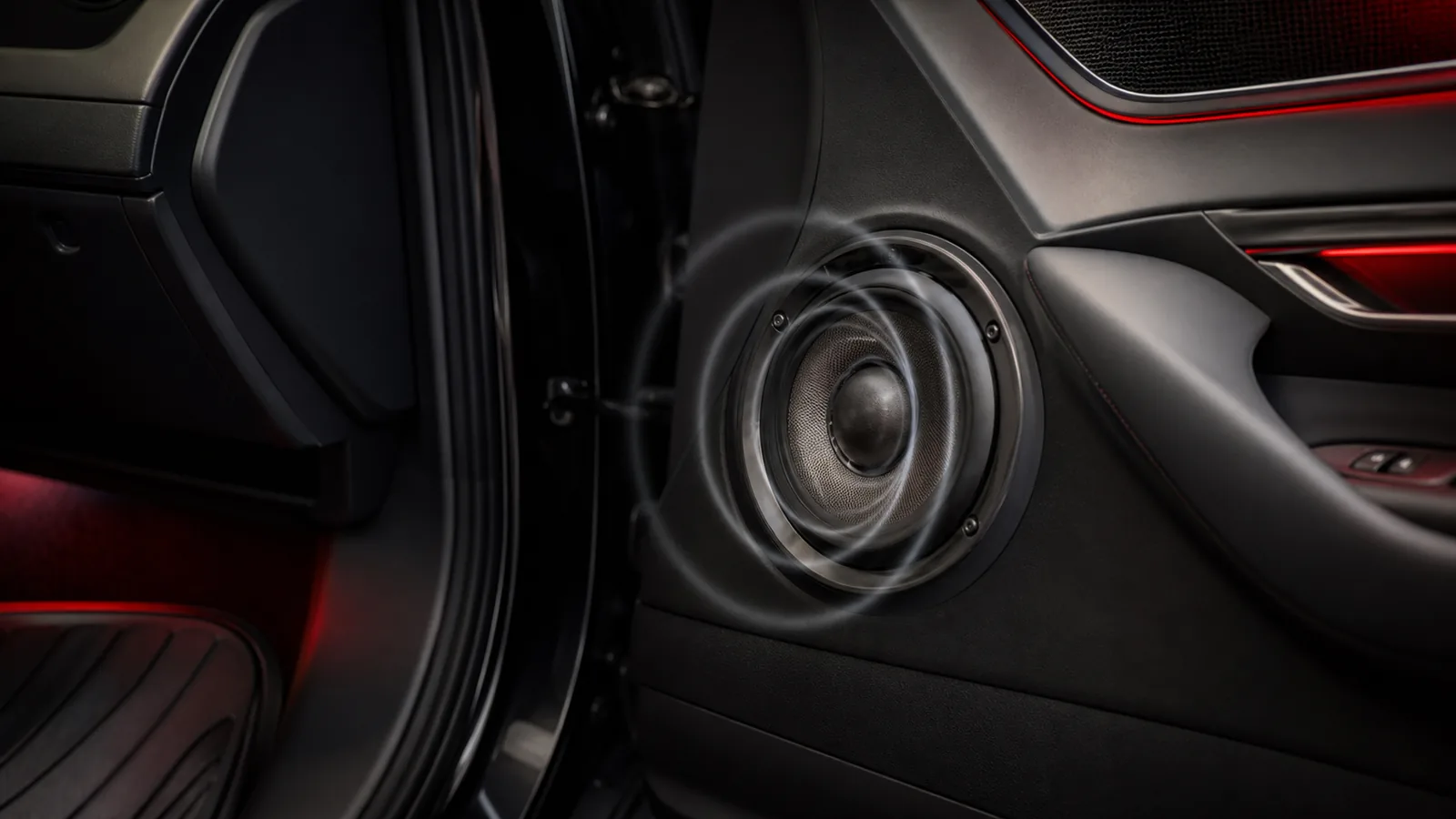
Why do car speakers distort only when the volume is raised?
At a low signal level, the head unit, amplifier and speaker operate within a comfortable range. Raising the volume increases the voltage delivered to the speaker, cone excursion and voice-coil temperature. If the head unit or amplifier can no longer reproduce a clean waveform, clipping begins. If the speaker has a damaged coil, surround or cone, the additional movement reveals the problem. A loose connector may also break contact only when the door and wiring vibrate more strongly.
Diagnosis should therefore begin by establishing exactly when the distortion occurs: with every source, only during bass notes, in one channel, or only above a particular volume setting.
Head unit or amplifier clipping
Clipping occurs when a device is asked to produce more output voltage than its power supply and circuitry can provide. The peaks of the waveform are flattened, sending a heavily distorted signal with additional high-frequency energy to the speaker. It is often heard as a hard, rough sound during strong bass transients.
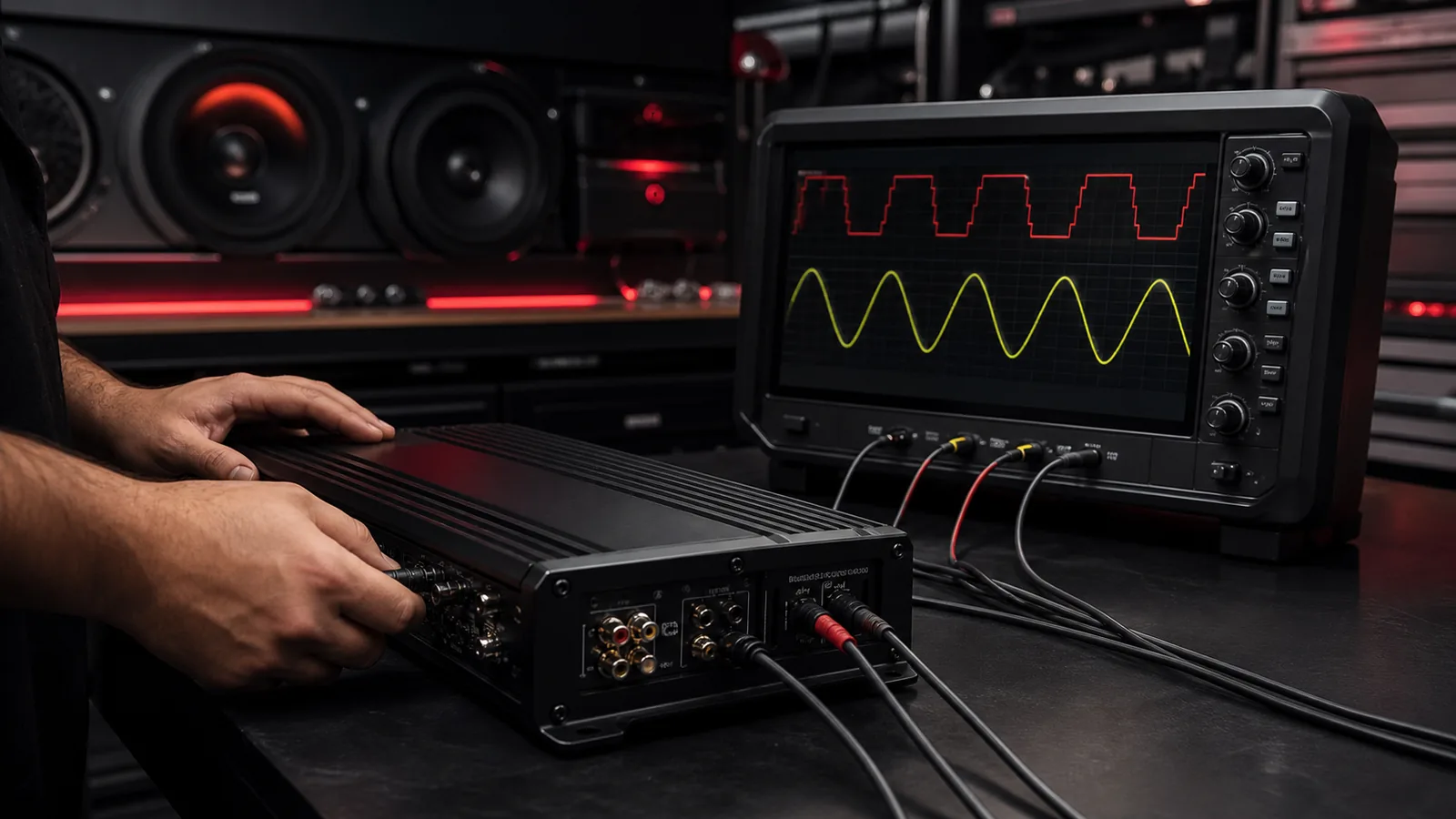
Clipping can also occur with a powerful amplifier. Gain is not a power control; it matches the amplifier input sensitivity to the source. If it is set too high, the amplifier reaches its limit prematurely. Excessive bass boost, extreme equaliser settings or an already distorted factory-radio output can create the same result.
A damaged voice coil, cone or suspension
A partly overheated or deformed voice coil may sound clean quietly but rub against the magnetic gap when cone excursion increases. A torn surround, loose dust cap, damaged tinsel lead or cracked cone can produce similar noises.
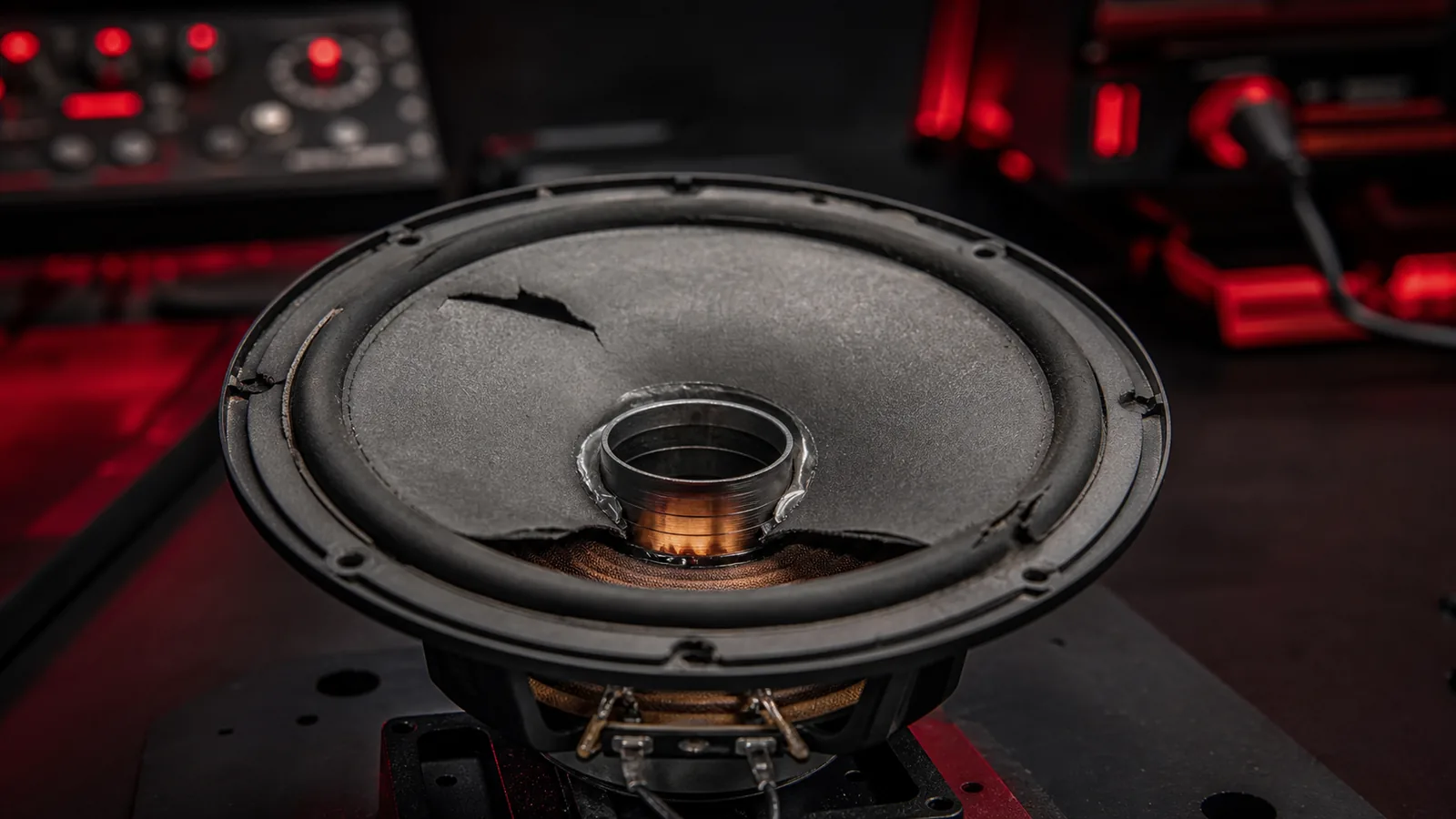
If the problem affects only one door and remains after the signal channels have been swapped during diagnosis, the speaker or its local wiring becomes the main suspect. Avoid testing a damaged driver at high output for long periods, because the voice coil can fail completely.
Loose connections and door wiring faults
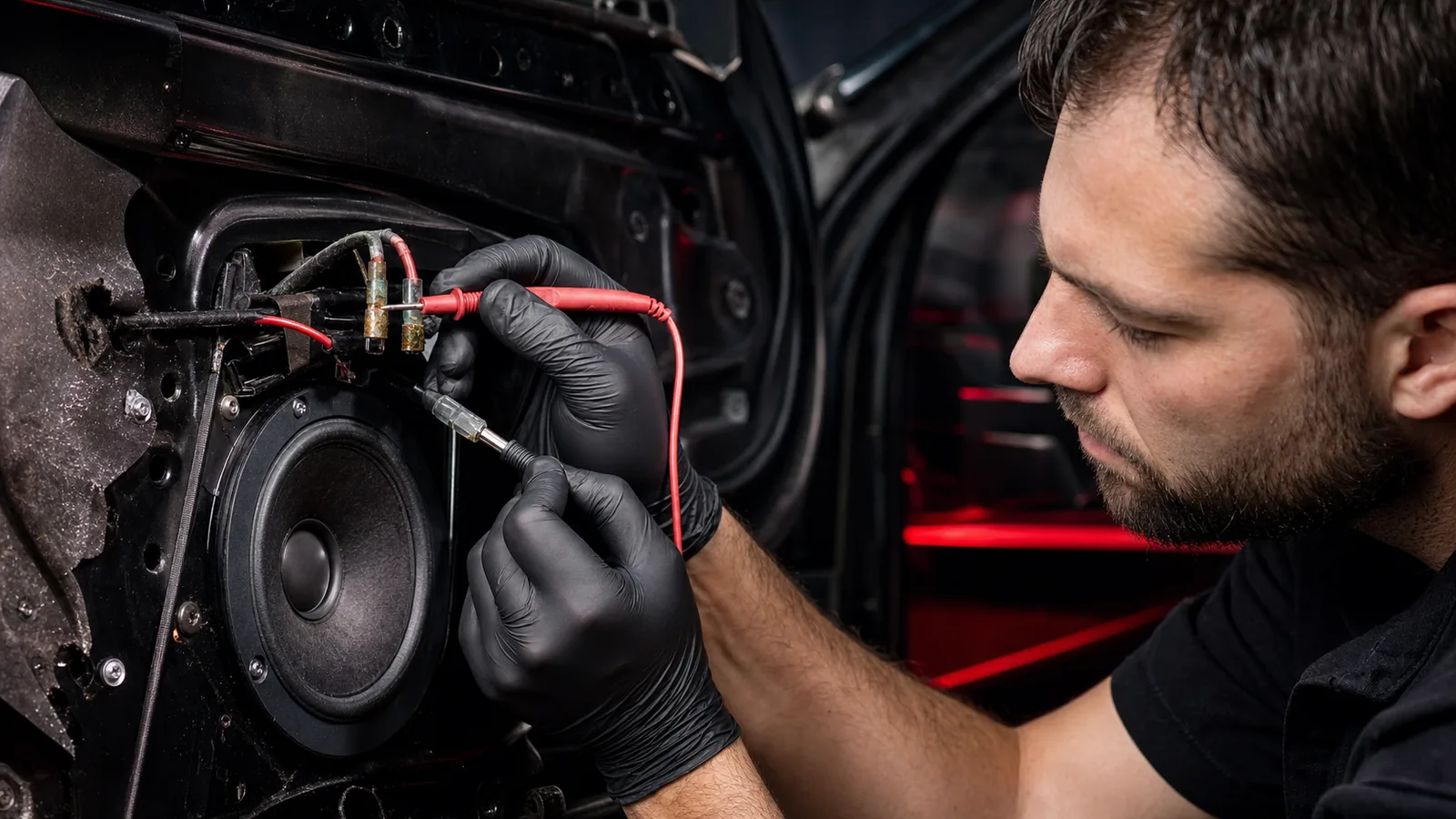
A car door is exposed to moisture, vibration and repeated flexing of the wiring loom. A loose terminal, oxidised connector, partially broken wire in the rubber boot or a conductor touching the door metal can cause crackles that change with volume and road movement. Sometimes the speaker is healthy and the real noise comes from a trim panel, mounting adapter or cable touching the cone.
Is the speaker receiving too little or too much power?
A common shortcut is to blame an amplifier that is either “too weak” or “too powerful”. In reality, the operating conditions of the complete system matter. A small amplifier driven deep into clipping may damage a speaker faster than a more powerful unit that is set correctly. On the other hand, excessive clean power delivered for too long can overheat the coil or push the cone beyond its mechanical limit.
Impedance, real RMS power, high-pass filtering, door installation and the nature of the music signal all matter. Comparing the largest numbers printed on the products cannot provide a reliable diagnosis.
Factory equalisation and protection strategies
Modern factory systems often process the signal dynamically. The head unit may reduce bass at higher volume, change equalisation with vehicle speed or send different levels to individual channels. If an aftermarket amplifier is connected without measuring that source signal, its input sensitivity can easily be set incorrectly.
Replacing the speakers alone is not always the answer. The source output, filters, channel loads and the exact point where distortion first appears must be checked.
How can you check the cause safely?
- Turn off bass boost, loudness and extreme equaliser settings.
- Try several well-recorded tracks and another audio source.
- Determine whether every speaker is affected or only one.
- Notice whether the noise follows bass notes, vocals or road bumps.
- Do not keep increasing volume after distortion begins.
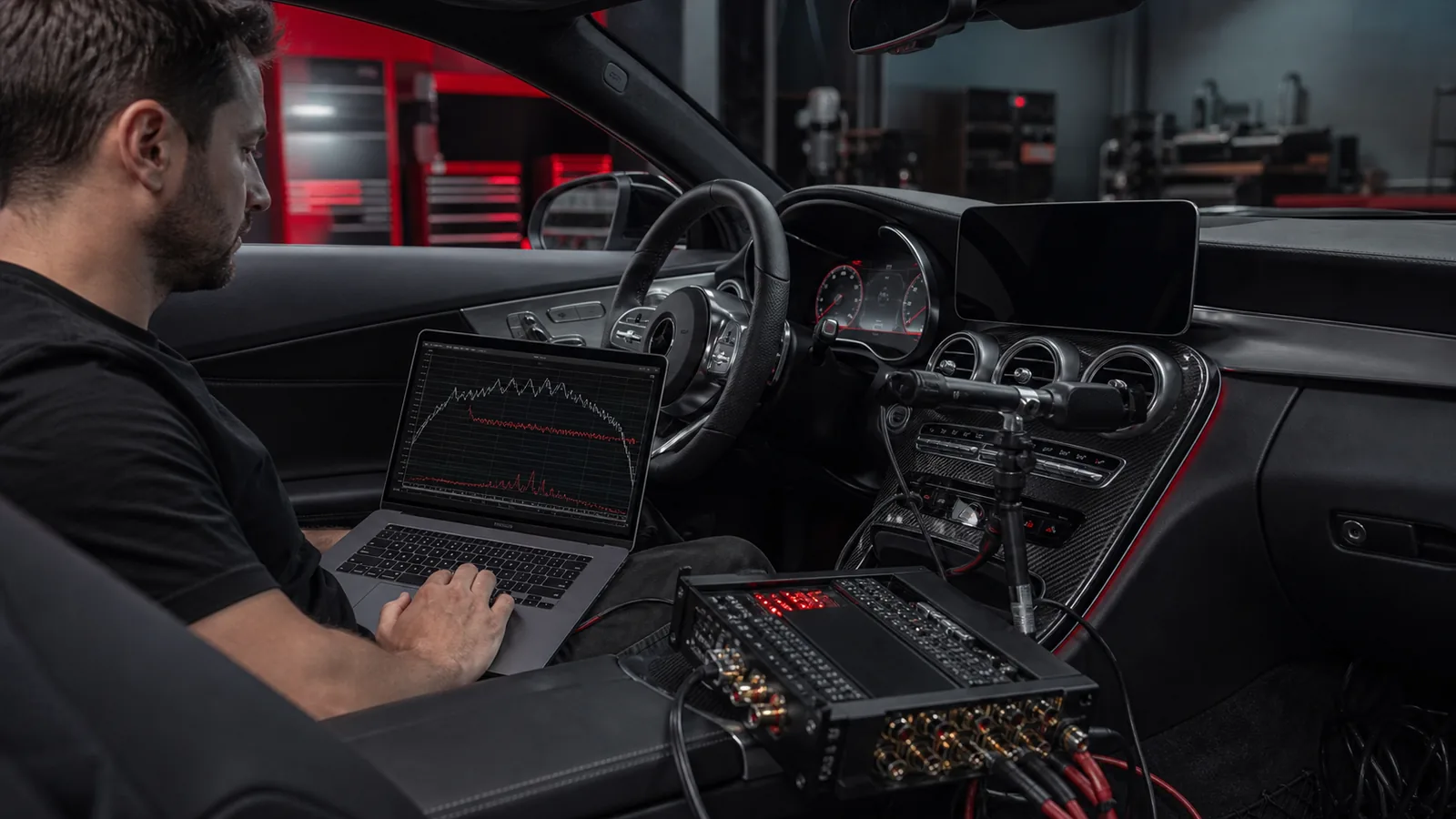
A professional diagnosis includes waveform measurement with an oscilloscope or analyser, wiring inspection, impedance checks and gain adjustment based on actual output voltage. A DSP system also requires correctly configured filters, limiters, channel levels and equalisation.
Fixing the cause instead of hiding the symptom
The correct solution may involve repairing a connection, replacing a damaged driver, changing filter settings, calibrating amplifier sensitivity or rebuilding part of the installation. Reducing equaliser bands or moving the balance control only hides the symptom. For a lasting result, see how a professional in-car sound system diagnosis and upgrade is approached.
The key rule is simple: clean sound should not turn into crackling merely because you listen louder. Distortion is a warning. Finding its source quickly protects both the speakers and amplifier from expensive damage.