
Why Are Vocals Quiet and Buried Under Bass in a Car?
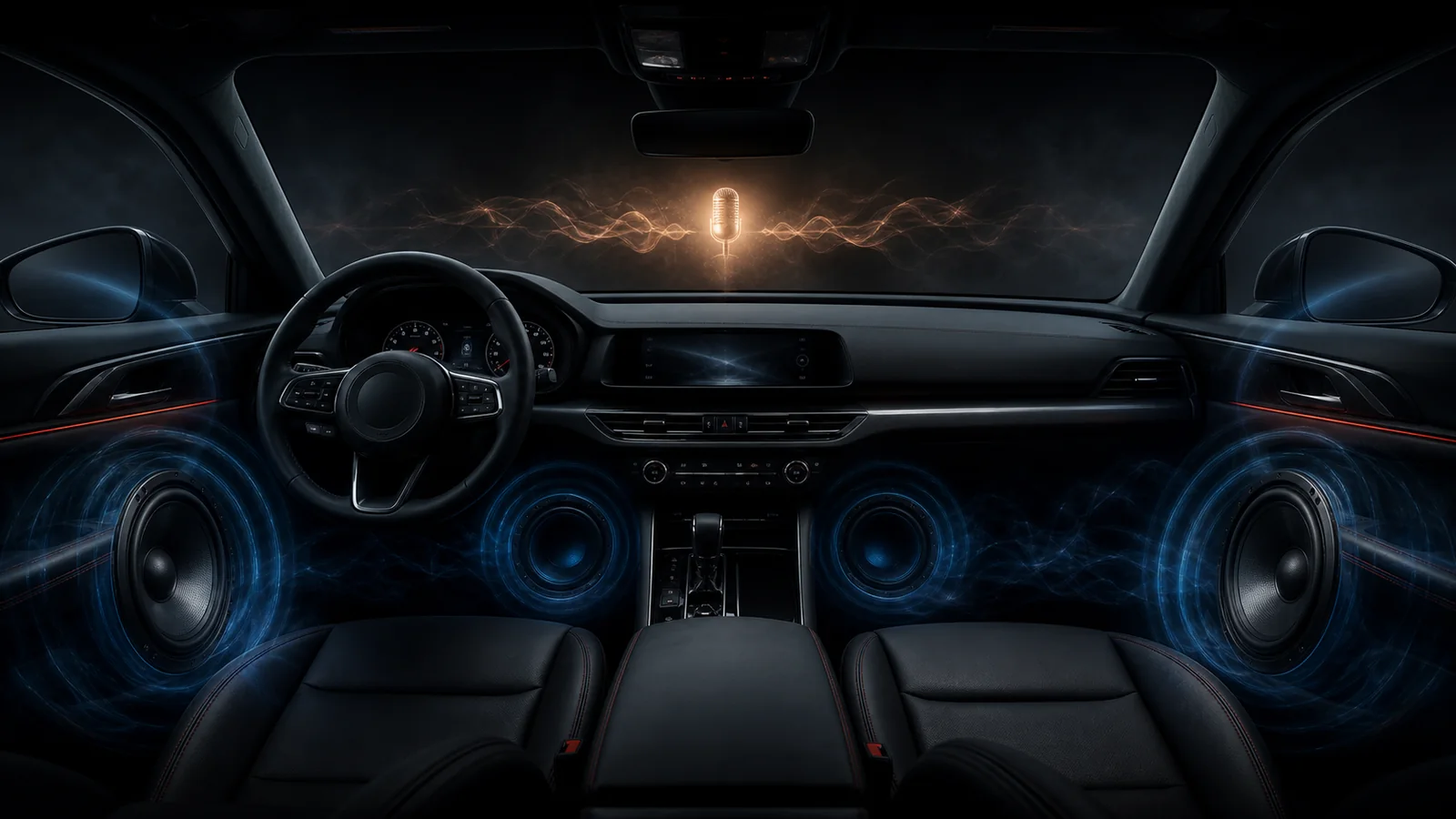
Bass can be powerful without covering the lyrics. If vocals remain clear at low volume but disappear beneath the kick drum and subwoofer when the level rises, the system is not maintaining the correct balance. The usual causes are excessive bass, missing midrange energy, unsuitable crossovers or poor driver integration.
The human voice covers a wide frequency range. Its fundamentals occupy the midrange, while intelligibility also depends on the upper midrange. Raising the treble control will not restore a natural vocal and may only add sibilance.
Start with the source settings
Disable loudness, bass boost, virtual surround and equalisation in both the phone and head unit. Several corrections may be active at the same time, each increasing low-frequency output. Compare familiar, well-recorded vocals through at least two sources.
If the problem occurs only in one app or sound profile, the installation may be working correctly. If vocals remain buried on every source, check levels, crossovers and installation.
Excessive subwoofer output masks the midrange
Low frequencies do not need to overlap the entire vocal range to make words harder to hear. Strong bass masks quieter details and encourages the listener to raise the master volume. A subwoofer set too loud, boosted through the upper-bass region or crossed too high begins to dominate the front speakers.
Reduce the subwoofer level, disable bass boost and review its low-pass filter. If the lyrics immediately become clearer, the issue is bass integration—not a lack of tweeter quality.
A midrange gap removes vocal presence
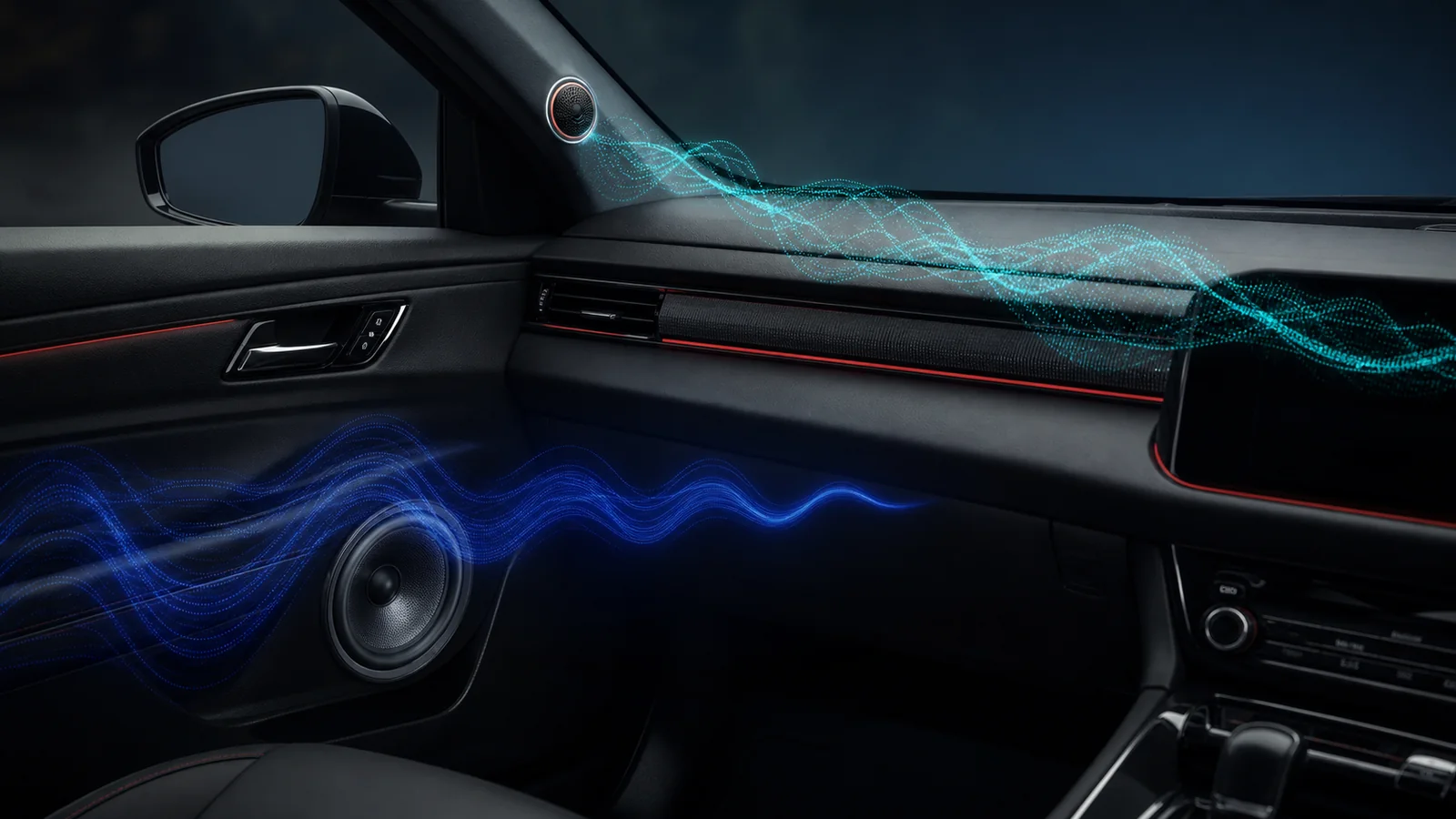
In a two-way system, the door woofer and tweeter must hand over smoothly. Unsuitable crossover frequencies or slopes can weaken the region responsible for vocal presence. Random replacement of factory speakers can create the same problem because the original head unit may contain equalisation designed for specific OEM drivers.
A higher-quality replacement does not automatically match that processed signal. Measuring the input and the acoustic response helps separate a source problem from a speaker or cabin problem.
Phase and delay errors weaken the centre vocal
If the left and right channels, or the woofer and tweeter, do not combine correctly, the centre image loses energy. Vocals become thin, unstable or shift toward one door. Reversed polarity is one possible cause, but filters and unequal path lengths also produce phase shifts.
Balance cannot correct timing errors. DSP can align levels and arrival times, but delay must be evaluated together with phase through the crossover region. Entering measured distances without acoustic verification does not always produce the best sum.
Resonating or leaking doors smear the midrange
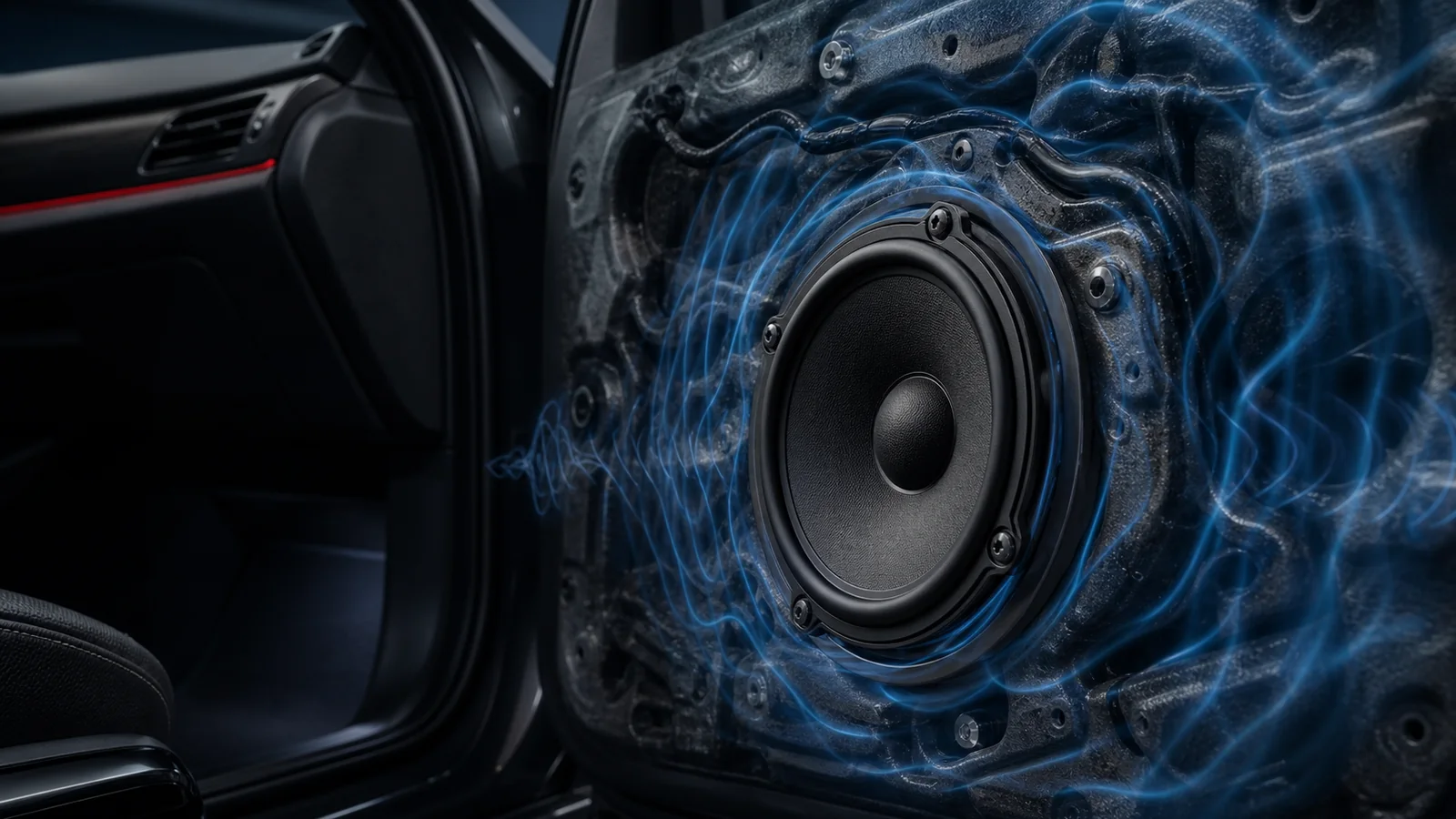
A door speaker needs a rigid spacer and a sealed path into the cabin. Leaks waste energy, while vibrating trim adds unwanted sound through the lower midrange. Bass becomes loose and the voice loses definition.
Door treatment is not only about producing more bass. Stiffening the panel, controlling service openings and isolating trim improves transient response. The front speakers then integrate more cleanly with the subwoofer, preserving vocal clarity at higher volume.
Why simply boosting the midrange is not the answer
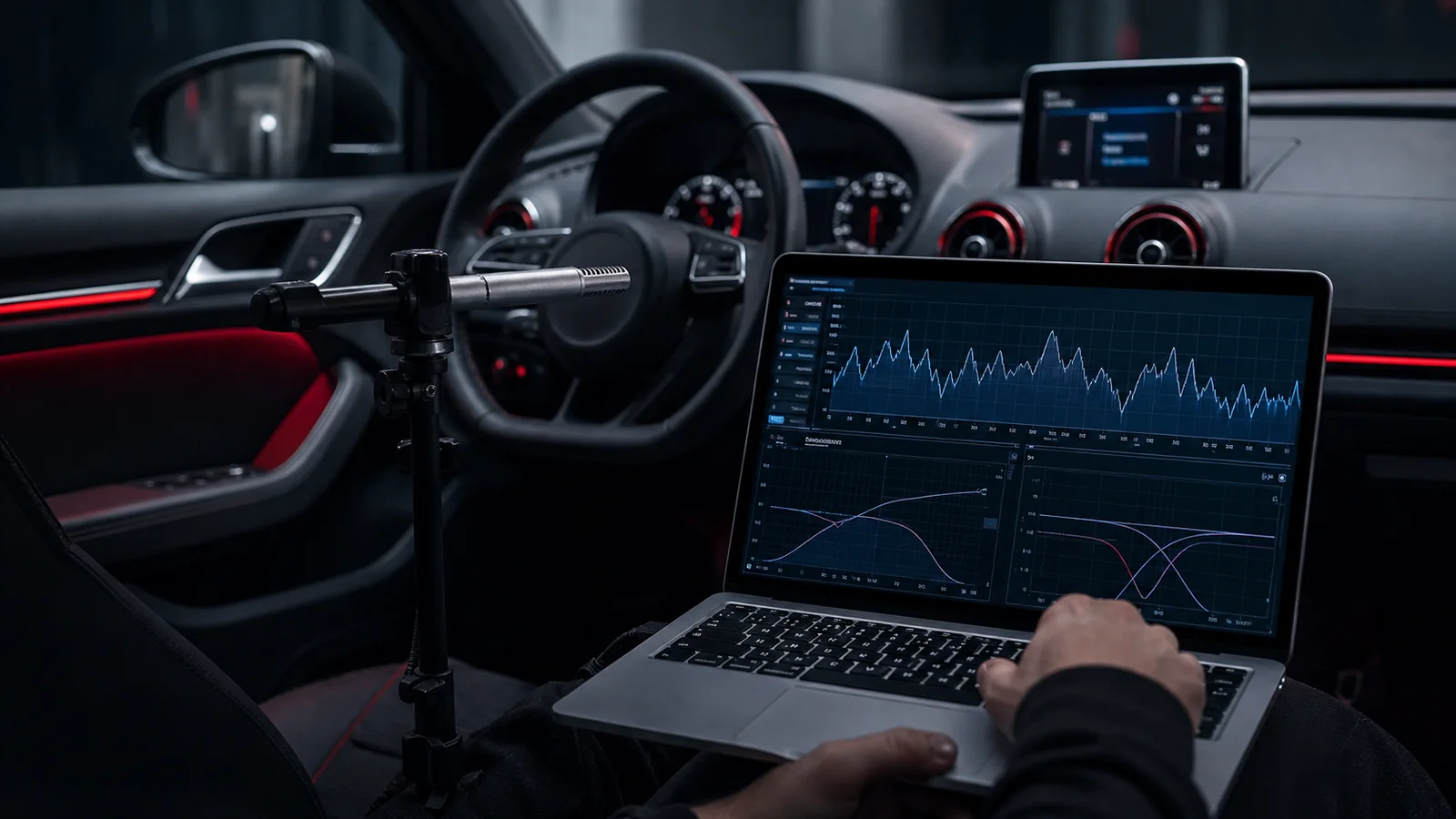
A broad midrange boost may bring the voice forward temporarily, but it can also add nasal tone, harshness and distortion. If the cause is a crossover gap, phase error or amplifier clipping, EQ only hides the symptom.
The correct order is to verify the source, installation and polarity, set crossovers, align levels and delays, and apply EQ last. Professional installation and tuning of an in-car sound system preserves powerful bass while restoring natural vocals and musical detail.
Diagnostic order
- Disable loudness, bass boost, surround and additional EQ.
- Compare several recordings and at least two sources.
- Reduce subwoofer level and check its low-pass filter.
- Listen to the left, right and front system without the subwoofer.
- Verify polarity, crossover points and filter slopes.
- Inspect speaker mounting, spacer sealing and door-panel resonance.
- Set levels, delays and equalisation using measurements and listening tests.
If clarity collapses mainly at high volume, see why car speakers crackle when played loudly. If the issue becomes worse on the road, check why car audio sounds worse while driving.
Summary
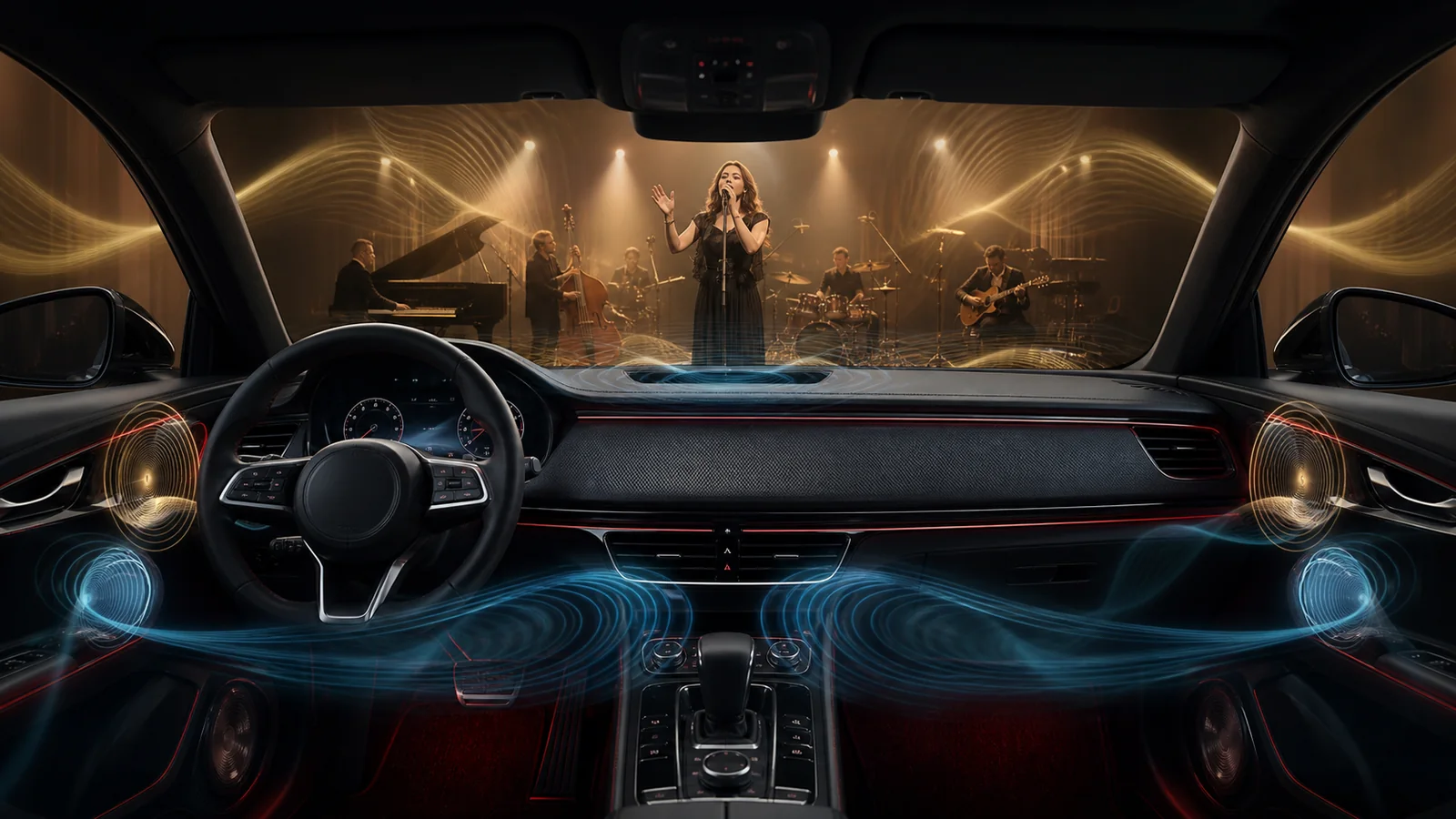
Quiet vocals buried under bass usually result from incorrect balance rather than a weak tweeter. Excessive subwoofer level, missing midrange energy, phase errors and resonating doors are the most common causes. Once the frequency ranges are integrated correctly, the voice remains centred, natural and intelligible while the bass stays powerful without dominating the music.