
Music can sound full and detailed while the car is parked, then lose bass, clarity and impact as soon as you start driving. This is common and does not automatically mean the speakers are faulty. In most cases, road noise masks important parts of the music, while door acoustics and tuning make the loss more noticeable.
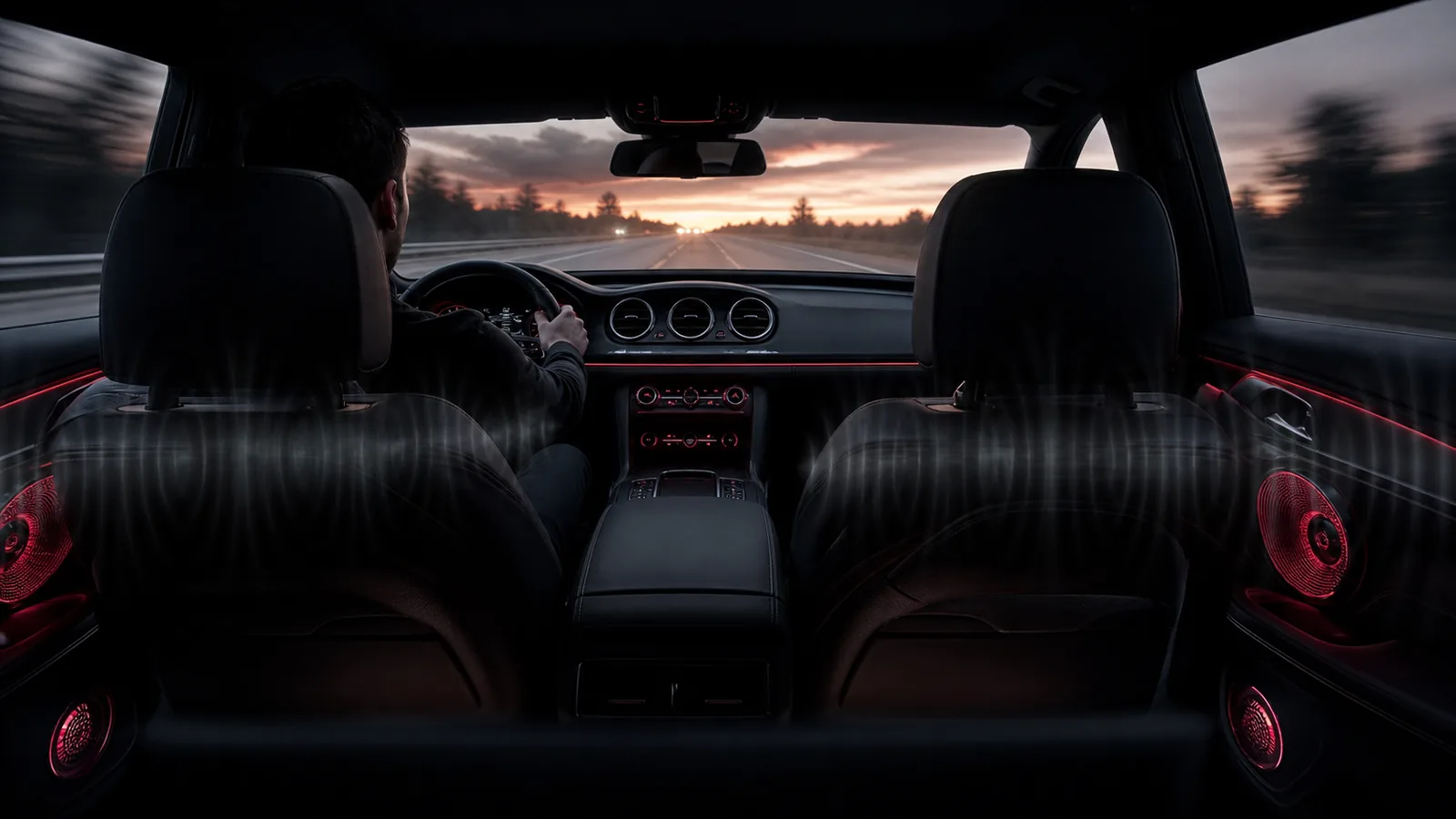
Why does car audio sound worse while driving?
A parked cabin is relatively quiet. Once the car moves, tyre noise, floor and wheel-arch vibration, engine sound and airflow all enter the listening environment. Much of that energy overlaps the same frequency ranges used by music. Your system is still playing, but your ears have more difficulty separating it from the background.
This is called masking. Low bass, lower midrange body and fine spatial detail are particularly easy to lose. A system can therefore be working correctly yet feel far less capable on the road.
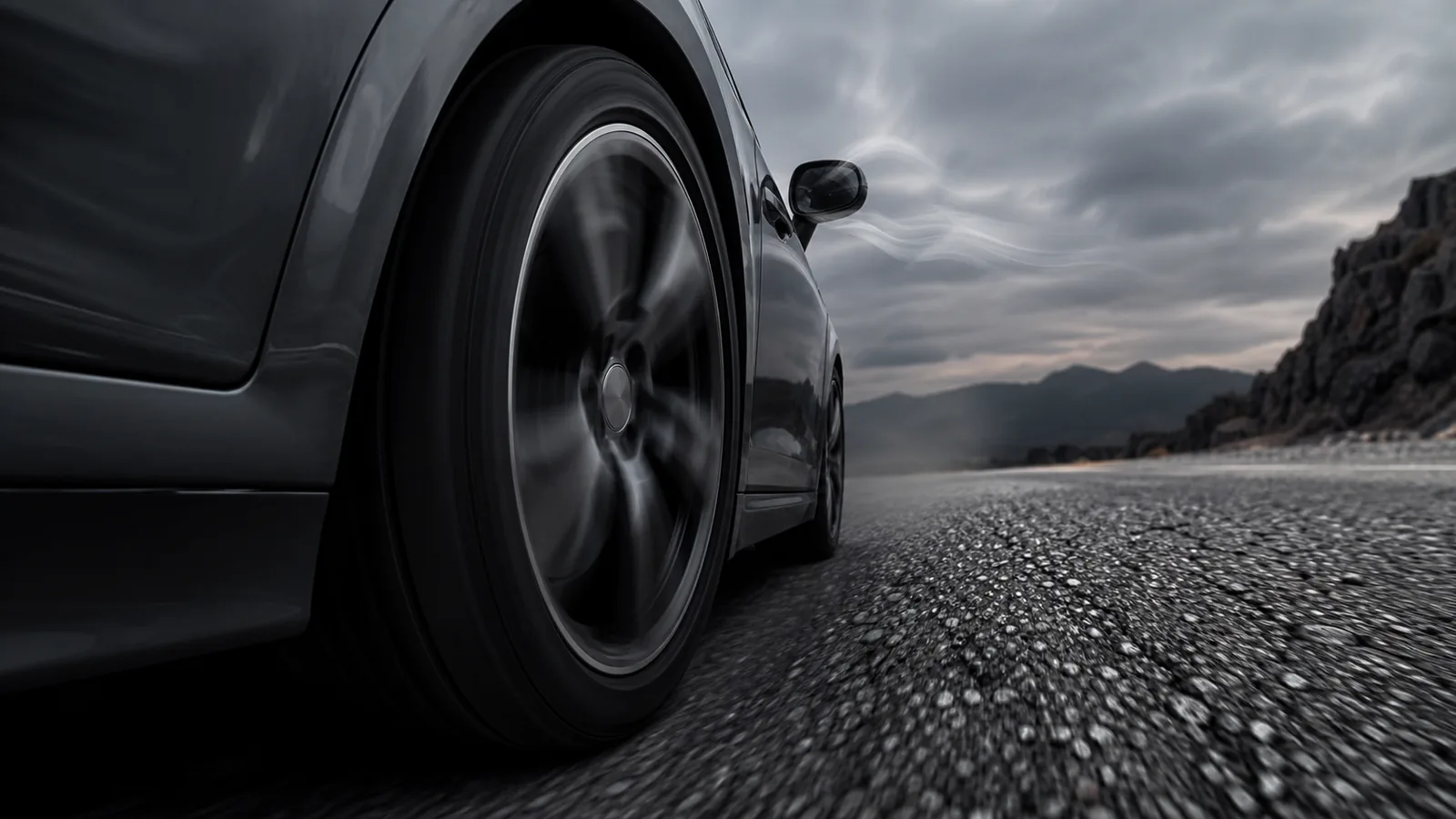
Road noise hides bass and detail
Tyre noise is not a single tone. It is a broad spectrum that changes with the tyres, road surface, speed and vehicle construction. Coarse asphalt can cover the range that gives a kick drum and bass guitar their weight. At higher speeds, wind noise also reduces vocal and treble clarity.
Turning the volume up only helps to a point. It raises the entire recording without improving the underlying signal-to-noise conditions. At high levels, the head unit or amplifier may run out of clean output, making the system harsh and tiring.
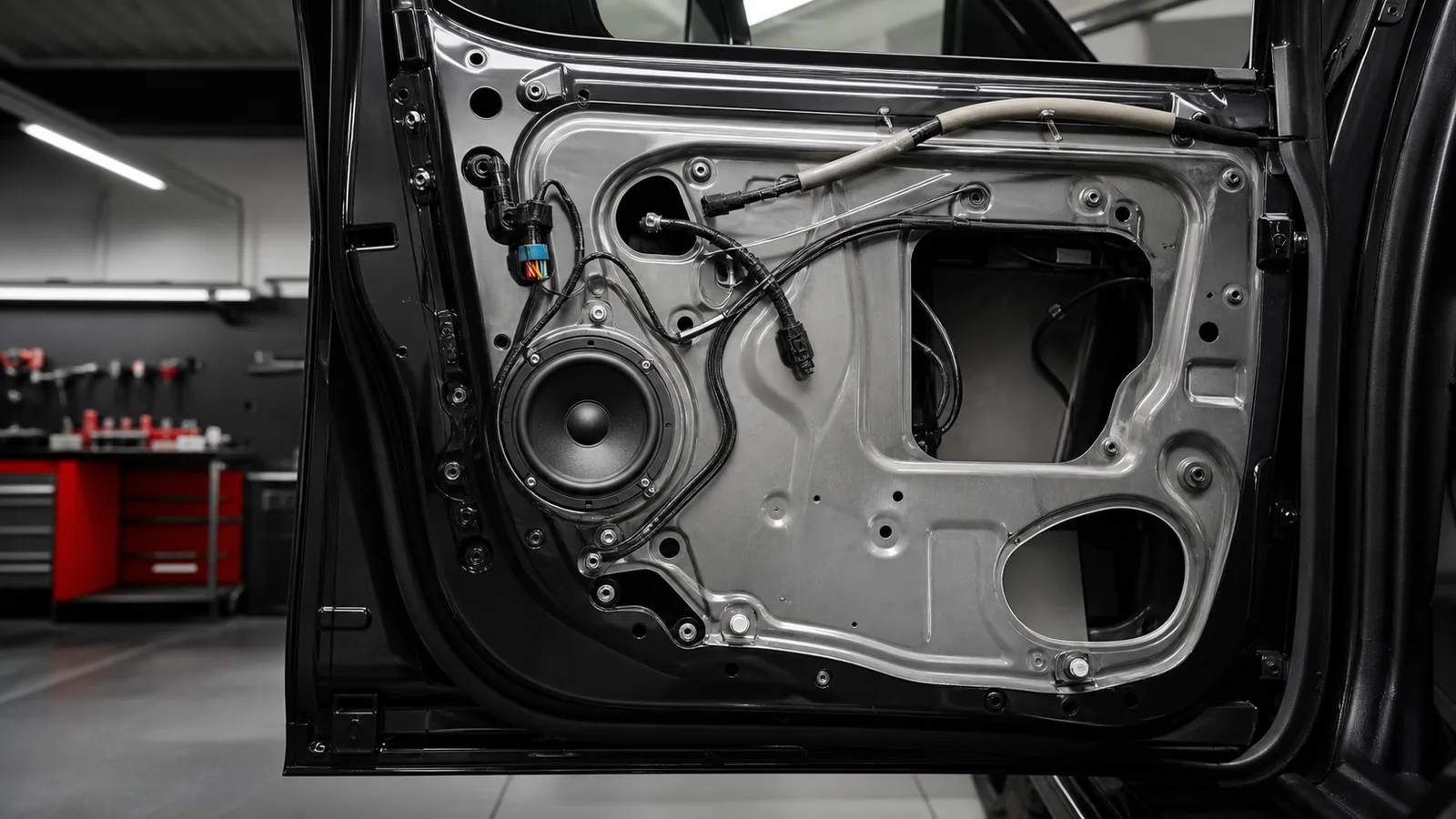
Untreated doors reduce speaker efficiency
A door speaker does not work in a perfect enclosure. It operates inside a large metal structure with service openings, flexible trim and parts that can vibrate. Some of the cone’s energy is therefore lost in sheet-metal movement and resonance instead of reaching the cabin.
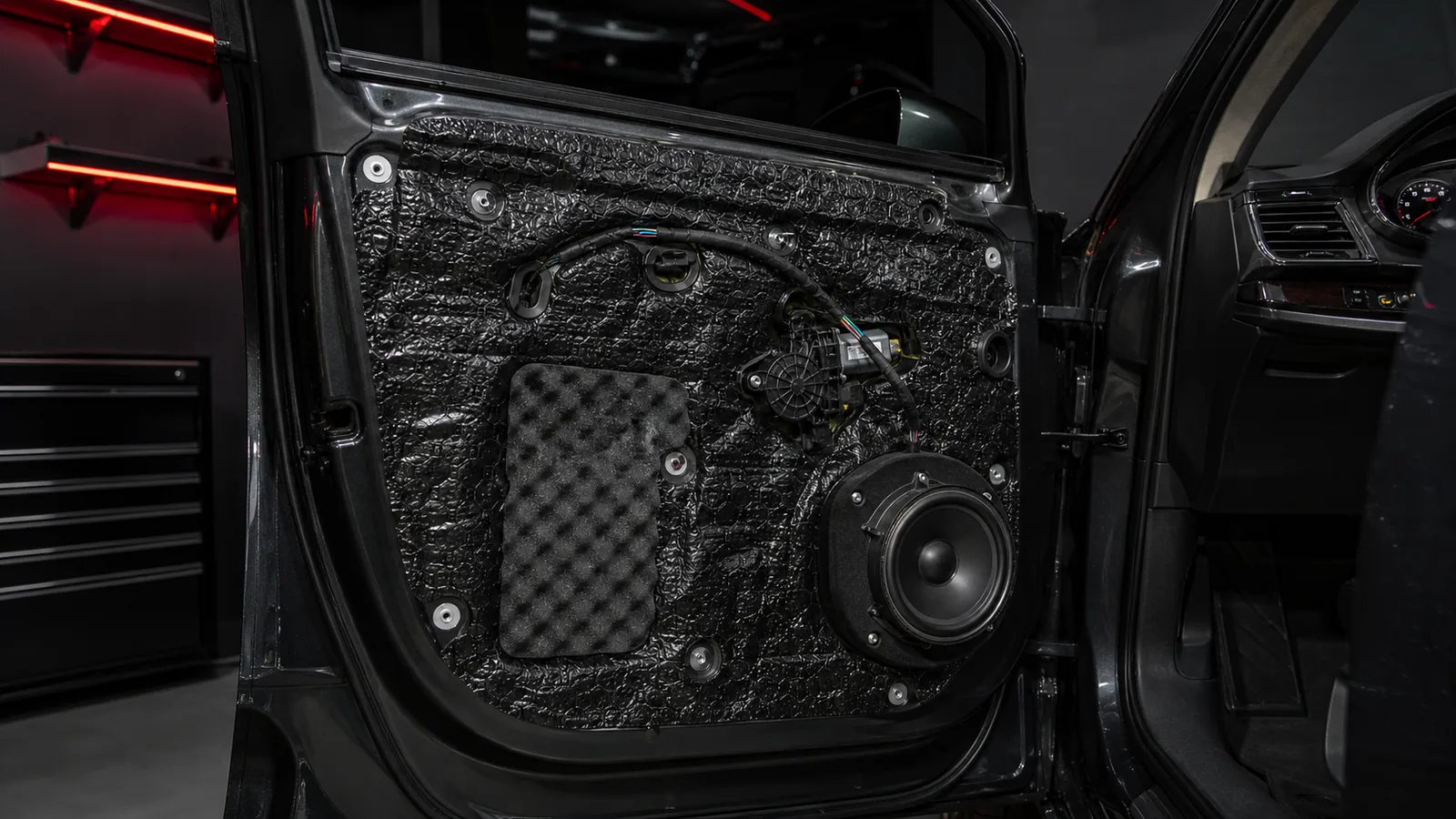
This weakness may be easy to overlook while parked. When tyre noise masks the same low-frequency region, it becomes obvious. Stiffening the door, controlling resonance, sealing the mounting area and using a rigid speaker adapter can restore efficiency and control without excessive equalisation.
Are the speakers, radio or amplifier to blame?
Randomly replacing parts is rarely the best first step. Several causes may overlap:
- the factory head unit may reduce bass as volume increases to protect the speakers;
- the amplifier may lack clean power and lose control on dynamic peaks;
- one speaker may have reversed polarity, cancelling part of the response;
- crossover filters may be set too high or leave a gap between drivers;
- the EQ may have been tuned only for quiet, parked listening.
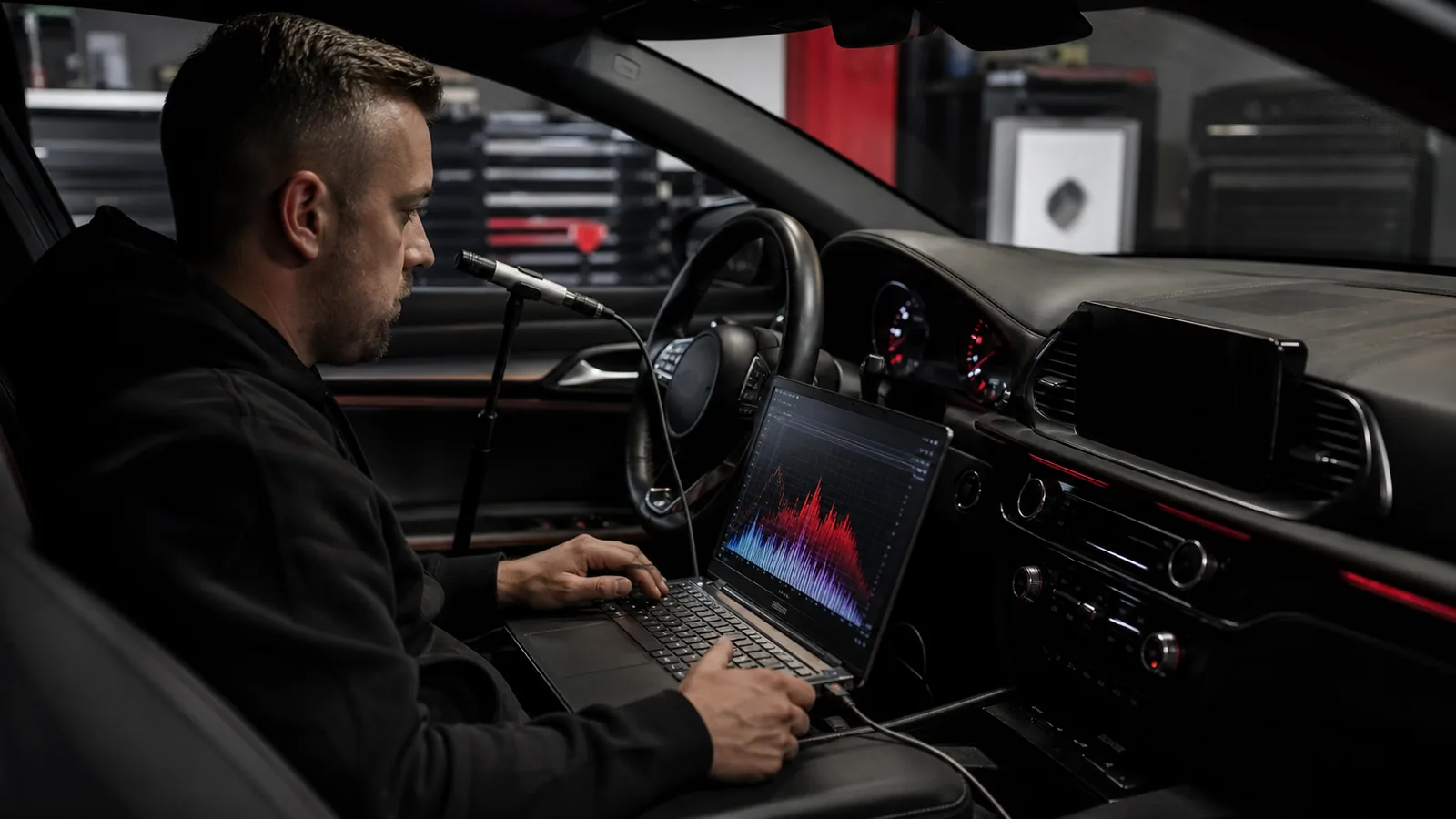
A proper diagnosis combines listening, installation checks and measurement. Only then can you decide whether the priority is mounting, sound treatment, amplification, a subwoofer or DSP tuning.
Why should DSP tuning account for real driving?
A DSP can control crossovers, time alignment, channel levels and equalisation. It should not be used to aggressively compensate for mechanical faults. EQ cannot truly repair a resonating door or an air leak around the speaker.
Good tuning preserves a natural balance while parked but also considers normal listening level and the noise character of the vehicle. A second motorway preset or modest subwoofer level adjustment can sometimes help. Adequate headroom matters: the music should remain intelligible without operating the system at its limit.
What can you check yourself?
- Compare the same track while parked and at the same volume during a safe drive.
- Note whether the problem grows mainly with speed or on a particular road surface.
- Check whether bass disappears everywhere or only at one seat.
- Disable loudness, speed-sensitive volume and accidental EQ presets, then compare again.
- Listen for trim buzzing or door vibration during strong bass notes.
These observations help diagnosis, but they do not replace measurement. Never adjust the system while driving; use a passenger or a safe closed test area.
How can full sound be restored on the road?
The most effective approach is to remove the cause instead of relying on more volume. Depending on the vehicle, the answer may be door and wheel-arch treatment, corrected speaker mounting, controlled low-frequency support, proper amplification or new tuning.
If you want a solution designed around the actual cabin, see how a professional in-car sound system upgrade is planned. Diagnosis of the existing installation and background noise should come before replacing every component.
The key takeaway
Sound that becomes weak while driving is usually the combined result of road-noise masking, energy lost in the doors and unsuitable tuning. When mounting, cabin acoustics and electronics work together, music remains full and clear on the road without constant, tiring volume increases.


