
You replaced the factory speakers with a more substantial component set, but the result seems backwards: the new car speakers sound quieter than the factory speakers. This does not automatically mean that the speakers are faulty or poorly chosen. The usual causes are differences in sensitivity, impedance, power requirements, factory signal processing, or installation.
This guide addresses one specific problem: why the volume drops after replacing factory speakers and how to decide whether the installation needs correction or an external amplifier.
The short answer: better speakers may require more power
Factory speakers are normally designed to produce useful volume from the limited power of an original head unit. Their light cones, small voice coils and modest motors can be efficient, even if they do not provide excellent bass control or low distortion.
An aftermarket speaker may use a heavier, stiffer cone, a larger voice coil and stronger suspension. These features improve control and power handling, but the driver may need more electrical power to reach the same sound pressure level.
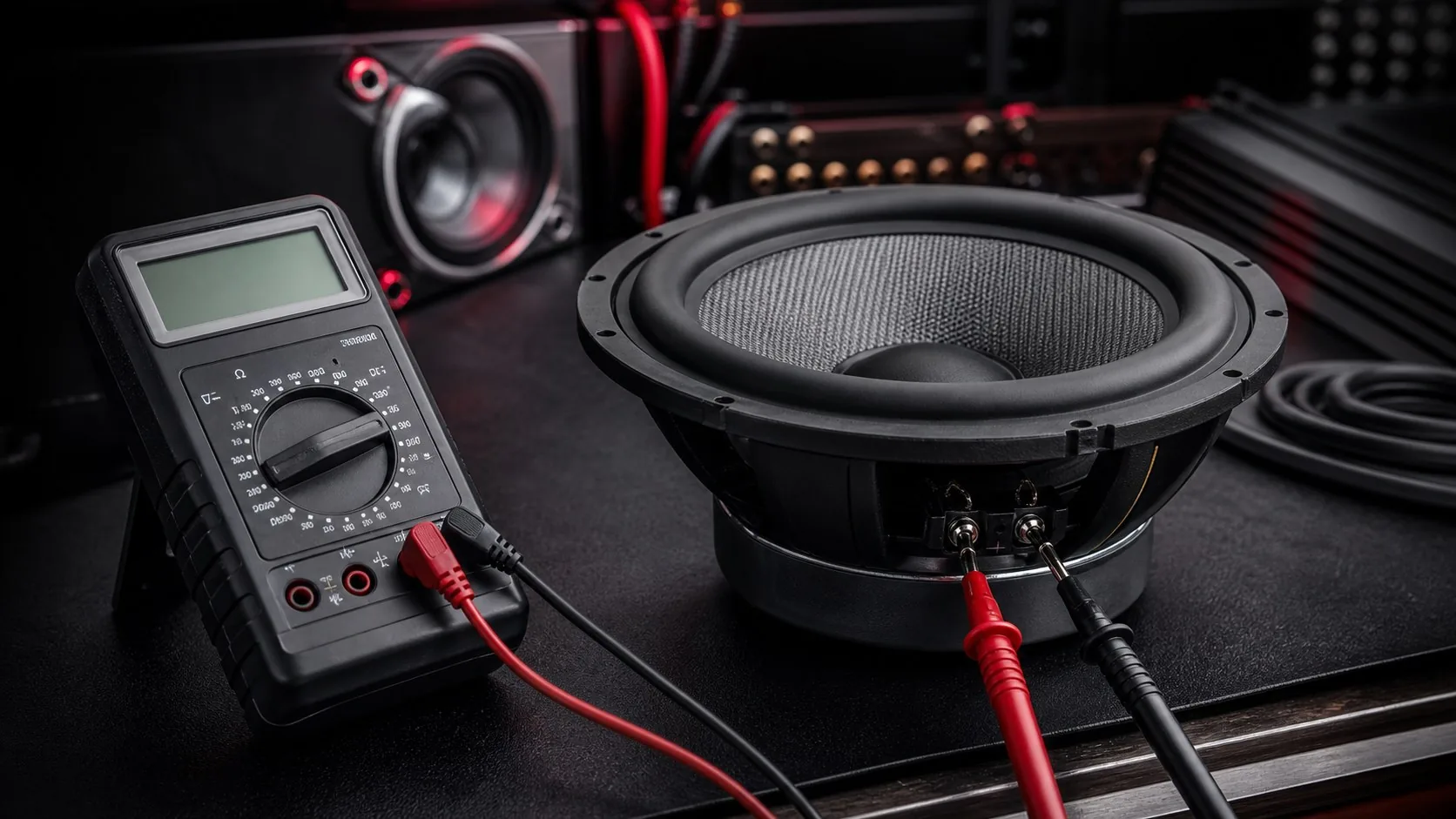
1. Speaker sensitivity matters more than the RMS rating
Sensitivity describes how loudly a speaker plays for a given input. A difference of only a few decibels is clearly audible. A 92 dB speaker can sound noticeably louder from the same radio than a model rated at 86–88 dB.
The RMS rating does not tell you how loud the speaker will be from a factory head unit. A rating of 100 watts RMS mainly describes safe power handling. If the radio supplies only a small fraction of that power, the driver will not reach its full potential.
2. The impedance may be different
Many factory systems use 2-ohm or 3-ohm speakers. Common aftermarket models are often rated at 4 ohms. When a higher-impedance speaker is connected, the original radio generally delivers less power, so the new speaker can play more quietly.
Do not choose a lower impedance without checking the radio or amplifier specifications. An excessive load can cause overheating, protection shutdowns, distortion or permanent damage.
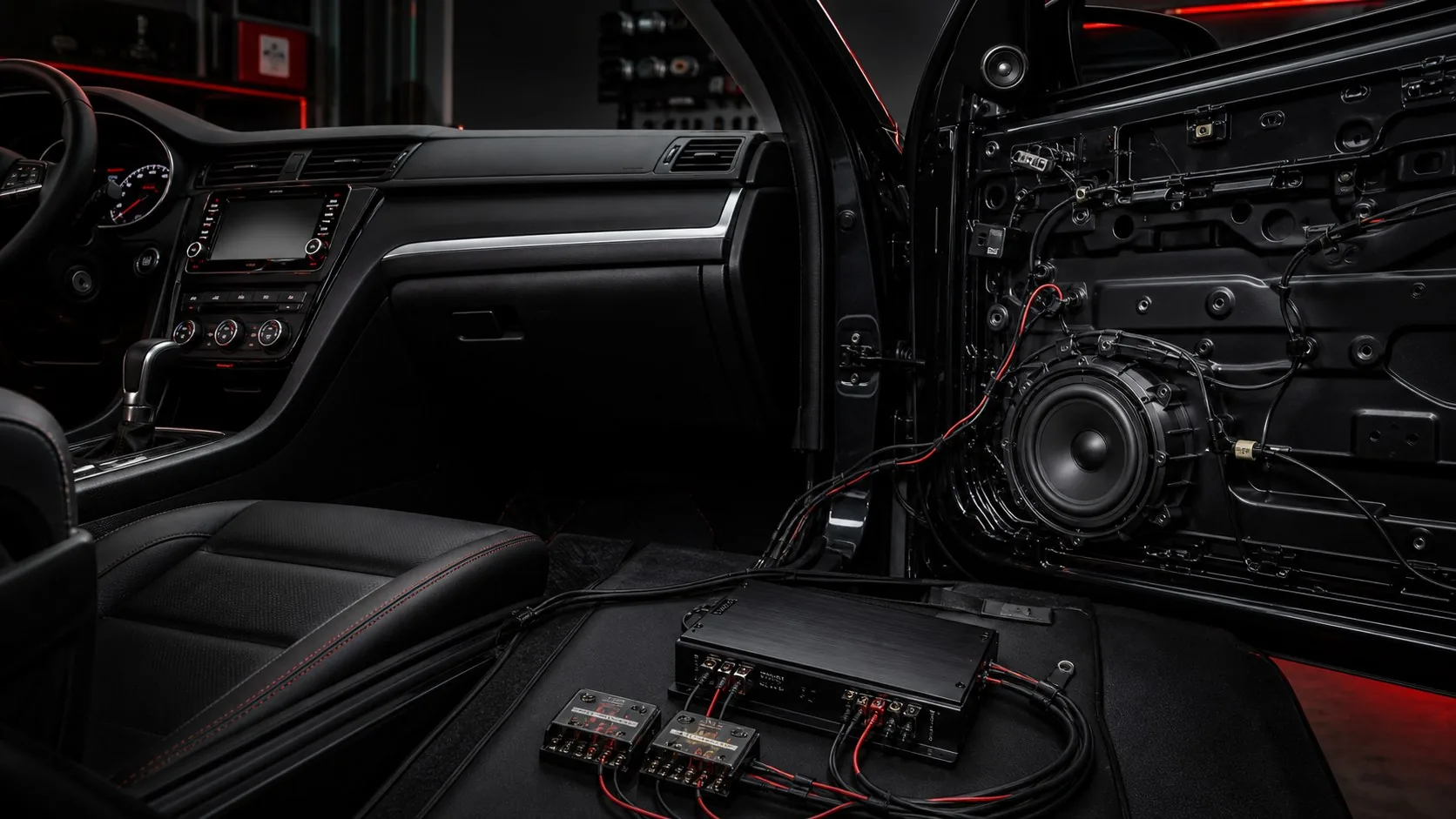
3. The factory head unit has limited output power
The large power number printed on a radio rarely represents continuous output across all channels. In practice, a factory head unit may provide only several usable watts per channel. That can be enough for a lightweight original speaker but insufficient for a demanding component set.
Low volume is not the only symptom. The system can sound flat, bass may lack control, and turning the volume higher can introduce compression and harsh distortion. A compact amplifier or amplifier with DSP can often be integrated without changing the original dashboard.
4. Factory equalization can work against the new speakers
Vehicle manufacturers tune the radio for the original drivers. The signal may include boosted frequency ranges, bass reduction at higher volume or unusual crossover settings. After replacing the speakers, the same correction may no longer be suitable.
In a complex factory system, proper diagnosis requires measuring the signal, correcting it and tuning the system again. Replacing the speakers alone cannot remove every limitation of the source.
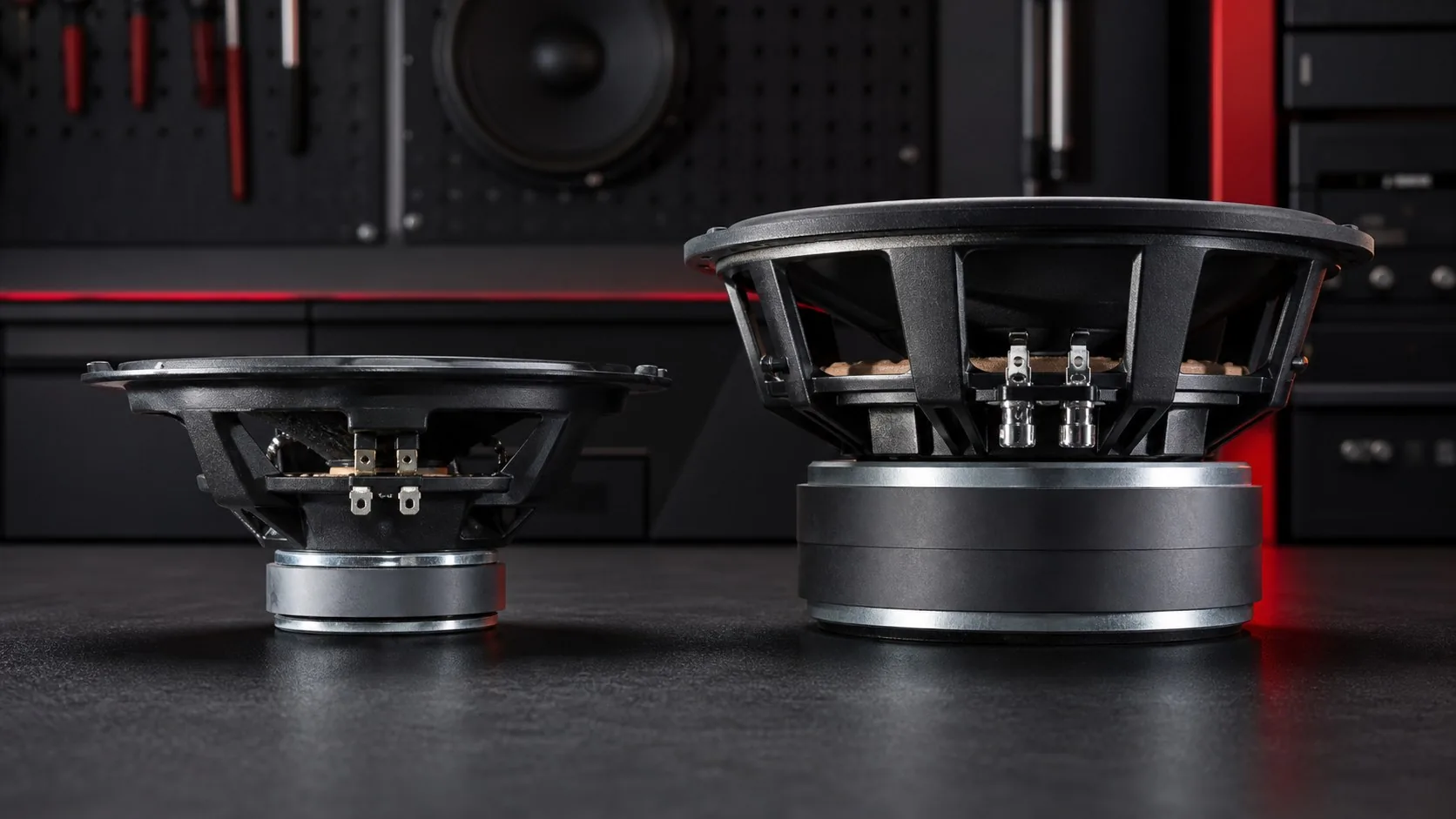
5. Door installation can waste acoustic output
A leaking adapter, missing gasket, flexible mounting surface or open service holes in the door can waste the speaker’s energy. Part of the output remains behind the trim panel, while sound from the front and rear of the cone can partially cancel.
A correct installation requires a rigid adapter, moisture protection, acoustic sealing and a clear path from the speaker to the factory grille. Even a high-quality driver can sound weak when these details are ignored.
How to identify the actual cause
- Compare impedance between the factory and replacement speakers.
- Check sensitivity, not only the RMS rating.
- Verify polarity on both channels.
- Inspect the adapter and seals around the speaker.
- Measure the factory signal at different volume settings.
- Test with a suitable amplifier before rejecting the speakers.
Is an external amplifier always necessary?
No. Efficient speakers with the correct impedance and a solid installation can work well from a factory head unit. An amplifier becomes advisable when the speakers need more power, greater dynamics are expected, or the factory signal requires DSP correction.
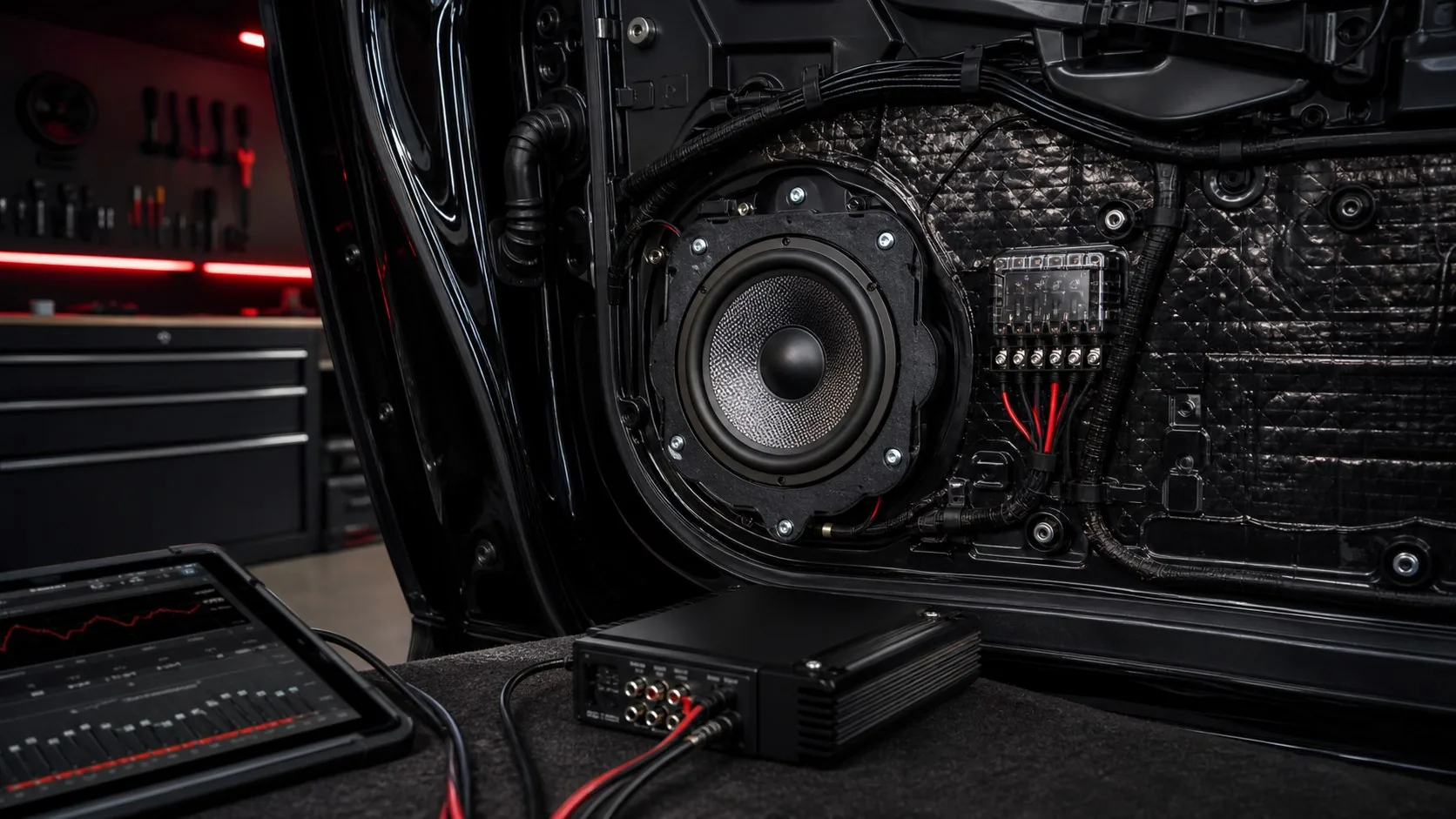
What should you do when new speakers are too quiet?
Do not start by maximizing the equalizer. Heavy EQ boost can drive the radio into clipping sooner. First check the speaker specifications, source signal, polarity and mechanical installation. Only then decide whether the system needs an amplifier, DSP or a different speaker set.
For a predictable result, see how a professionally designed in-car sound system is planned and installed. Sound Audio System checks the factory source, selects compatible components and tunes the complete installation after assembly.
Summary
New car speakers may sound quieter than factory speakers because they have lower sensitivity, higher impedance or greater power requirements. Factory radio limitations and acoustic losses in the door can make the difference larger. The RMS rating alone cannot predict the result. The source, speakers, mounting, amplification and tuning must work as one system.