Why Does Car Bass Boom Only on Certain Notes?
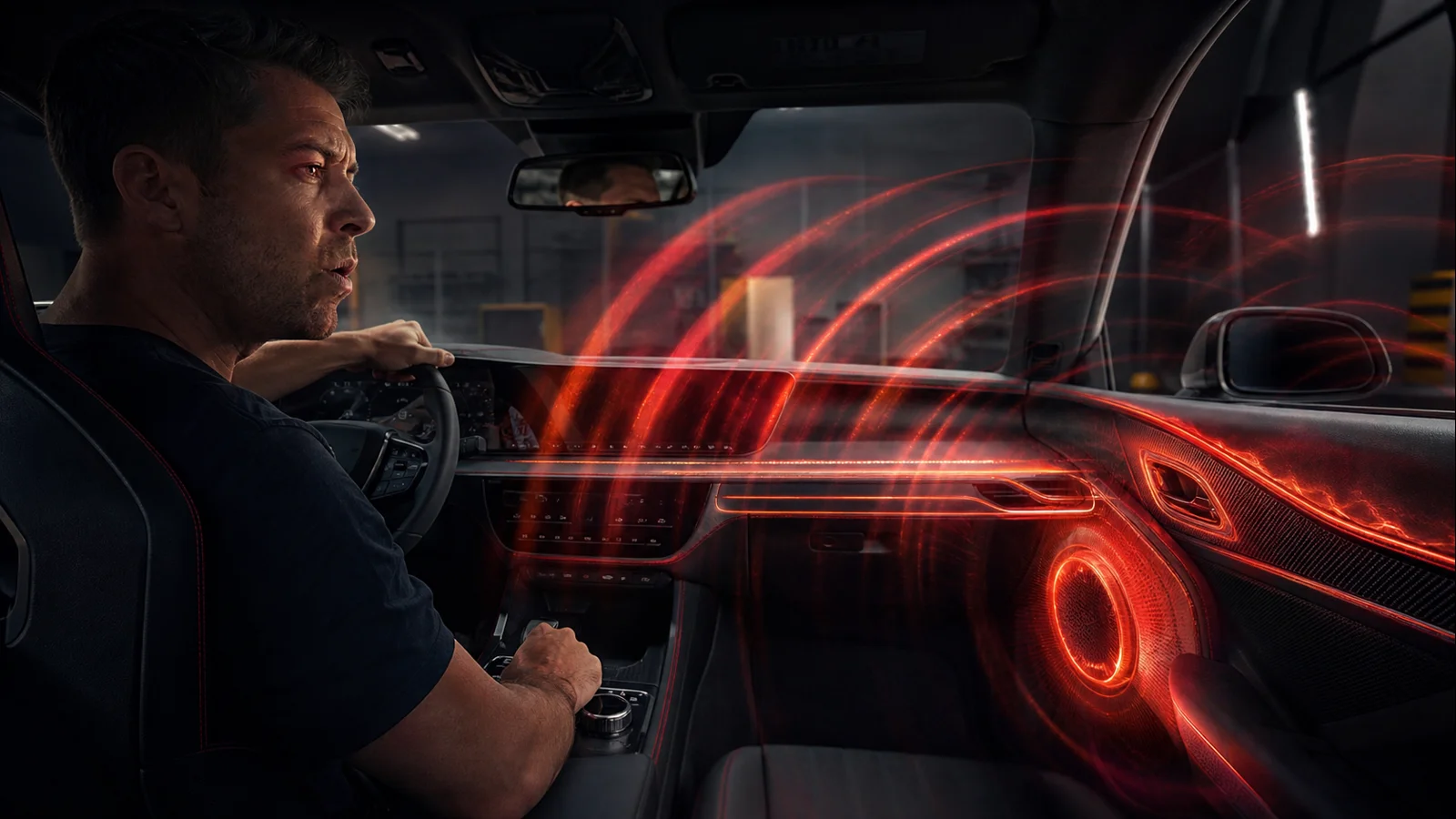
If most bass sounds correct but one note becomes unusually loud, long and tiring, the system is probably reinforcing a narrow frequency range. The usual cause is resonance in the cabin, enclosure or trim rather than excessive bass across the entire spectrum.
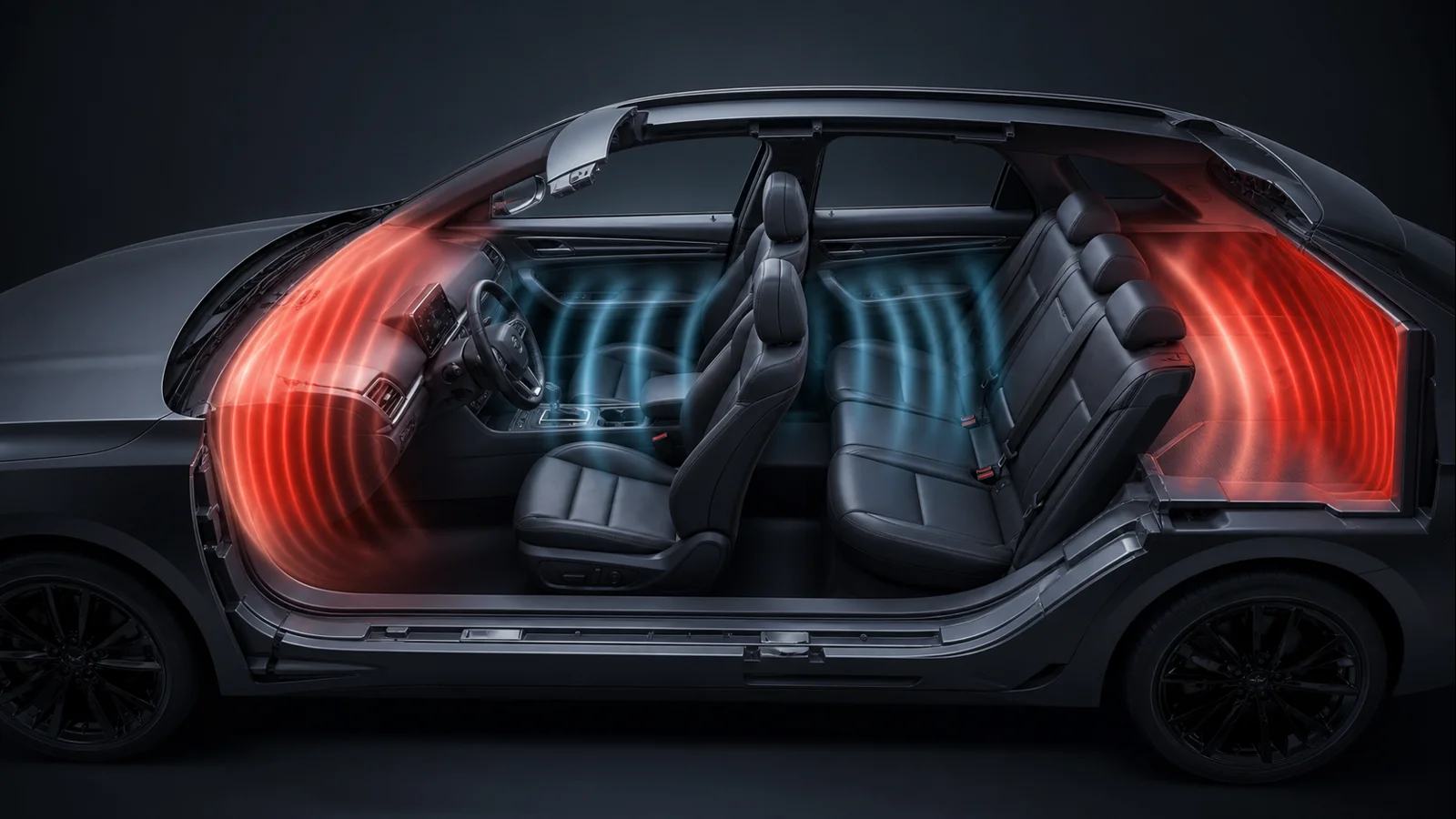
One frequency can excite the whole cabin
A car interior has acoustic modes. At particular wavelengths, reflections from glass, the floor and body panels combine strongly at the driver’s seat. This creates a peak, making certain notes much louder than neighbouring notes. Moving the seat or listening position may change the effect.
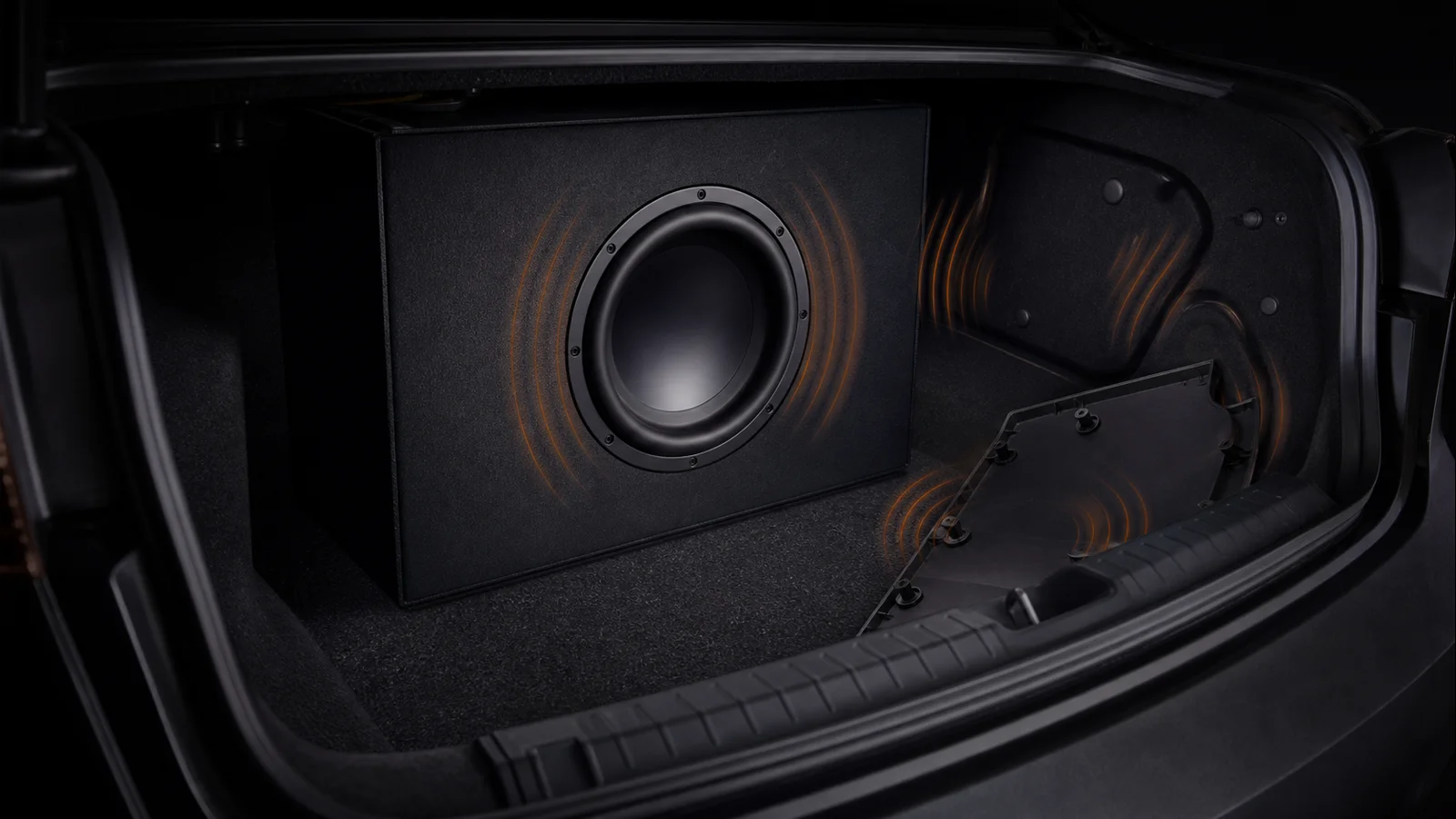
The subwoofer enclosure has its own response
A bass-reflex enclosure can strongly emphasise its port tuning region. When enclosure tuning, crossover settings and cabin gain overlap, one dominant tone appears. A sealed enclosure can also boom because of unsuitable volume, leakage or excessive equalisation.
Do not boost lower frequencies simply to compensate. First identify the exact peak and check whether distortion accompanies it.
Doors and trim can create the noise
Not every resonance comes from the subwoofer. Door trim, a parcel shelf, trunk cover or number plate may vibrate only at one frequency. The resulting buzz or prolonged tone can easily be mistaken for an acoustic tuning problem.
Use short music passages or a slow frequency sweep and gently hold suspected panels. If the sound changes, remove the play or isolate the contacting surfaces.
Crossovers and phase can create a hump
The subwoofer and door woofers must hand over smoothly. Excessive overlap, unsuitable filter slopes or incorrect delay may reinforce a narrow band. A 0/180-degree phase switch is not always enough because phase relationships change with frequency.

EQ comes after diagnosis
A narrow peak can be reduced with parametric EQ, but only after checking installation, filters and phase. Do not aggressively boost deep dips; they often result from cancellation, and extra power increases driver stress without improving response.
Correct diagnosis uses measurements at the driver’s seat, several nearby microphone positions and separate listening to the subwoofer and front stage. Professional installation and tuning of an in-car sound system removes dominant resonances while preserving musical energy.
Diagnostic order
- Disable loudness, bass boost and additional EQ.
- Identify the note or frequency that causes booming.
- Inspect loose door and trunk components.
- Listen to the subwoofer and front woofers separately.
- Verify filters, polarity and delay.
- Measure response before applying narrow EQ.
If bass clearly comes from the trunk, see why bass sounds as if it comes from the rear. If opening a door changes it dramatically, read why car bass disappears when a door opens.
Summary
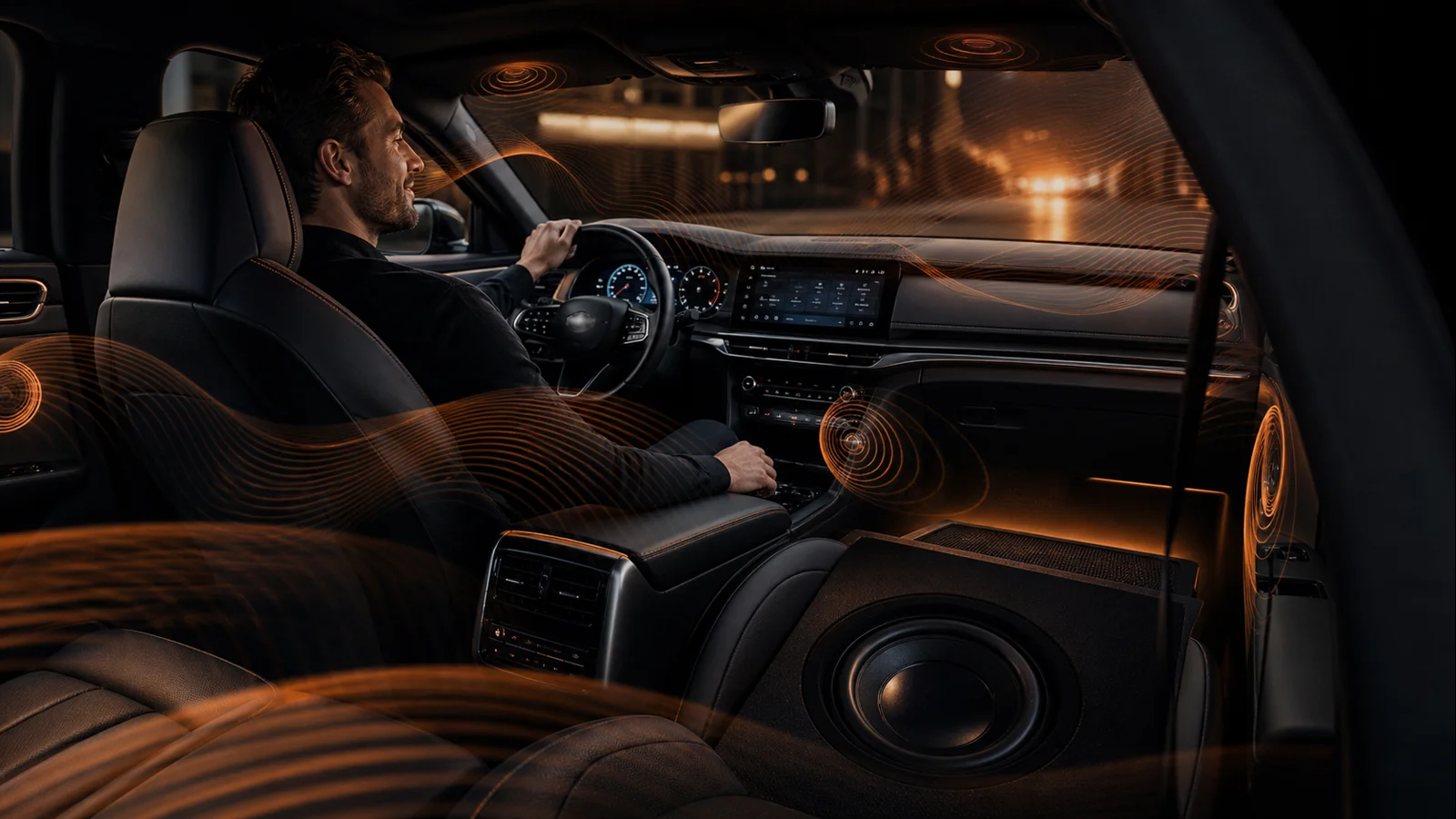
Booming on selected notes usually indicates resonance rather than an overly powerful subwoofer. The cabin, enclosure, trim or poor crossover integration may be responsible. Measuring and correcting the cause produces faster, more even bass without removing its impact.