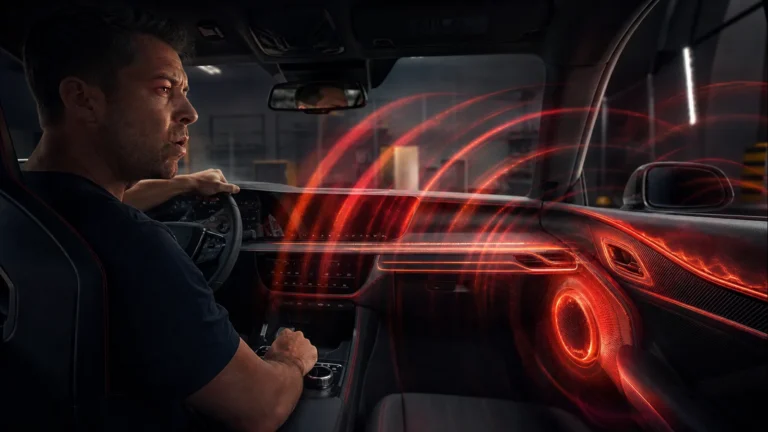
Why Does Car Bass Disappear When a Door Opens?
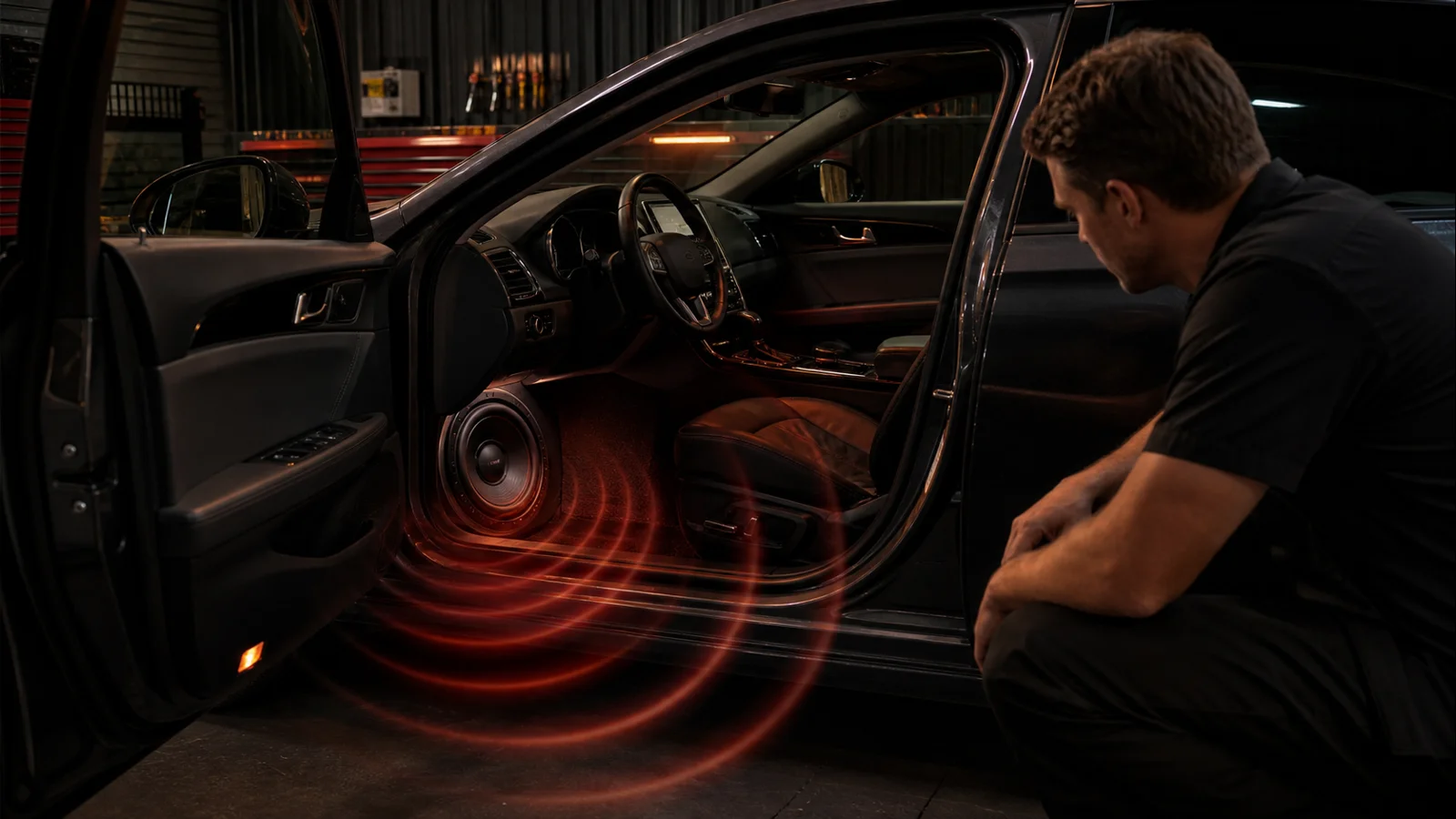
Bass may sound powerful with the doors closed and suddenly weaken when one opens. This common effect does not automatically mean the subwoofer is faulty. A car interior acts as a small acoustic chamber. Closed doors and windows help low frequencies build pressure; a large opening changes the system’s operating conditions immediately.
A closed cabin reinforces low frequencies
Bass wavelengths are much longer than the passenger compartment. In a sealed cabin, cabin gain can make the lowest frequencies noticeably stronger. Opening a door releases pressure and changes the acoustic response.
A moderate difference is normal. An extreme drop may show that the system depends heavily on one cabin resonance instead of producing balanced bass across a useful range.
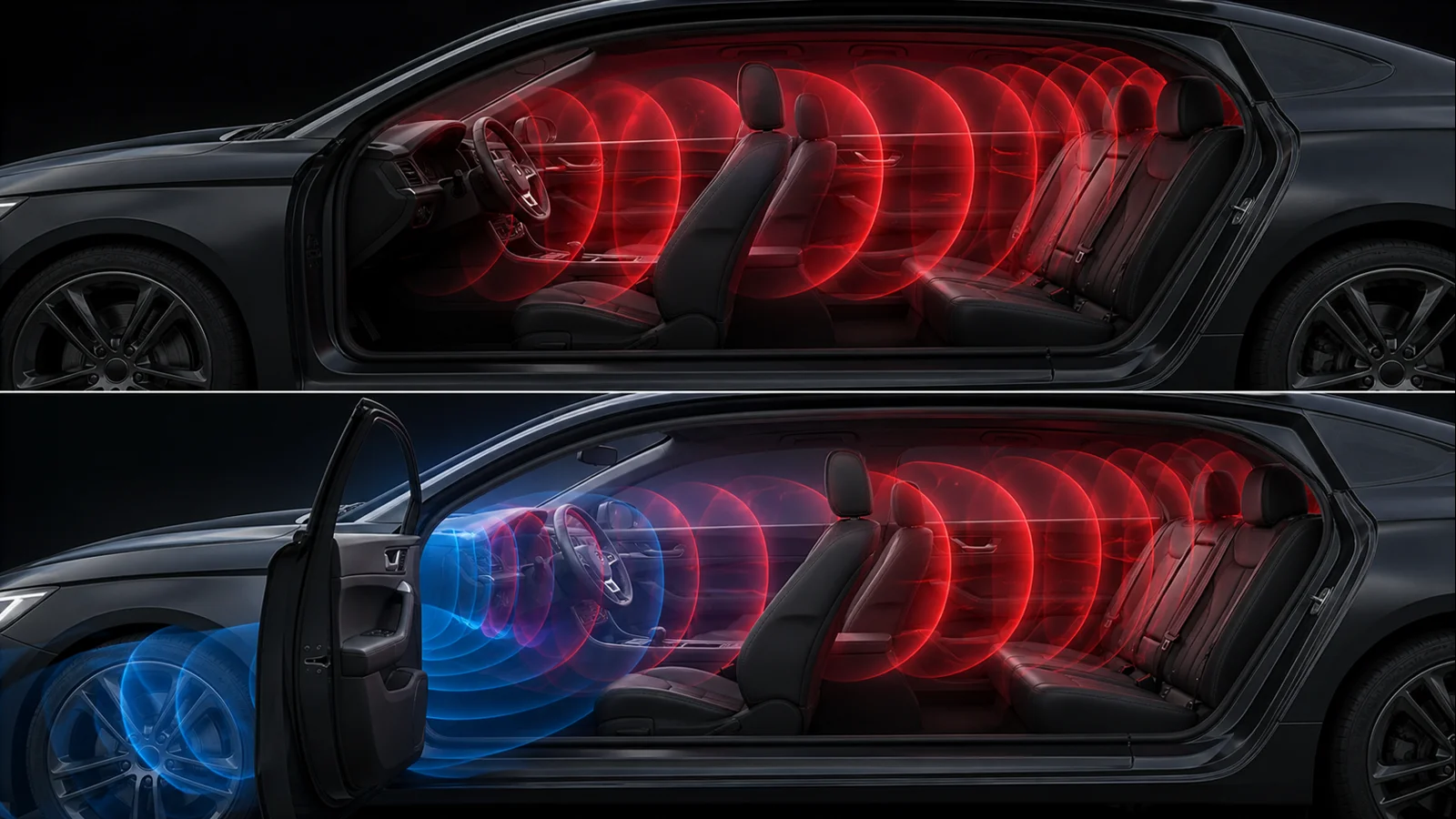
An open door changes wave summation
What reaches the listener combines direct sound with reflections from glass, seats, the floor and body panels. With a door open, some energy escapes while other energy returns with a different delay. At certain frequencies the waves can partially cancel, so one track loses deep rumble while another loses kick-drum impact.
Do not judge subwoofer phase only with the doors open. A system intended for driving should be measured and tuned under normal listening conditions, with doors and windows closed and the seat in its usual position.
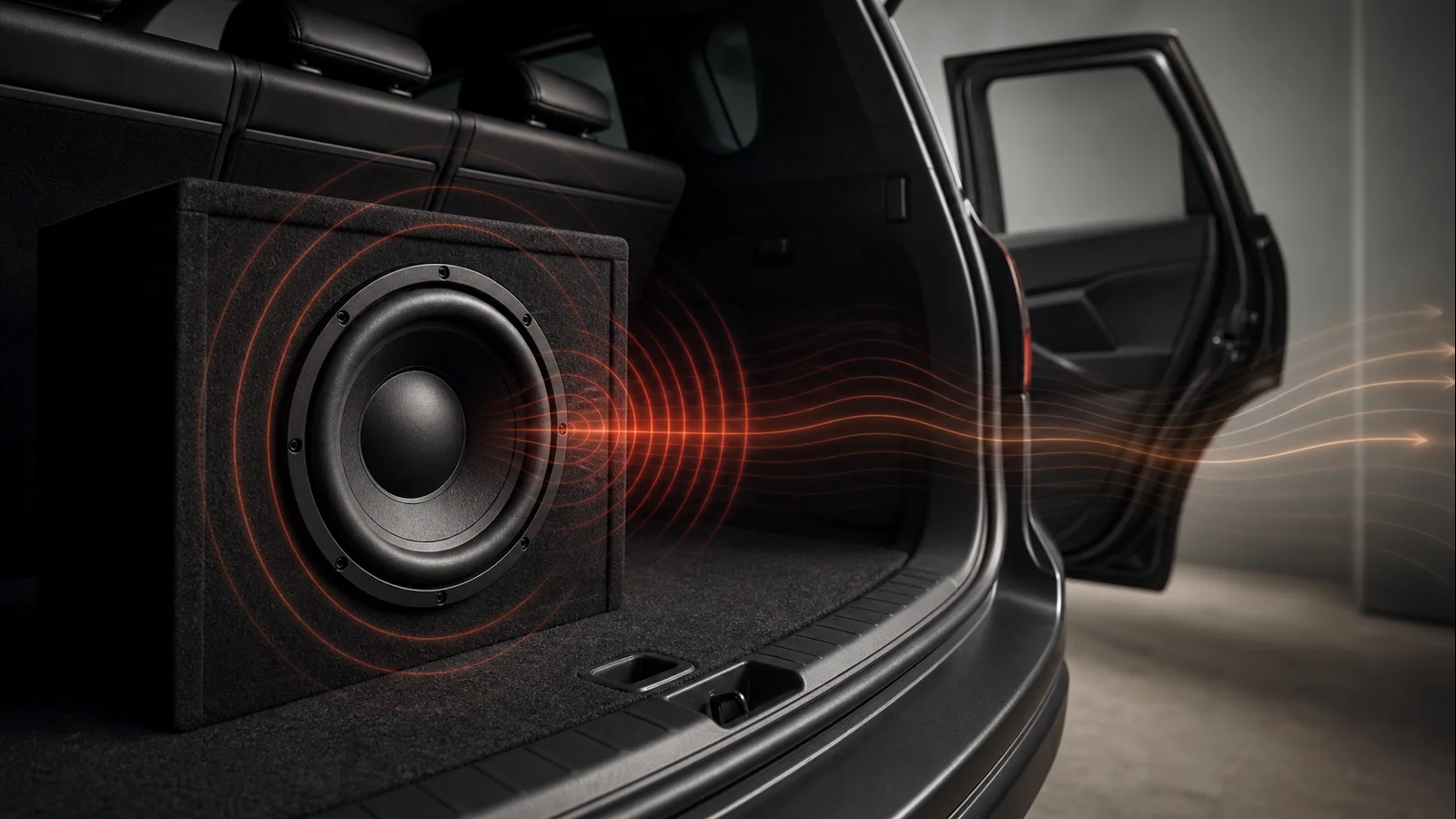
Subwoofer position and direction matter
A driver facing rearward, sideways or upward uses different boundary reflections. The distance between the enclosure, tailgate and trunk walls also affects response. Opening a door or tailgate changes those boundaries and can remove beneficial summation.
That does not mean the enclosure should immediately be rotated. Compare positions under identical conditions and verify that wiring, mounting and the enclosure are secure.
Check polarity and integration with the front speakers
Where the subwoofer and door woofers overlap, phase determines the strength of upper bass. Incorrect polarity, unsuitable delay or excessive overlap can create a deep cancellation. Opening a door changes the contribution from the door speakers and exposes the problem.
Listen to the subwoofer and front woofers separately. Review crossover frequencies and slopes. Switching between 0 and 180 degrees can assist diagnosis, but it cannot replace acoustic measurement.
Will door treatment help?
Stiffening and sealing the doors improves woofer operation and reduces resonance. It cannot prevent the loss of cabin gain when a door is fully open, but it can make front-bass response more controlled and less dependent on vibrating trim.
If bass is weak with the doors closed too, inspect speaker mounting, spacer seals and polarity. If low frequencies clearly come from the trunk, read why bass sounds as if it comes from the rear.
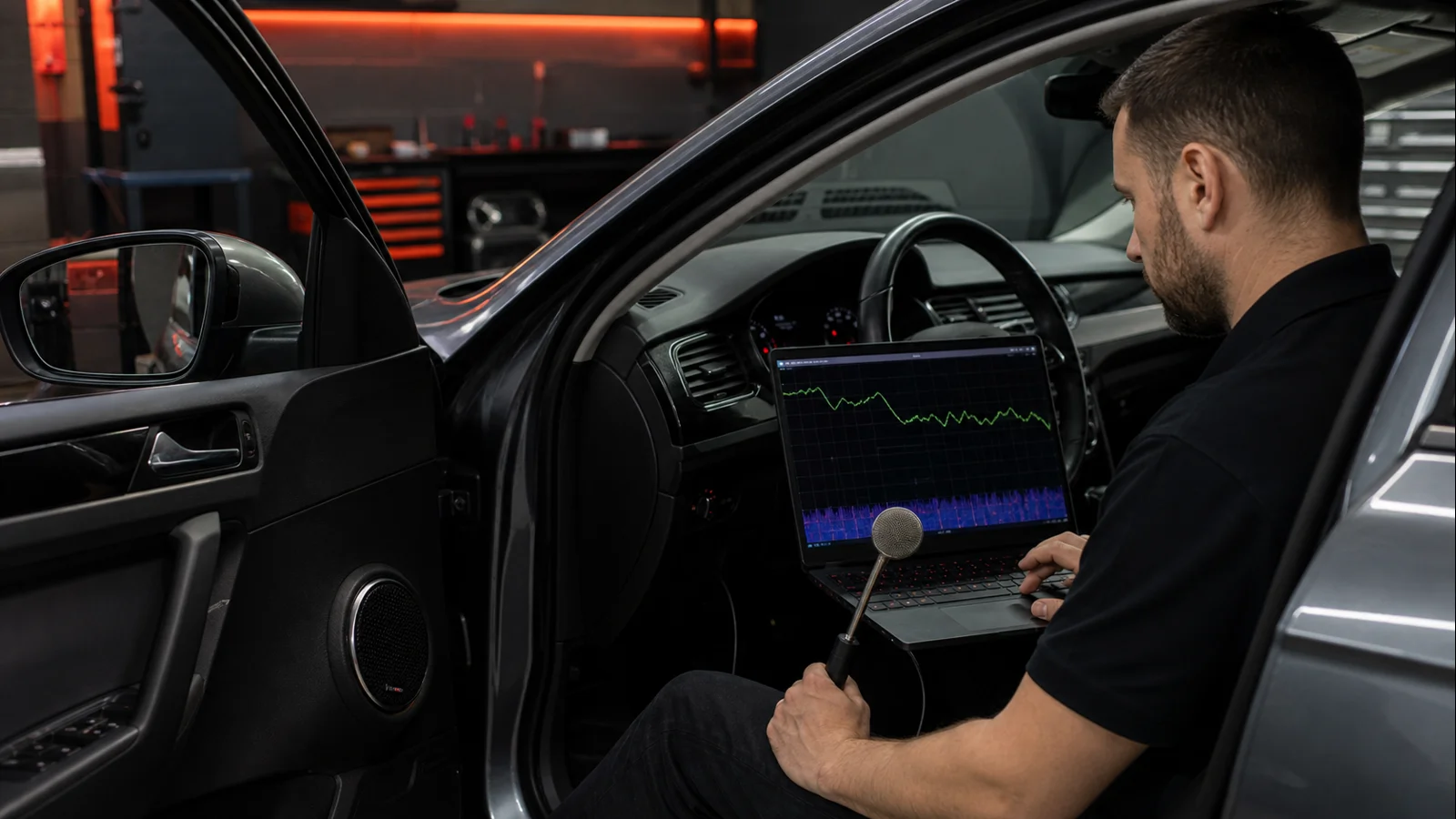
Diagnostic sequence
- Keep the head unit, EQ and subwoofer level unchanged.
- Compare the same passage with the doors closed and open.
- Listen to the subwoofer and front woofers separately.
- Verify polarity, filters and delays.
- Inspect enclosure mounting and subwoofer position.
- Measure response at the driver’s seat with the cabin closed.
Professional installation and tuning of an in-car sound system integrates the subwoofer with the front stage so bass remains even, fast and natural during normal driving. If the problem is strongest on the road, also see why car sound gets worse while driving.
Summary
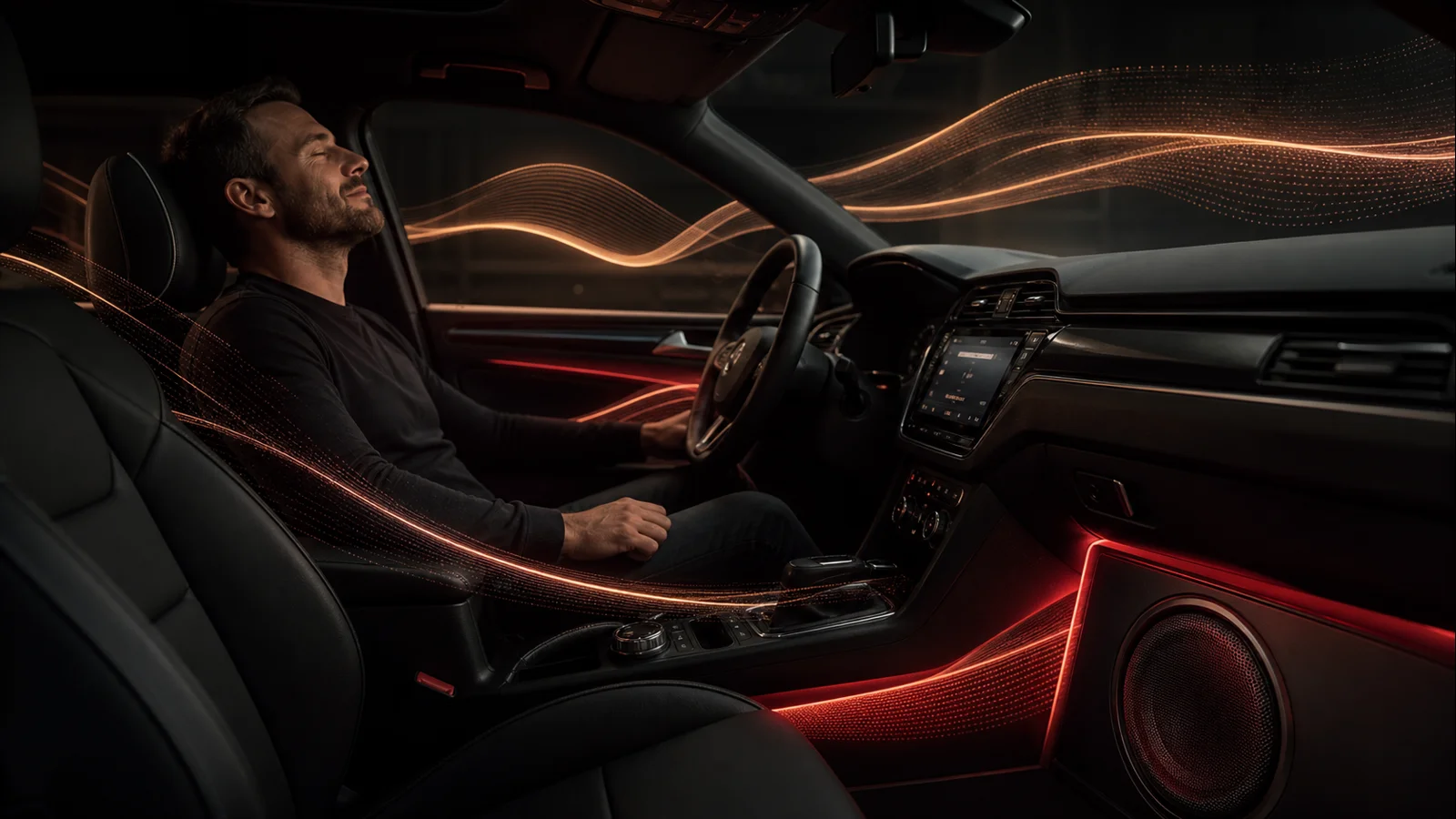
Bass loss after opening a door mainly results from reduced cabin pressure and changed wave summation. A small change is normal. A dramatic loss in a narrow range can reveal resonance, phase error or poor integration between the subwoofer and front speakers. Diagnosis and final tuning should be performed with the cabin closed.