There is no single soundproofing order that will work best for every vehicle. In one car, the main problem may be tyre noise entering through the wheel arches and floor. In another, the driver may hear noise through the doors, while a different vehicle may suffer from trunk booming or tailgate resonance.
Before starting any work, it is important to identify which type of noise is the most disturbing and where it enters the passenger compartment. Only then can you decide what to soundproof first and how to use the available budget effectively.
When the source of the unwanted sound is unclear, begin with our guide explaining where car noise comes from. This article focuses on choosing the first area to treat.
What should you soundproof first in a car? Quick answer
The best starting point depends on the dominant problem:
| Main problem | Area to soundproof first | Main purpose |
|---|---|---|
| Noise entering from the sides | Doors | Reduce resonance and improve loudspeaker performance |
| Loud tyre roar | Wheel arches | Reduce tyre, road and impact noise |
| Constant noise underneath the cabin | Floor | Control road noise and underbody vibration |
| Booming from the rear of the vehicle | Trunk and tailgate | Reduce rear wheel noise and body resonance |
| Wind and rain noise above the occupants | Roof | Control resonance of the large roof panel |



1. Door soundproofing – a strong starting point for comfort and car audio
Doors are frequently selected as the first stage of car soundproofing. They have large, relatively thin metal panels and multiple service openings. The door skin and trim can resonate because of loudspeaker movement, road vibration and body movement.
Start with the doors when:
- noise clearly enters from the sides of the vehicle,
- the doors produce a thin or metallic sound when closed,
- the door cards vibrate when bass is played,
- the factory loudspeakers lack control and midbass response,
- a car audio upgrade is being planned.
Correct damping stabilises the inner and outer door skins, limits resonance and creates better operating conditions for the midbass loudspeaker. Bass can become tighter, while voices and instruments may be easier to hear.
Door treatment will not, however, solve loud tyre roar entering through the wheel arches and floor. It is the right first step when the main goal is improving audio performance or reducing noise from the sides of the cabin.
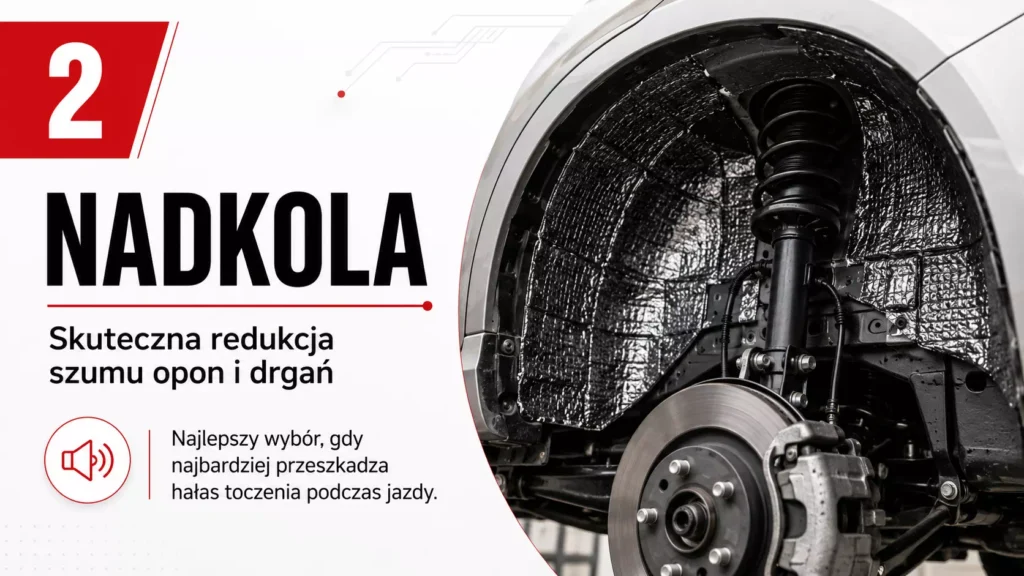
2. Wheel arch soundproofing – when tyre noise is the main problem
If the noise changes noticeably with road surface, vehicle speed or tyre type, the wheel arches should usually be treated first. Tyre roar, water impacts, gravel and small stones all generate noise in this area.
Rear wheel arches can be particularly loud because they are often separated from the cabin by relatively thin sheet metal and limited factory insulation. In hatchbacks, estates and SUVs, the luggage area is directly connected with the passenger compartment, allowing this noise to travel forward.
Professional wheel arch soundproofing may involve treatment from inside the vehicle, from the exterior arch area or a combination of both methods. The correct approach depends on the vehicle design.
Start with the wheel arches when:
- tyre roar is the dominant problem,
- noise becomes louder on rough asphalt,
- water and stone impacts are clearly audible,
- the sound comes directly from the wheel area,
- the vehicle is mainly uncomfortable on longer journeys.
3. Floor soundproofing – extensive work with wide-ranging results
The floor is connected with the sills, transmission tunnel, seat mounts and areas close to the suspension and exhaust system. It transmits road noise, underbody vibration and part of the sound produced by the engine and drivetrain.
Floor soundproofing can provide a broad improvement, but it normally requires the removal of seats, the rear bench, sill trims, sections of the centre console and the original carpet. It is therefore a more extensive stage than treating only the doors or wheel arches.
The floor may be the best starting point when:
- noise is distributed underneath the entire passenger compartment,
- a low-frequency rumble is present while driving,
- the vehicle remains loud on most types of road surface,
- exhaust noise enters the cabin,
- comprehensive soundproofing is planned.
With a limited budget, it may be better to treat the most problematic local area first and complete the floor at a later stage. For a comprehensive vehicle damping project, however, floor treatment is one of the most important elements.
4. Trunk and tailgate soundproofing – important in estates, SUVs and hatchbacks
The luggage compartment can behave like a large resonating chamber. It contains rear wheel arches, a wide floor panel, side cavities, the tailgate and numerous plastic trim components. These areas can amplify booming, tyre roar and body vibration.
Trunk soundproofing is particularly important in vehicles where the luggage area is not separated from the passenger compartment by a rigid partition. This includes estates, SUVs, crossovers, vans and hatchbacks.
Start with the trunk and tailgate when:
- the noise clearly comes from the rear of the vehicle,
- rear wheel arch booming is noticeable,
- the tailgate or its trim vibrates,
- a subwoofer is installed in the trunk,
- the noise becomes stronger after folding the rear seats.
Depending on the vehicle, treatment can include the trunk floor, spare wheel well, side panels, rear wheel arches, tailgate and plastic trim.
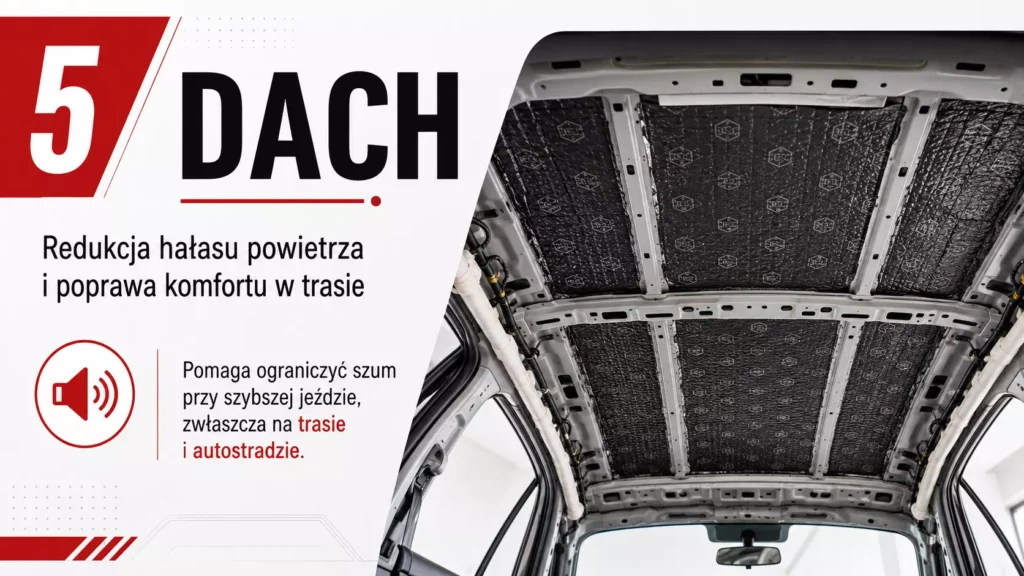
5. Roof soundproofing – for wind, rain and sheet metal resonance
The roof is a large and relatively flat body panel. When only limited factory insulation is installed, the metal can resonate because of airflow, wind or rainfall.
Roof damping can reduce the sound of rain hitting the metal, part of the wind noise and vibrations heard above the occupants. It may also improve the thermal insulation of the cabin.
Start with the roof when:
- rain noise is the most disturbing problem,
- wind noise clearly enters from the upper part of the cabin,
- the roof produces a thin, hollow sound,
- the vehicle has a large roof surface,
- a van or large SUV is being comprehensively treated.
The roof will not usually be the best first choice when tyre roar is the main issue. Wheel arches, the floor and luggage compartment will normally have a greater influence on that type of noise.
What about the firewall and transmission tunnel?
When engine, transmission or exhaust noise dominates, treatment may need to include the front section of the floor, transmission tunnel and accessible sections of the firewall separating the engine bay from the passenger compartment.
This can be a complicated stage because access to the complete firewall may require extensive dismantling. Mechanical faults such as worn engine mounts, loose heat shields or an exhaust leak should always be ruled out before acoustic treatment begins.
Is it better to soundproof one area properly or several areas partially?
Completing one logical area correctly will normally provide a better result than applying small and unrelated pieces of material throughout the vehicle. Effective car soundproofing requires consistent coverage, correct surface preparation and materials selected for the specific task.
For example:
- complete front door treatment will usually help the audio system more than small damping patches on all four doors,
- proper treatment of the rear wheel arches and trunk sides may outperform random pieces placed across the floor,
- a vibration-damping layer without an appropriate absorbing or insulating layer may not effectively reduce airborne noise.
Example soundproofing order for a limited budget
Option 1: improved comfort and car audio performance
- Front doors.
- Rear doors.
- Trunk and tailgate.
- Wheel arches.
- Floor and roof.
Option 2: reducing tyre noise on longer journeys
- Front and rear wheel arches.
- Trunk and rear seat area.
- Cabin floor.
- Doors.
- Roof.
Option 3: comprehensive car soundproofing
- Floor, transmission tunnel and internal wheel arches.
- Trunk and tailgate.
- Front and rear doors.
- Roof.
- Remaining resonance points and interior trim.
These orders are examples. The final sequence can change depending on the construction of the vehicle and the dominant sound path.
How can you identify the best area to treat first?
During a short test drive, pay attention to how the noise changes:
- The sound changes with the road surface: tyres, wheel arches and the floor are probably responsible.
- Noise increases with road speed but not engine speed: tyres or airflow may be dominant.
- The sound changes with engine revolutions: inspect the drivetrain, firewall and exhaust.
- Vibration appears while music is playing: the doors, trim or luggage compartment may be resonating.
- Booming comes mainly from the rear: focus on the trunk and rear wheel arches.
Which materials are used for car soundproofing?
Professional vehicle soundproofing does not use one universal mat for every area. Different materials perform different functions:
- vibration-damping mats control sheet metal resonance,
- sound-absorbing foams reduce reflections inside cavities,
- noise barrier materials limit sound passing into the cabin,
- anti-rattle tapes and foams separate interior trim components.
Materials must be resistant to temperature and moisture and must fit within the available space. Excessive thickness can prevent trim panels from being installed correctly, while poor surface preparation may cause the materials to detach.
Partial or comprehensive soundproofing?
Partial treatment is a good solution when the problem comes from one specific area or when the available budget is limited. Comprehensive treatment covers a larger part of the body and can reduce several different noise sources at the same time.
Professional car soundproofing and vehicle damping may include the doors, floor, wheel arches, trunk, tailgate, roof and additional resonance points. The scope should always match the vehicle and the owner's expectations.
Common mistakes when choosing the first area
- Treating the doors when the main noise enters through the wheel arches.
- Applying random damping patches without diagnosing the problem.
- Using one material for every type of noise.
- Blocking drainage holes or service access points.
- Adding layers that are too thick for the original trim.
- Trying to hide a mechanical fault with acoustic materials.
What should you soundproof first? Summary
Start with the doors when the priority is better audio performance and less noise from the sides. When tyre roar is the main problem, begin with the wheel arches. The floor is a good option for widely distributed road noise, while the trunk should be prioritised when booming comes mainly from the rear.
The roof is most useful for rain noise, wind noise and resonance above the occupants. The best result, however, comes from choosing the treatment scope according to the actual source of noise and the construction of the vehicle.
Soundproofing also creates better acoustic conditions for the loudspeakers. More information about combining damping with a sound system upgrade is available in our professional car audio guide.
Choose the areas you would like to treat and estimate the scope of work using our car soundproofing quotation configurator.
Frequently asked questions
Is it worth starting with the doors?
Yes, especially when the goal is improving loudspeaker performance, reducing door card resonance and limiting noise from the sides. Door treatment will not remove tyre noise transmitted through the floor and wheel arches.
Which gives a greater improvement: doors or wheel arches?
Doors normally provide a greater improvement in audio performance, while wheel arches are more effective against tyre and road noise. The correct choice depends on the dominant problem.
Is floor treatment enough to soundproof the whole car?
Floor treatment can reduce a significant amount of road noise, but it will not eliminate every sound entering through the doors, roof, wheel arches and luggage compartment.
Will roof soundproofing reduce motorway noise?
It can reduce some airflow noise and roof panel resonance. When tyre roar dominates, the wheel arches, floor and trunk will normally be more important.
Can a car be soundproofed in stages?
Yes. The project can be divided into several stages, beginning with the area responsible for the most disturbing noise. Each stage should be completed properly and planned with future treatment in mind.