Why Do High Frequencies Sound Harsh and Fatiguing in a Car?
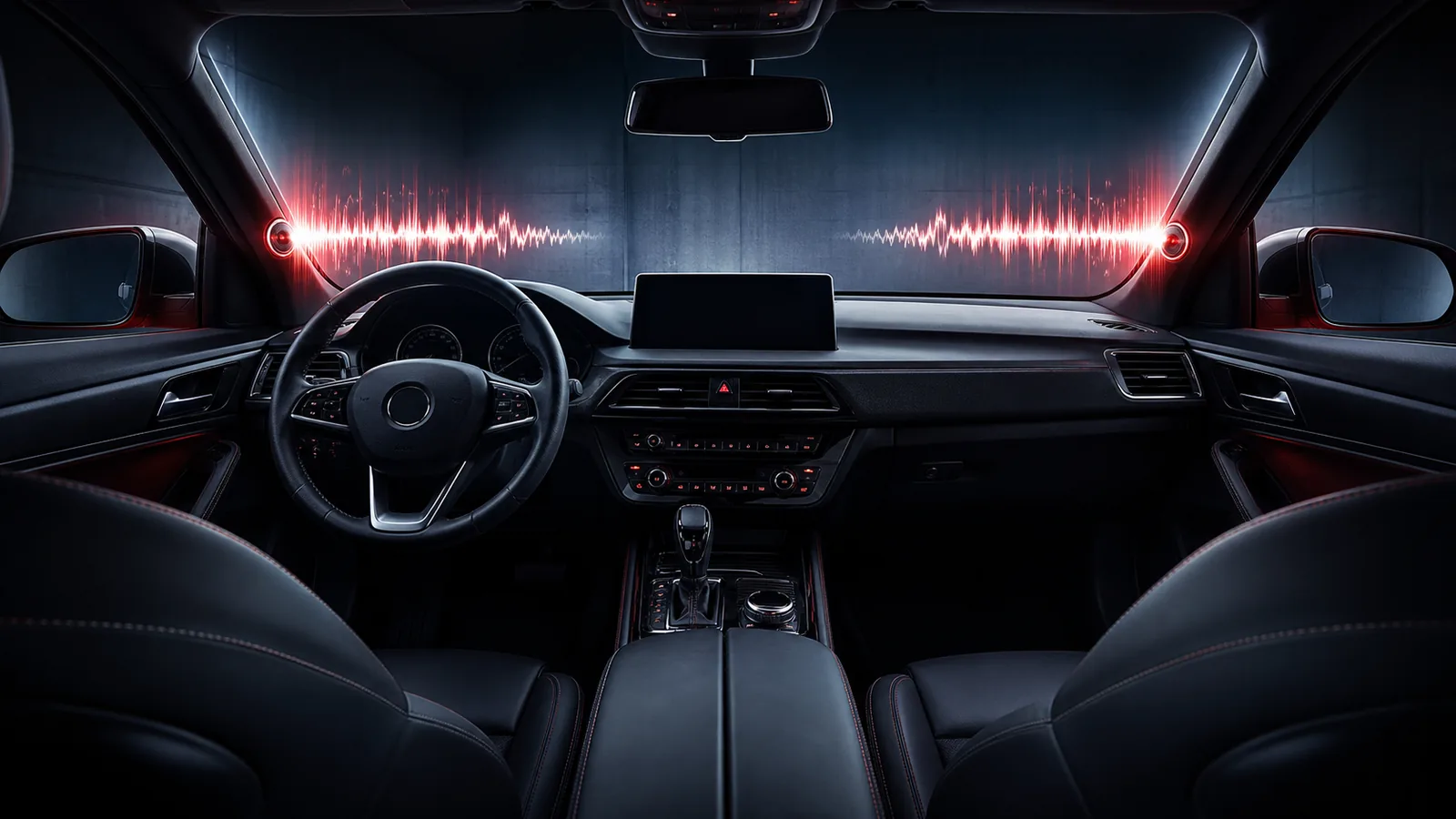
Exaggerated sibilance, metallic cymbals and piercing sound at higher volume can make music tiring within minutes. If a system seems detailed but leaves you fatigued after a drive, excessive treble may be the reason. This does not automatically mean the speakers are defective. Tweeter direction, reflections from glass, an incorrect crossover and aggressive equalisation are more common causes.
High frequencies behave differently inside a car than in a home listening room. The driver sits close to one speaker, the cabin is asymmetrical, and glass and hard plastics create strong reflections. Replacing the tweeters with more expensive units without considering these factors can make the result worse.
Check the source and playback settings first
Before adjusting the processor or removing the A-pillars, play several familiar recordings from different sources. Heavy compression, a low-quality stream or aggressive mastering can emphasise sibilance even when the installation is correct. Disable the phone EQ, detail enhancement, virtual surround and any sound-enhancement options in the music app.
If harshness appears only in one recording or over one Bluetooth connection, the cause may be upstream of the sound system. If it occurs across many recordings and every source, the installation and tuning need to be checked.
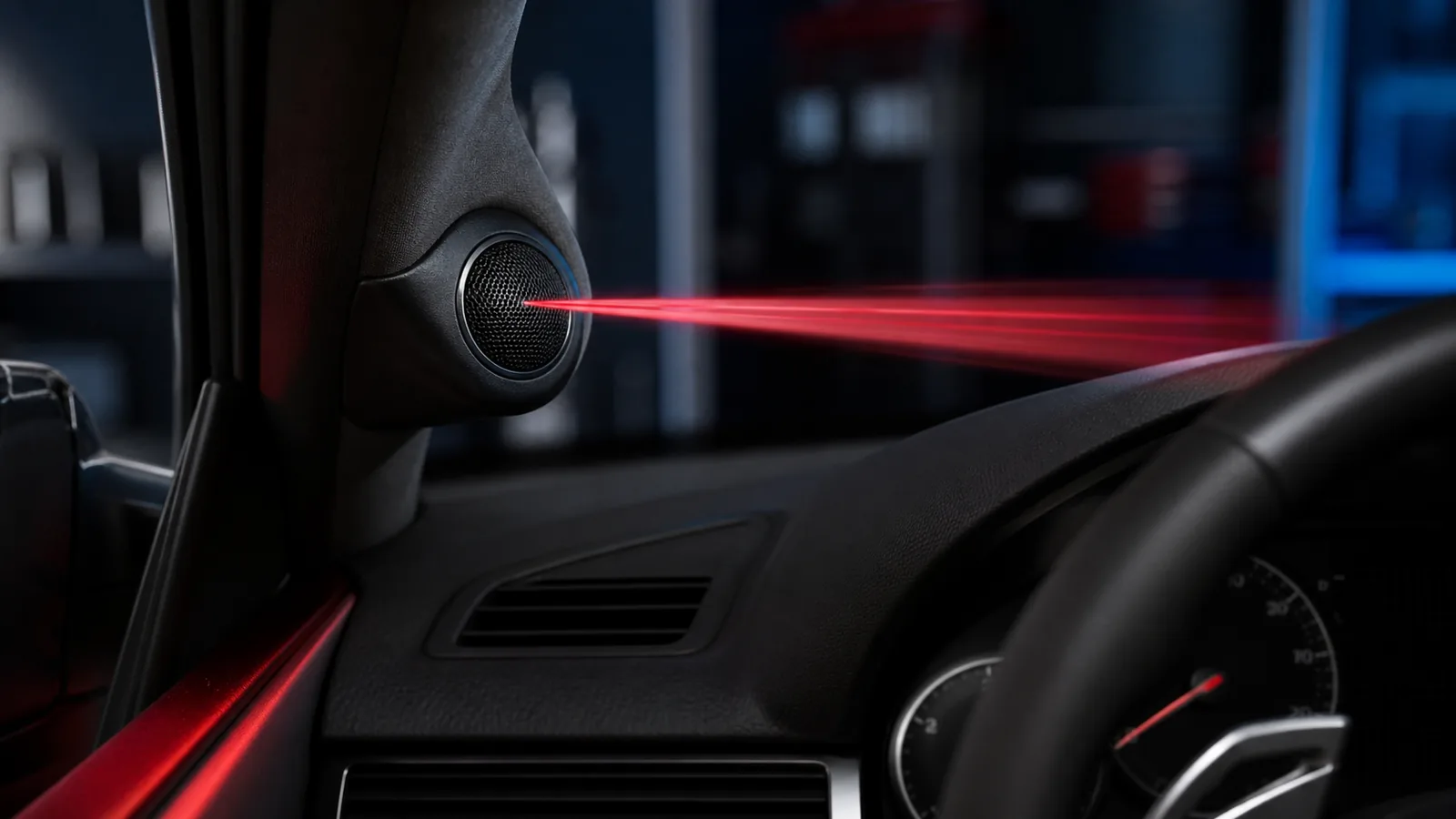
A tweeter aimed directly at your ears can sound aggressive
A tweeter radiates high frequencies directionally. A unit aimed straight at the driver may provide plenty of detail while overemphasising the range responsible for sibilance and glare. The opposite tweeter is farther away and heard at a different angle, which can make the soundstage uneven.
Reducing the entire treble range with an equaliser is not always the answer. Changing the mounting angle, aiming the tweeters toward the opposite seats or using a controlled reflection can be more effective. The best direction depends on the tweeter design, mounting location and the acoustics of the particular cabin. It should be assessed through listening and measurement, not appearance alone.
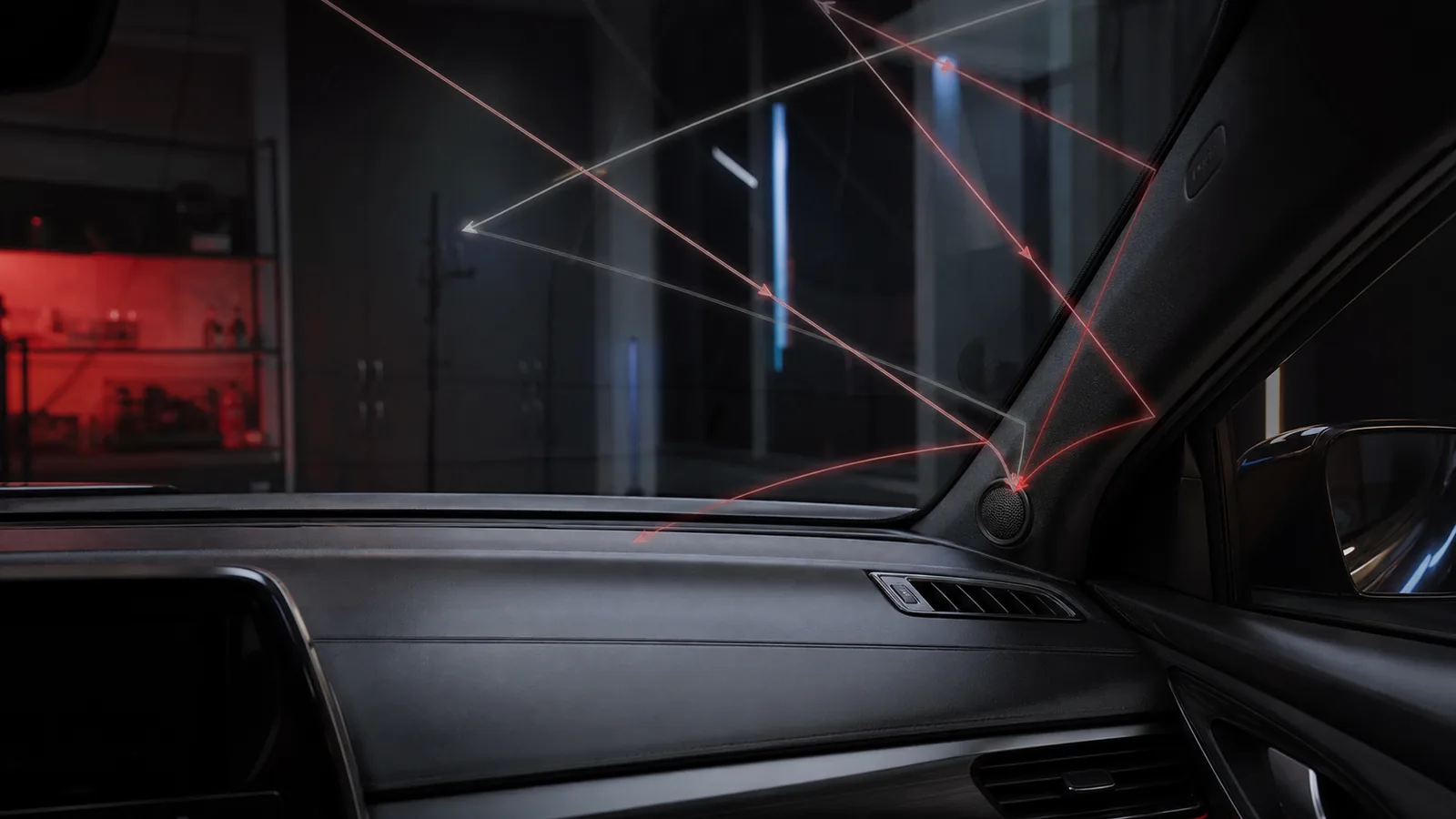
Glass and the dashboard create unpleasant reflections
The windscreen, side windows and hard dashboard produce short, strong reflections. Direct sound and a delayed copy reach the ear together. At certain frequencies they combine, creating local peaks perceived as glassiness, hiss or unnatural brightness.
This is why a response measured at only one point should not be flattened blindly with very narrow filters. Moving the head slightly can change the result considerably. Measurements around several nearby positions, combined with recordings containing natural vocals, acoustic instruments and transients, give a more reliable picture.
An incorrect crossover can overload the tweeter
A tweeter should operate only above a frequency it can reproduce cleanly and safely. A crossover point that is too low, or a slope that is too shallow, increases diaphragm excursion and distortion. The result may sound hard and nervous, especially at higher volume.
Overlap between the tweeter and the midrange or midbass driver is equally important. If both drivers cover too much of the same range, part of the spectrum becomes excessive. Polarity errors, unequal path lengths and incorrect phase relationships can create further peaks and dips. Simply lowering the tweeter level will not repair an incorrect crossover.

EQ and DSP work only when the underlying cause is addressed
A DSP allows separate control of levels, delays, filters and equalisation for each channel. It is powerful, but it can also hide one problem while creating another. A deep cut across the entire treble range removes detail and space yet may leave a narrow, irritating peak untouched.
Correct tuning starts with channel levels and crossovers, then checks polarity and delays, and applies equalisation last. In many cars, a small change in tweeter angle or a modest cut in one narrow range works better than radically darkening the sound. Professional tuning and upgrading of an in-car sound system helps match the installation to the specific vehicle and the driver’s position.
The tweeter or factory signal processing may be responsible
A damaged diaphragm, overheated voice coil or incorrect protection capacitor can produce distortion. Harshness can also appear when replacement speakers are connected to a factory head unit with volume-dependent equalisation. The vehicle manufacturer may have boosted a certain range to compensate for limitations of the original drivers. With different speakers, the same processing can become excessive.
It is worth measuring the input signal before tuning a more complex system. This shows whether the irregularity is created by the cabin or already exists at the output of the factory unit.
Road noise encourages excessive volume
Tyre and wind noise mask part of the music, so drivers naturally increase the volume. The irritating range then becomes more obvious, while the amplifier or speakers may approach their clean operating limits. If the issue is worse mainly on the road, see why car audio sounds worse while driving.
Harshness that appears only at high output may also indicate clipping or driver distortion. Our guide explains why car speakers crackle at higher volume.
How to diagnose harsh treble in a car
- Disable equalisation and sound enhancements in the head unit, phone and app.
- Compare several well-recorded tracks and at least two signal sources.
- Check whether the issue affects both sides and increases with volume.
- Inspect the condition, position and direction of the tweeters.
- Verify crossover frequencies, slopes, polarity and channel levels.
- Measure the response at several positions around the driver’s head.
- Make small changes and perform a comparison after each adjustment.
Summary
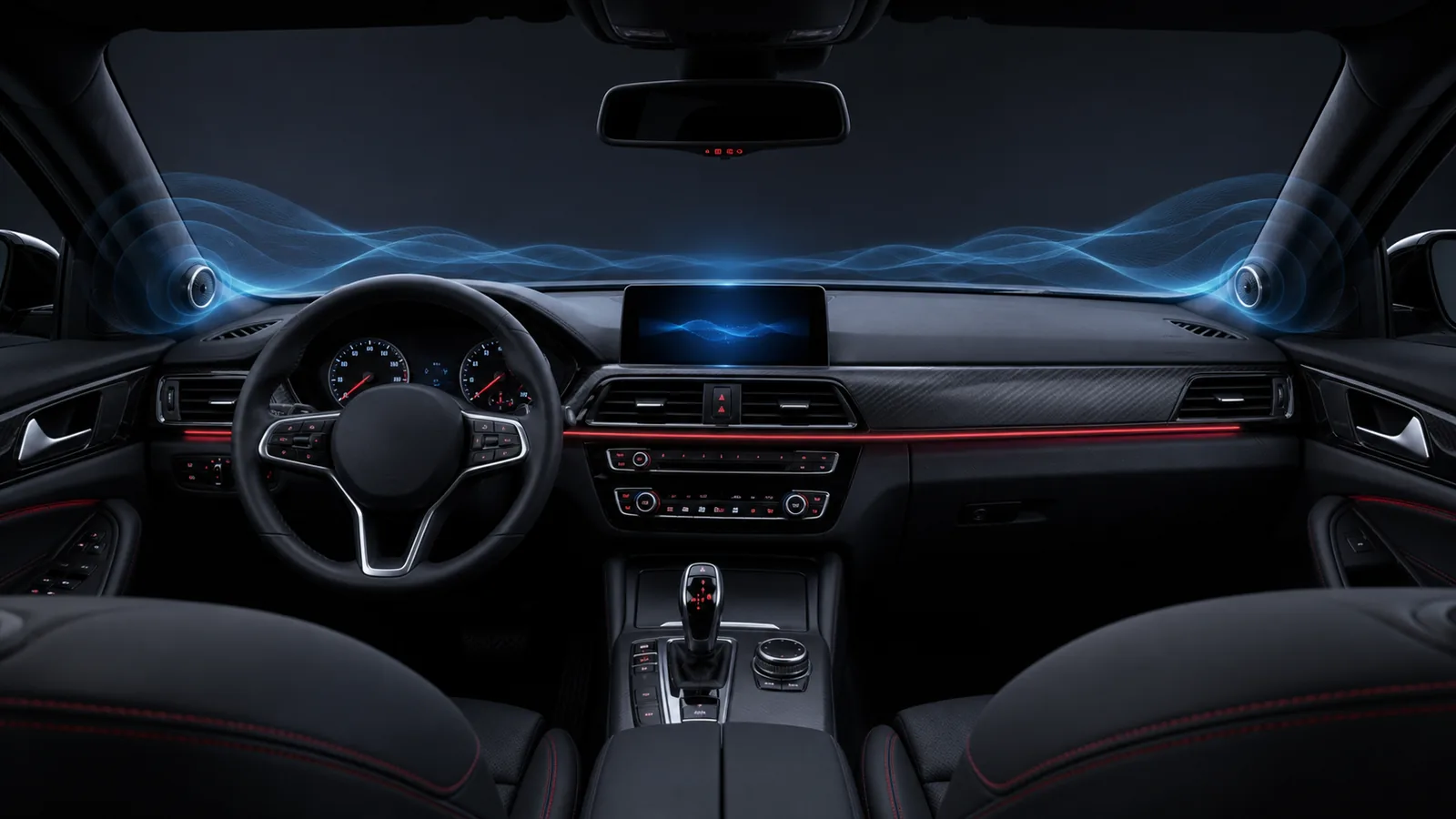
Harsh car treble rarely comes from one component alone. It is usually a combination of directional tweeter output, reflections from glass, crossover settings, factory signal processing and equalisation. The effective solution is to identify the cause instead of lowering the treble control at random. A properly configured system preserves detail and spaciousness while allowing long listening sessions without hiss, piercing peaks or fatigue.