Why Is One Car Speaker Quieter Than the Other?
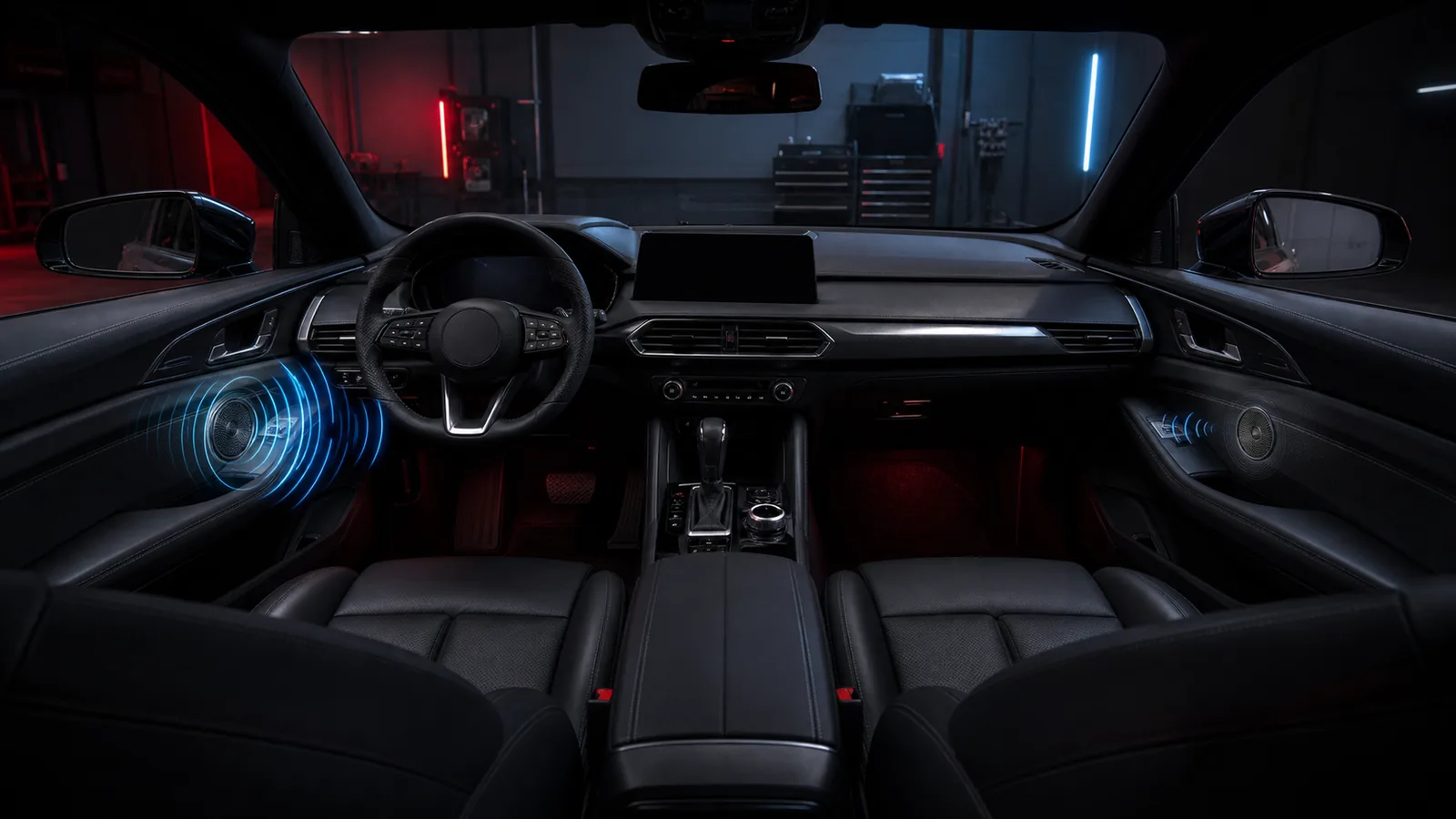
When the left and right sides do not play at a similar level, the soundstage shifts toward the stronger channel and vocals lose their stable position. The cause may be a simple head-unit setting, but it can also be a loose connection, damaged speaker, installation difference, amplifier fault or incorrect DSP configuration.
Do not replace the speaker immediately. First determine whether the whole channel is quieter, only the woofer or tweeter is affected, and whether the fault appears at every volume level.
Check balance, fader and source settings
Set balance and fader to the centre. Disable driver-focus modes, listening-position presets, automatic volume correction and surround effects. Factory systems sometimes favour one seat intentionally, so an uneven level does not always indicate damage.
Test another source as well. If the difference occurs only with Bluetooth, FM radio or one app, the problem is probably upstream of the amplifier and speakers.
Loose connector or damaged wire
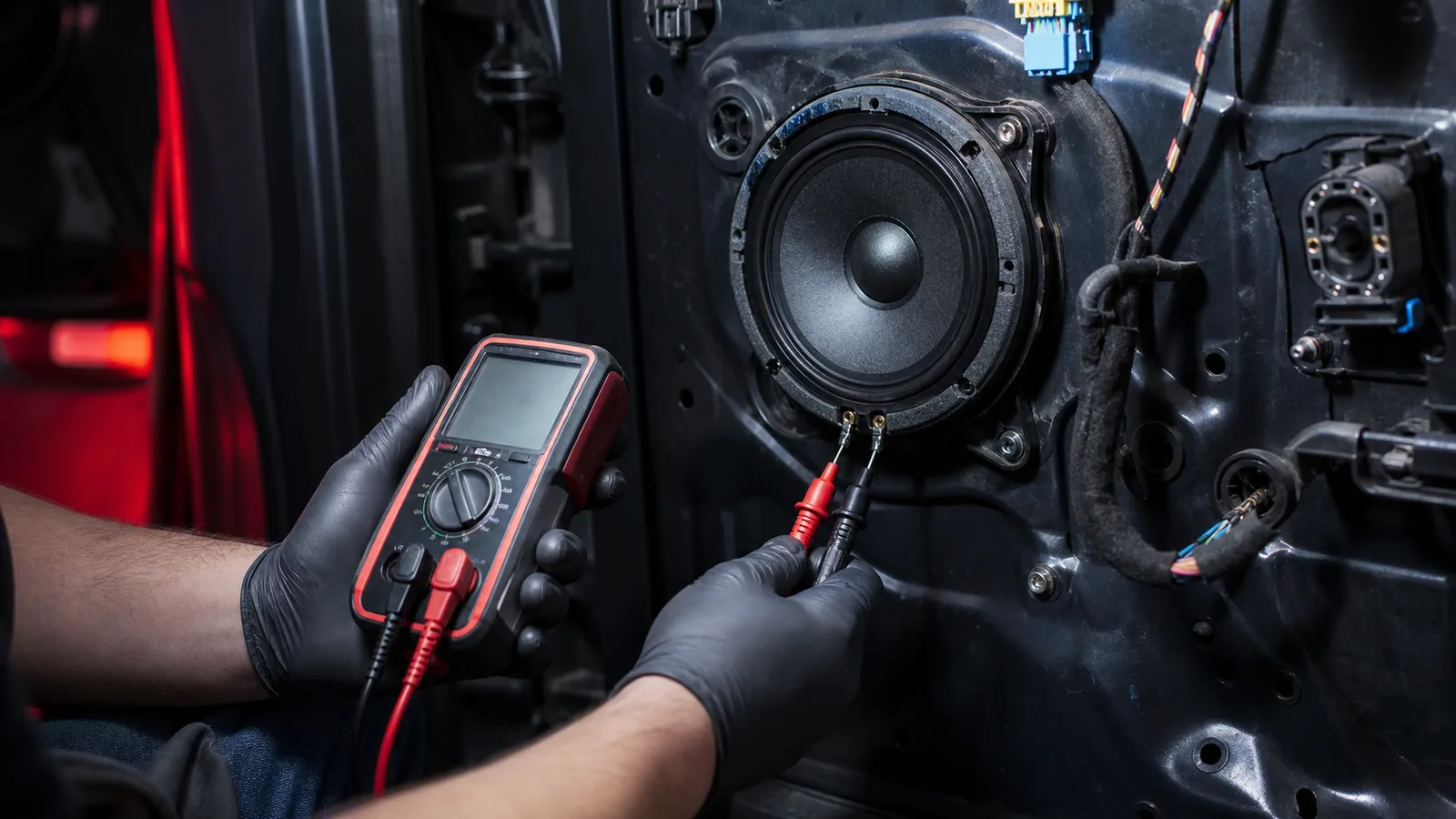
The wiring between the body and the door flexes every time the door opens. A conductor may eventually break inside intact insulation, while a terminal can loosen or oxidise. Typical symptoms include low output, intermittent sound on bumps, or a level that changes when the door moves.
Continuity and voltage-drop tests help distinguish a wiring fault from a damaged driver. A visual inspection alone may miss a broken conductor.
Damaged voice coil or suspension
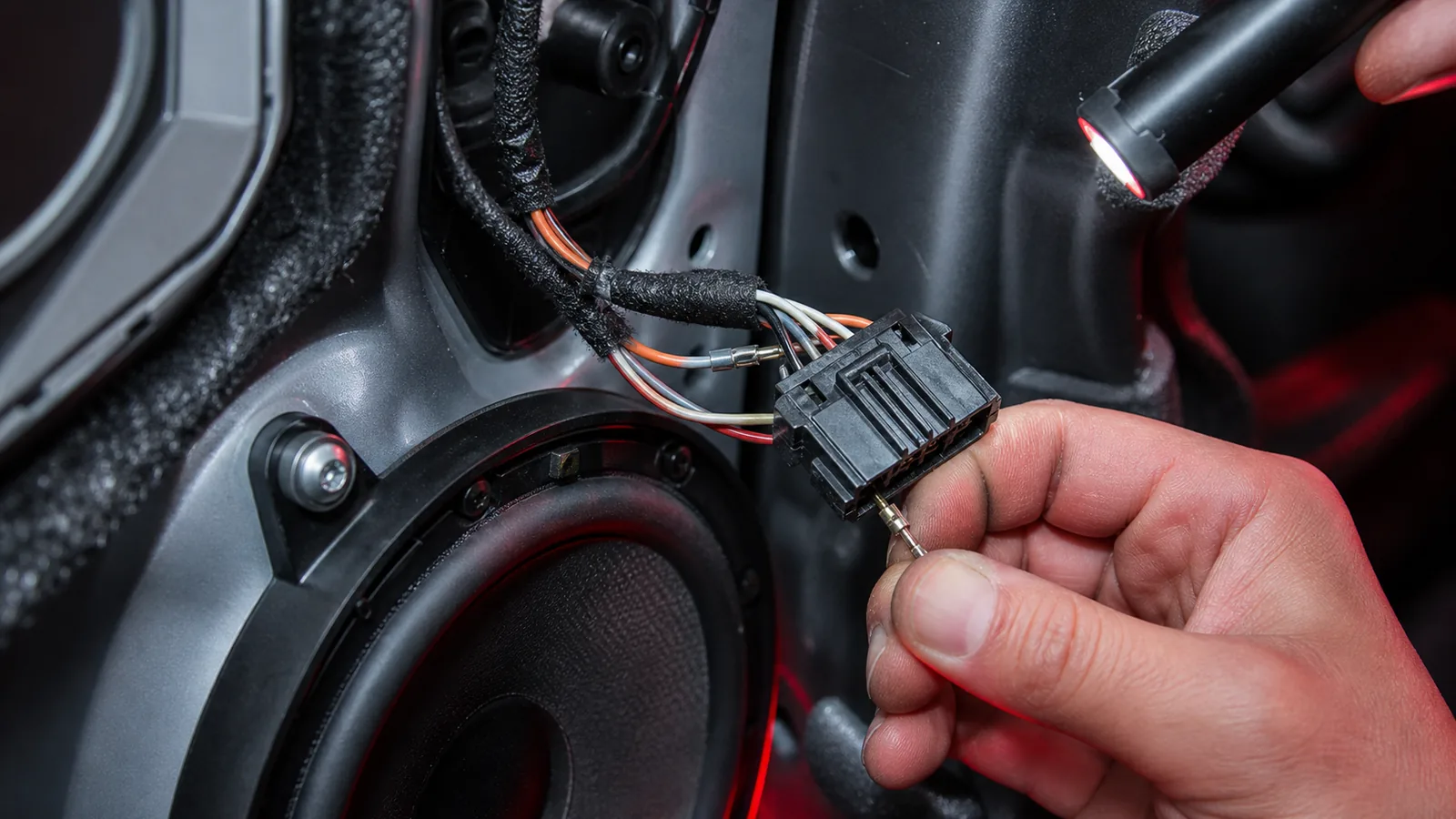
A partially overheated voice coil may still produce sound but with lower sensitivity, more distortion or mechanical rubbing. Moisture, damaged suspension and a deformed cone can create similar symptoms.
Compare the impedance of both speakers and, where safe, swap channels. If the fault follows the speaker, the driver is suspect. If it stays on the same side, inspect the signal, wiring and amplifier channel.
Different door installation conditions
Two healthy speakers can have different output when one is mounted on a rigid, sealed adapter and the other has an air leak. Poor sealing reduces mid-bass, while loose trim and missing acoustic treatment can absorb energy or introduce resonances.
Diagnosis should therefore include the mounting ring, seals, moisture protection, damping material and coupling between the speaker and door trim.

Amplifier, head unit or DSP settings
Different gain, crossover, EQ or channel-delay settings can make one side appear weaker. In an active system, every driver may have its own amplifier channel, so one accidental change can affect only part of the frequency range.
An amplifier channel may also lose output because of an internal fault or poor input connection. Measuring the signal before and after the amplifier reveals where the level difference begins.
Do not hide the fault with the balance control
Moving the balance can mask the symptom, but it will not repair a loose terminal, overheated voice coil or incorrect gain setting. A damaged weak channel may deteriorate faster when pushed harder. Use balance correction only after confirming that both channels are healthy.
A reliable diagnostic sequence
- Check head-unit settings and several sources.
- Listen to each channel and frequency range separately.
- Inspect connectors and door wiring.
- Measure speaker impedance and input/output signals.
- Compare amplifier gain, crossovers, EQ and DSP delay.
- Check mounting rigidity and sealing.
This process identifies the actual cause without buying random parts. For balanced left-right output and a stable soundstage, see how a professionally designed and tuned in-car sound system should be built.
Summary
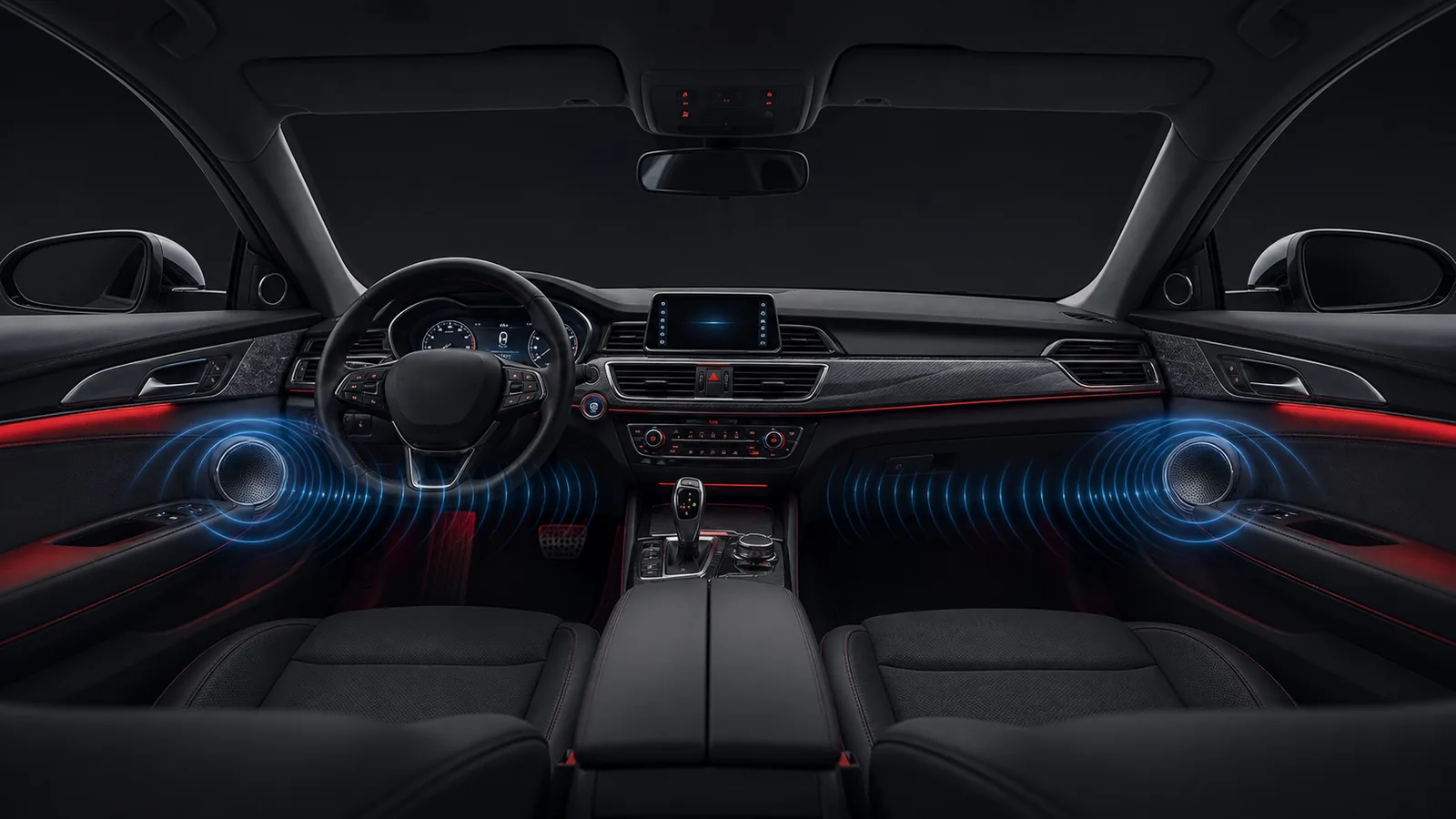
One car speaker may be quieter because of settings, wiring, connectors, a damaged driver, different mounting conditions, or amplifier and DSP configuration. The key is to learn whether the fault follows the speaker, channel or side of the vehicle. Measurements then point to the correct repair.