A subwoofer may be installed in the trunk, but it should not constantly draw attention to its location. When properly integrated, bass feels like part of the music playing in front of the driver. If every kick drum or low note clearly comes from behind, the mounting location is rarely the only problem. The complete system normally needs adjustment.
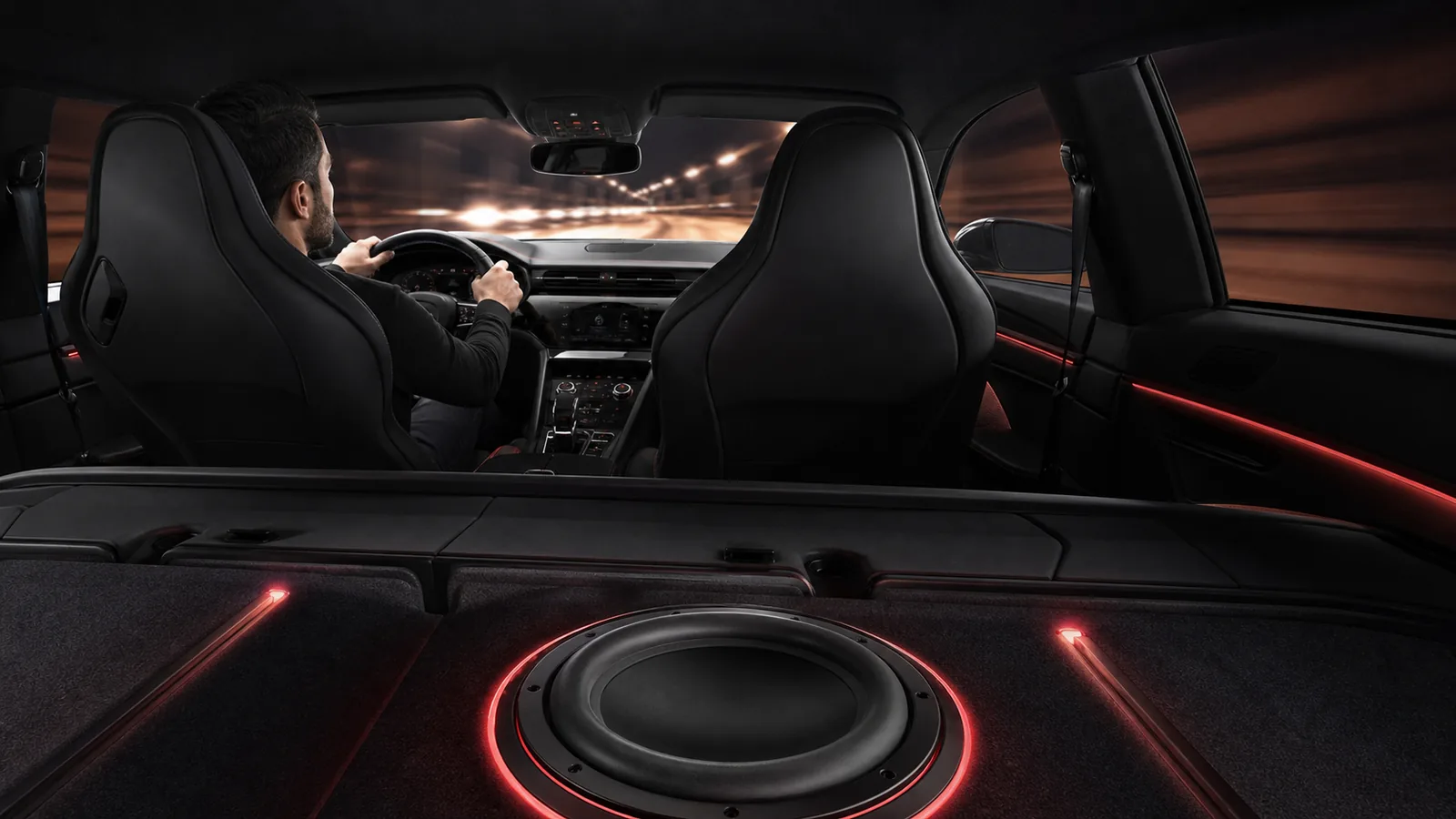
Why does car bass sound like it comes from the rear?
Very low frequencies are difficult to localise, but a subwoofer does not reproduce only the lowest octave. If its crossover is too high, its level is excessive or the trunk produces resonances, the ear begins to identify the source. Higher harmonics, vibrating trim and a timing mismatch between the rear subwoofer and front midbass drivers can all reveal its position.
The low-pass crossover is set too high
The low-pass filter determines how high the subwoofer plays. If it is set too high, the trunk reproduces frequencies that are easier to locate. There is no single correct setting for every vehicle. The crossover must match the front speakers, filter slopes and cabin acoustics.
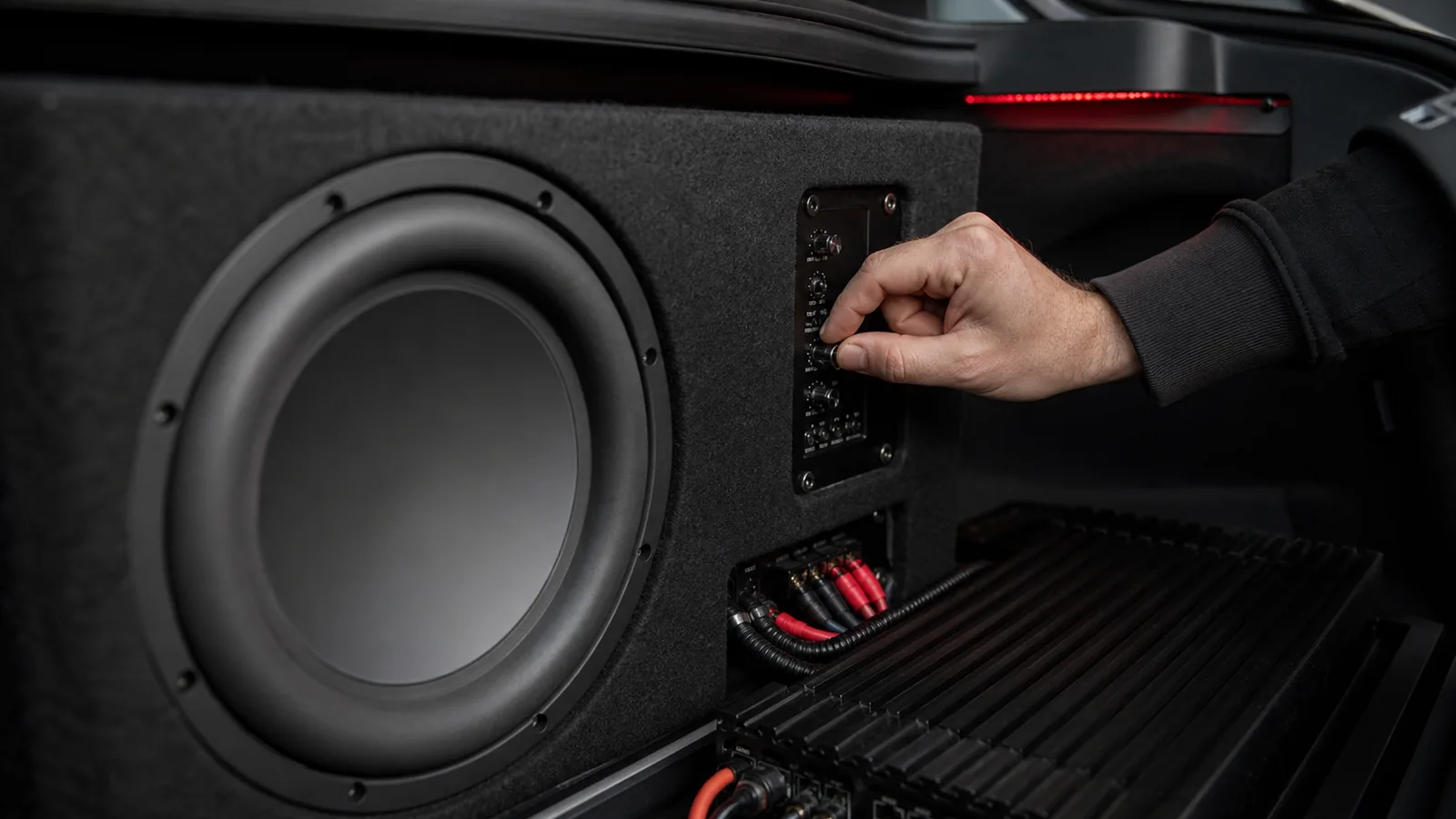
Simply lowering the crossover is not always enough. If the front speakers are high-passed too aggressively or the doors do not support useful midbass, a gap develops between them and the subwoofer. Turning the subwoofer up to hide that gap makes its location even more obvious.
Excessive subwoofer level
Strong bass may impress during a short demonstration, but excessive output quickly separates it from the music. The subwoofer should complete the front system rather than dominate every recording. A remote level control does not replace correct gain calibration; it should provide small adjustments between recordings, not repair an incorrectly tuned system.
Subwoofer phase and polarity
Within the crossover region, waves from the subwoofer and door speakers can add together or partly cancel. Reversed polarity is not automatically wrong and may improve summation in a particular vehicle, but the decision should follow measurement and listening. A random phase setting can reduce bass at the driver seat while leaving obvious booming energy at the rear.
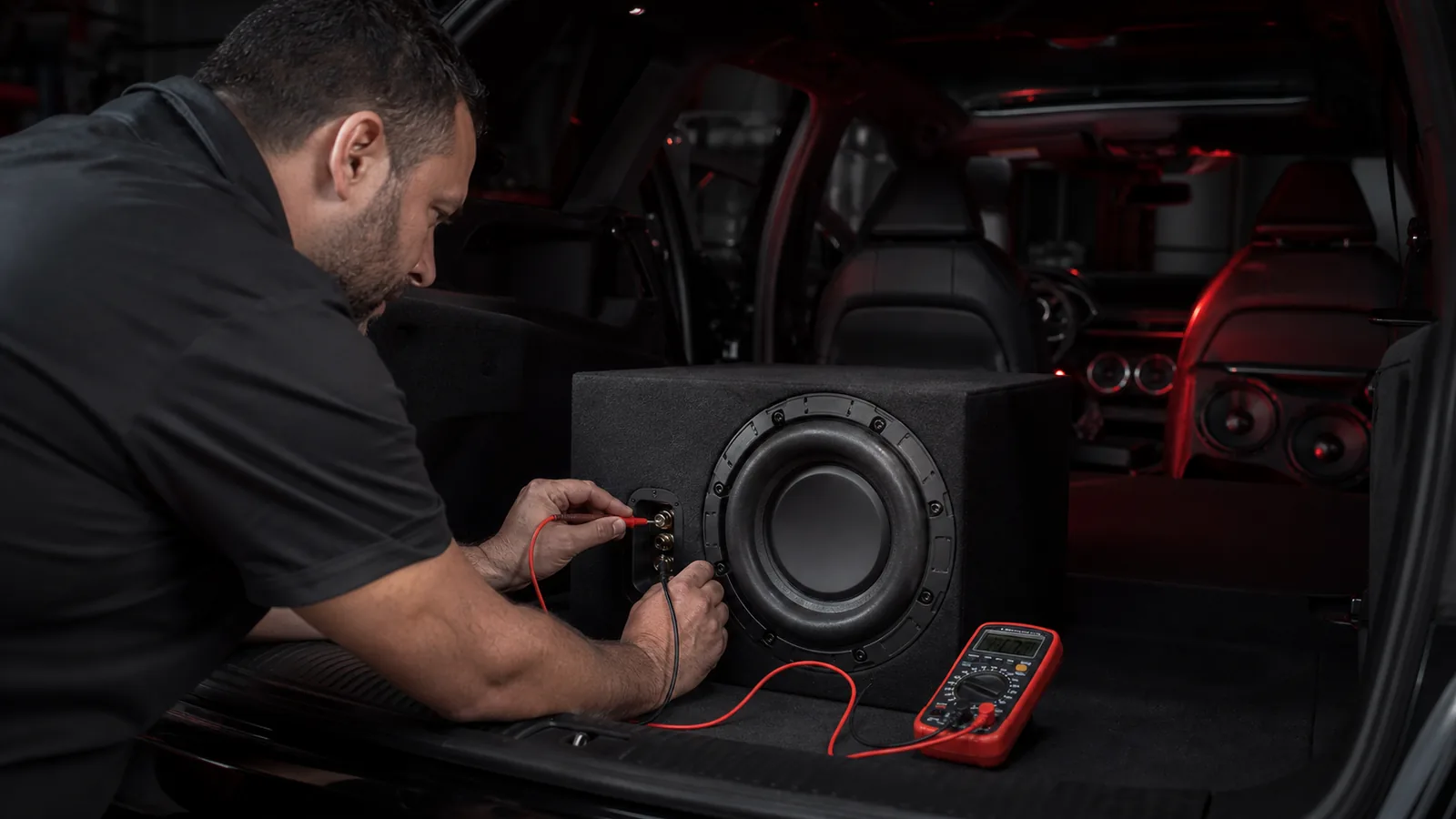
Delay relative to the front speakers
The subwoofer is normally much farther from the driver than the door speakers. Filters and the enclosure add their own phase shift. If arrival times are not aligned, the front impact and rear bass do not form one event. Rhythm becomes less precise and the subwoofer sounds like a separate source.
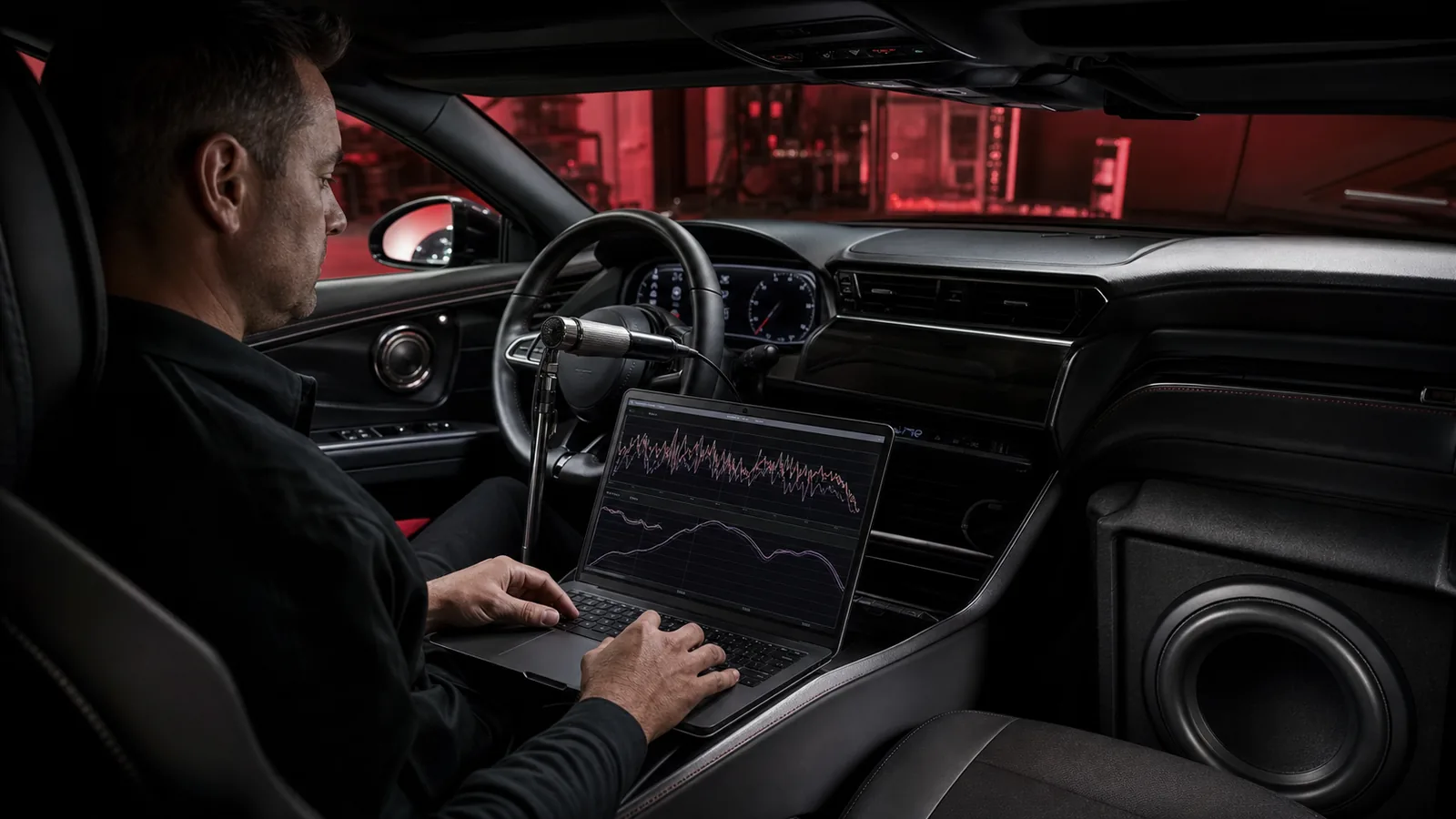
A DSP provides time-alignment controls, but entering tape-measured distances is only a starting point. Acoustic delay also includes filter behaviour, enclosure response and cabin reflections. Final adjustment benefits from impulse-response measurement or careful phase comparison through the crossover region.
Trunk resonances reveal the subwoofer location
Sometimes the listener localises a mechanical noise rather than the bass itself: a vibrating parcel shelf, licence plate, trunk panel or loose installation part. These noises contain higher frequencies and are easy to locate. Secure mounting, cable control and targeted damping are therefore part of system integration.
How can you check the problem?
- Reduce subwoofer level and check whether bass moves forward.
- Disable bass boost and extreme equaliser settings.
- Compare several recordings with short, natural bass notes.
- Listen for rattles and mechanical vibration in the trunk.
- Change only one parameter at a time: crossover, phase, gain or delay.
How do you blend bass into the front soundstage?
The front speakers and subwoofer must be adjusted as one system: crossover points, slopes, level, polarity, phase and arrival time all interact. The final settings depend on the vehicle, subwoofer position and door construction. To achieve coherent bass rather than sound coming from the trunk, see how professional in-car sound system tuning and upgrading is approached.
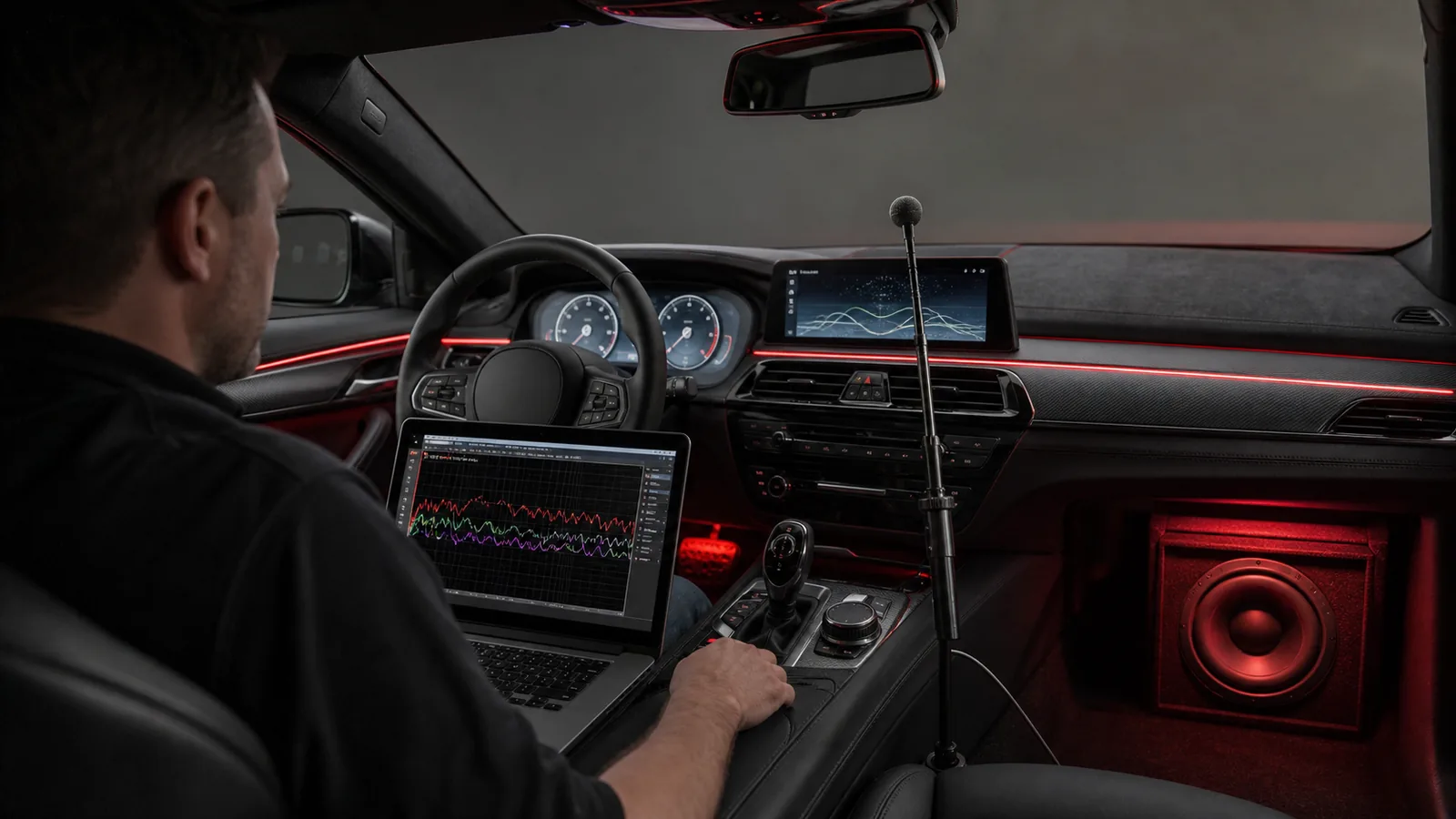
A well-integrated subwoofer remains physically in the trunk but disappears as a separate sound source. Bass gains depth and timing while its energy joins the music in front of the listener.