A humming noise from the rear of a car can have several different causes. It may come from the tyres and rear wheel arches, a resonating luggage compartment, a worn wheel bearing, a loose underbody shield or a damaged exhaust system. Although these noises may sound similar, they require completely different solutions.
The first step is to determine whether the sound changes with road speed, engine speed, road surface, vehicle load or cornering. Only after proper diagnosis should you decide whether the vehicle requires a mechanical repair, new tyres or professional soundproofing of the rear section.
For a wider overview, read our guide explaining where car noise comes from.
What does a humming noise from the rear sound like?
Drivers may describe it as a low-frequency hum, rumble, drone, booming or continuous rushing noise. In many cases, the sound becomes noticeable only after the vehicle reaches a particular speed.
The noise may:
- increase with road speed,
- change immediately on a different type of asphalt,
- become stronger while cornering,
- appear during acceleration or engine braking,
- change with engine speed,
- be more noticeable in an estate, SUV, hatchback or van,
- travel through the floor, luggage compartment panels and rear bench.
Common causes of rear humming noise
The problem usually comes from one of five areas:
- rear tyres and wheel arches,
- the luggage compartment and spare wheel well,
- wheel bearings and suspension components,
- the exhaust system and its mountings,
- loose shields, trim panels or equipment.




Noise that increases with road speed
When the sound increases with vehicle speed but does not follow engine speed, the first components to inspect are the tyres, wheel bearings, suspension and wheel arches.
Possible causes include:
- uneven tyre wear,
- tread cupping,
- incorrect tyre pressure,
- internal tyre damage,
- a worn wheel bearing,
- suspension play,
- limited factory wheel arch insulation.
If the sound changes immediately on coarse asphalt, rolling noise is probably dominant. Read more in our guide explaining why tyre noise is so loud inside a car.
How can you recognise a worn rear wheel bearing?
A worn wheel bearing may produce a low and continuous hum that increases with speed. The intensity can change while cornering because the load moves between the left and right wheels.
Possible warning signs include:
- one side being noticeably louder,
- noise changing during a long bend,
- vibration felt through the floor or seat,
- a rough rotating sound,
- play detected during wheel inspection.
A damaged bearing must be repaired rather than covered with soundproofing materials.
Rear wheel arches as a noise source
The rear wheel arches are positioned directly above the tyres and are excited by tyre roar, water, stones and suspension vibration. Thin metal panels can act like membranes and transmit low-frequency noise into the luggage compartment.
The problem is often more noticeable in:
- estate cars,
- SUVs,
- hatchbacks,
- vans,
- electric and hybrid vehicles.
Correctly installed rear wheel arch soundproofing can reduce panel vibration, water and stone impacts and the amount of tyre noise entering the cabin.
Why does the trunk act as a resonating chamber?
The luggage compartment is a large space that includes the floor, spare wheel well, side cavities, wheel arches and tailgate. Without sufficient damping, these areas may reinforce one another and amplify rear axle noise.
Noise can also come from:
- large areas of thin sheet metal,
- the empty spare wheel well,
- plastic side panels and loose clips,
- an unsecured jack or repair kit,
- the luggage cover,
- a loose parcel shelf,
- the rear seat backrest,
- tailgate trim.
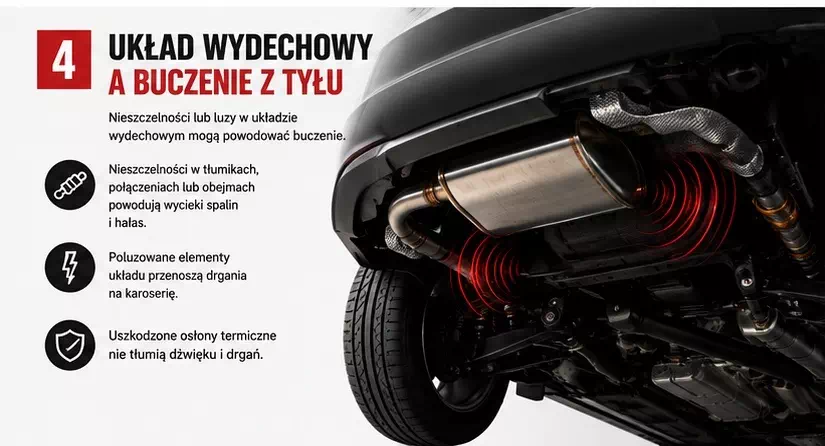
Exhaust system noise from the rear
Exhaust noise can be mistaken for tyre roar or luggage compartment resonance. However, it often changes with engine speed, acceleration or engine load.
Possible causes include:
- a leaking silencer,
- a damaged pipe or joint,
- a failed flexible section,
- a worn rubber hanger,
- the exhaust touching the underbody,
- a loose heat shield,
- internal silencer damage.
If the sound can be reproduced while the vehicle is stationary by increasing engine speed, it is unlikely to be caused by the tyres or wheel bearings.
How can the noise source be located?
- Check whether the sound follows road speed or engine speed.
- Compare smooth and coarse asphalt.
- Observe whether it changes while cornering.
- Empty the luggage compartment and secure loose equipment.
- Inspect the tyres and their wear pattern.
- Check wheel bearings, suspension and alignment.
- Inspect exhaust system leaks and mountings.
- Evaluate the factory insulation of the wheel arches, floor and trunk.
When will soundproofing help?
Soundproofing is appropriate when the tyres, bearings, suspension and exhaust system are in good condition but road noise still enters the cabin at an uncomfortable level.
Treatment may include:
- the inner surfaces of the rear wheel arches,
- the luggage compartment floor,
- the spare wheel well,
- side panels of the trunk,
- the area underneath the rear bench,
- the tailgate,
- plastic trim panels.
Our guide explaining what to soundproof first in a car can help determine the correct treatment order.
Common mistakes
- Soundproofing before completing mechanical diagnostics.
- Ignoring cupped or damaged tyres.
- Trying to hide a worn wheel bearing.
- Ignoring exhaust mountings and heat shields.
- Applying random damping patches without a complete plan.
- Using materials that prevent correct trim reassembly.
- Leaving cables, clips and plastic panels unsecured.
Rear humming noise – summary
A humming noise from the rear may come from the tyres, wheel arches, luggage compartment, wheel bearings, suspension or exhaust system. When it changes with road texture and vehicle speed, begin with the tyres and wheel arches. When it changes with engine speed, inspect the exhaust system and its mountings.
After mechanical faults have been ruled out, professional car soundproofing and vehicle damping can reduce resonance from the rear wheel arches, floor and luggage compartment and improve comfort during daily and long-distance driving.
Frequently asked questions
Why does my car hum from the rear at higher speeds?
The most common causes are the tyres, rear wheel arches, a wheel bearing or luggage compartment resonance. Check whether the sound changes with the road surface or while cornering.
Can cupped tyres cause humming?
Yes. Unevenly worn tread may create a continuous rumble that increases with speed and is often confused with a worn wheel bearing.
Can the trunk amplify road noise?
Yes. The large space, thin body panels, spare wheel well and rear wheel arches may create a resonating chamber that amplifies rear axle noise.
How can exhaust noise be distinguished from tyre noise?
Tyre noise mainly follows road speed and surface texture. Exhaust noise is more likely to change with engine speed, acceleration and engine load.
Will soundproofing eliminate the noise completely?
Soundproofing can reduce road noise and body resonance, but it cannot repair a worn bearing, damaged tyre or leaking exhaust system. Mechanical faults must always be repaired first.