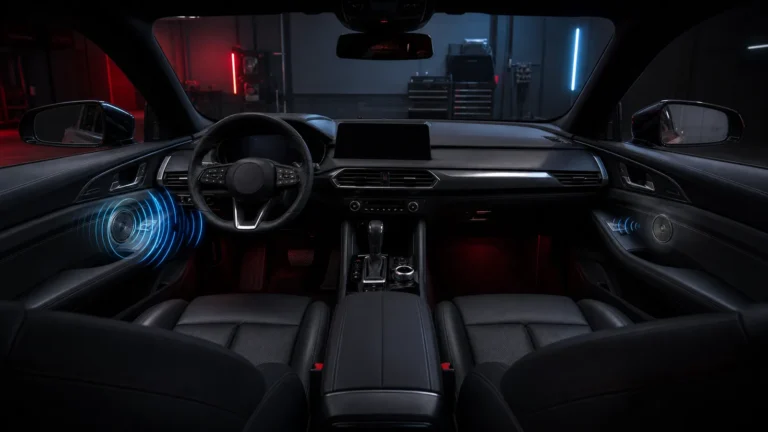
Why Does Music Sound Like It Comes from the Car Doors?
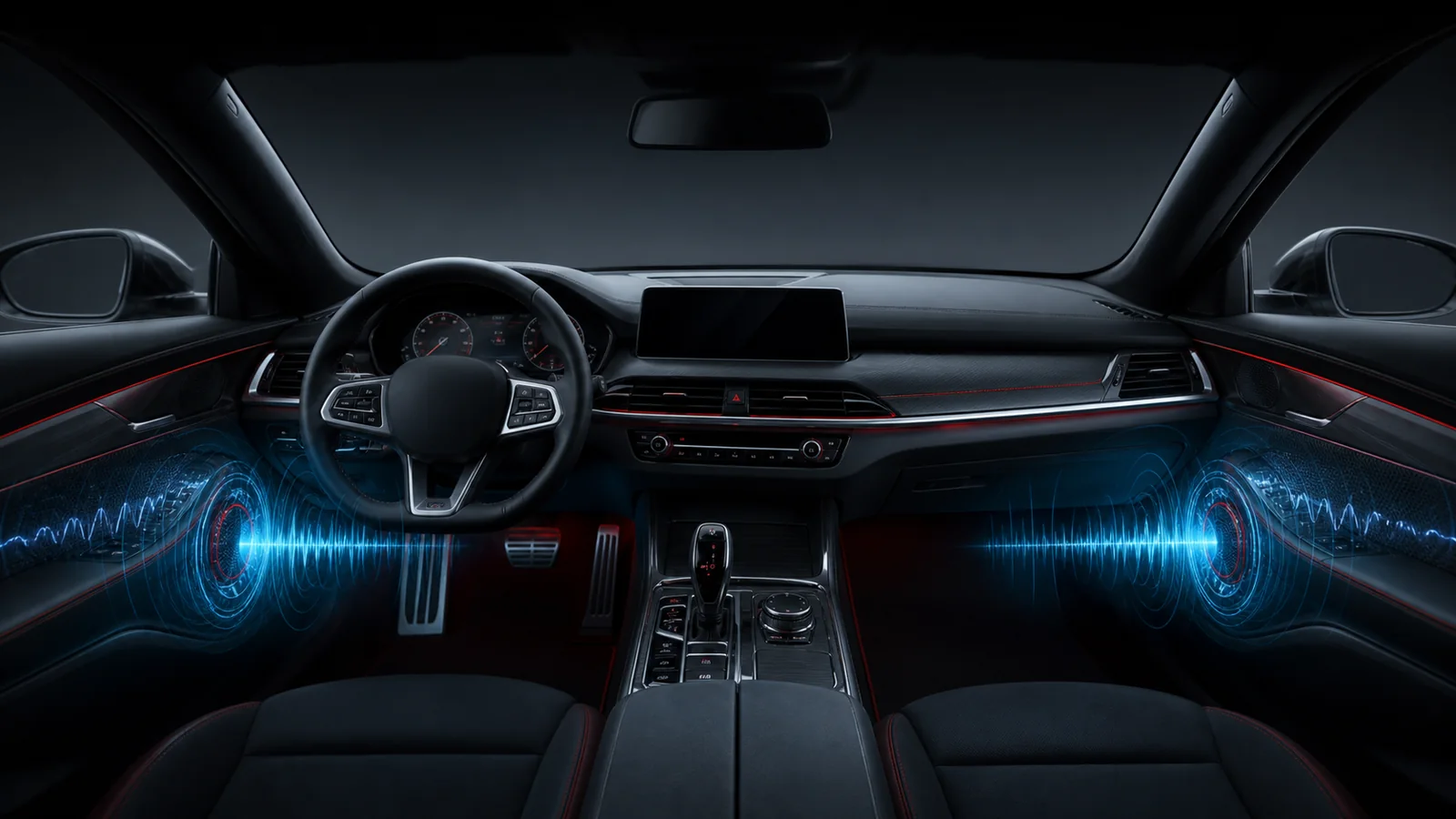
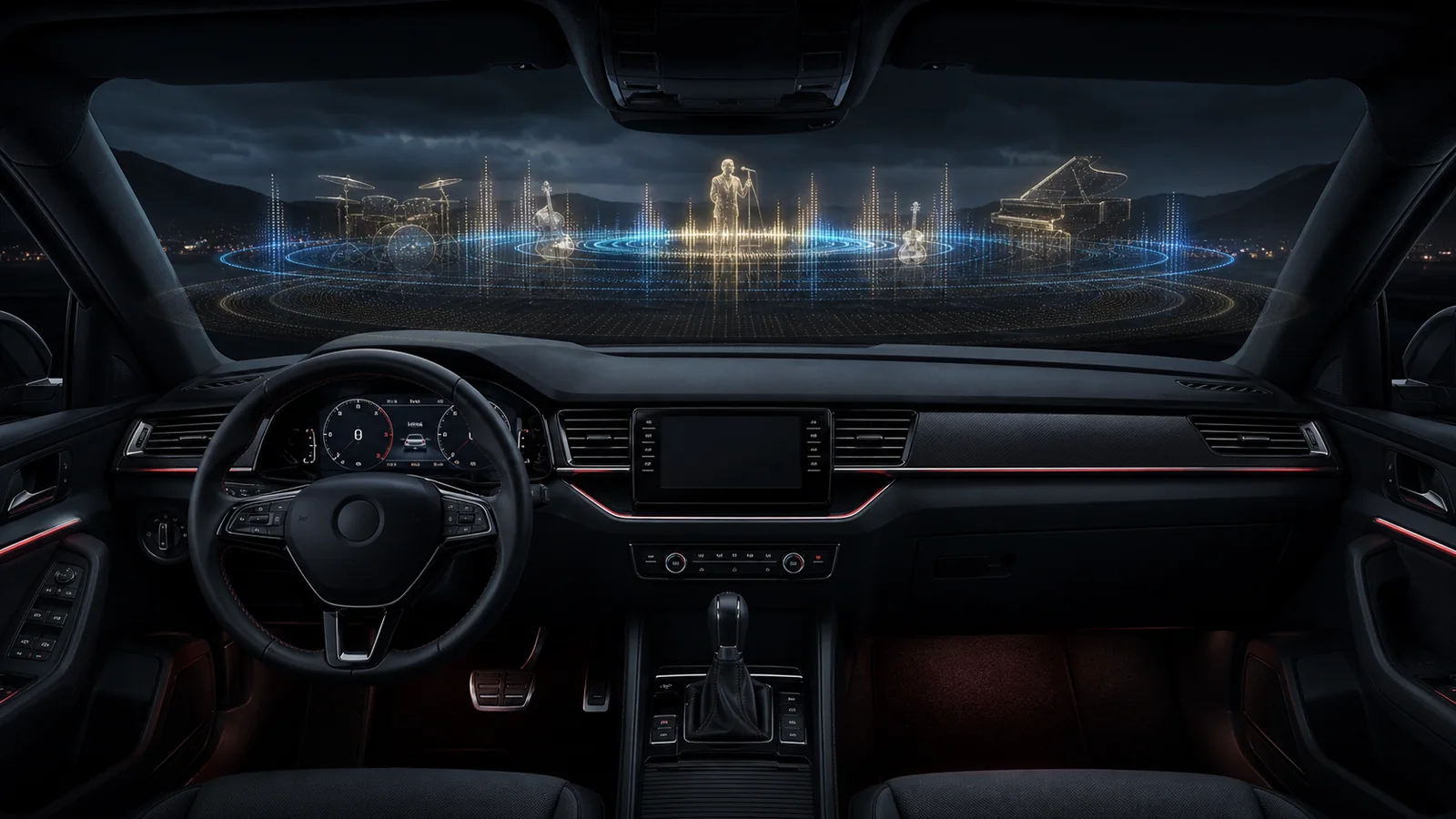
In a properly configured system, the vocal should appear in front of the driver, usually around the centre or upper part of the dashboard. Instruments should occupy stable positions between the A-pillars instead of sticking to the door panels. If you can clearly hear the left speaker beside your leg or the singer appears to come from the passenger door, the front soundstage has not been built correctly.
This is not simply a matter of speaker quality. Even excellent drivers can remain easy to locate when they are mounted poorly, cover the wrong frequency range or reach the listener at different times. Several causes usually overlap.
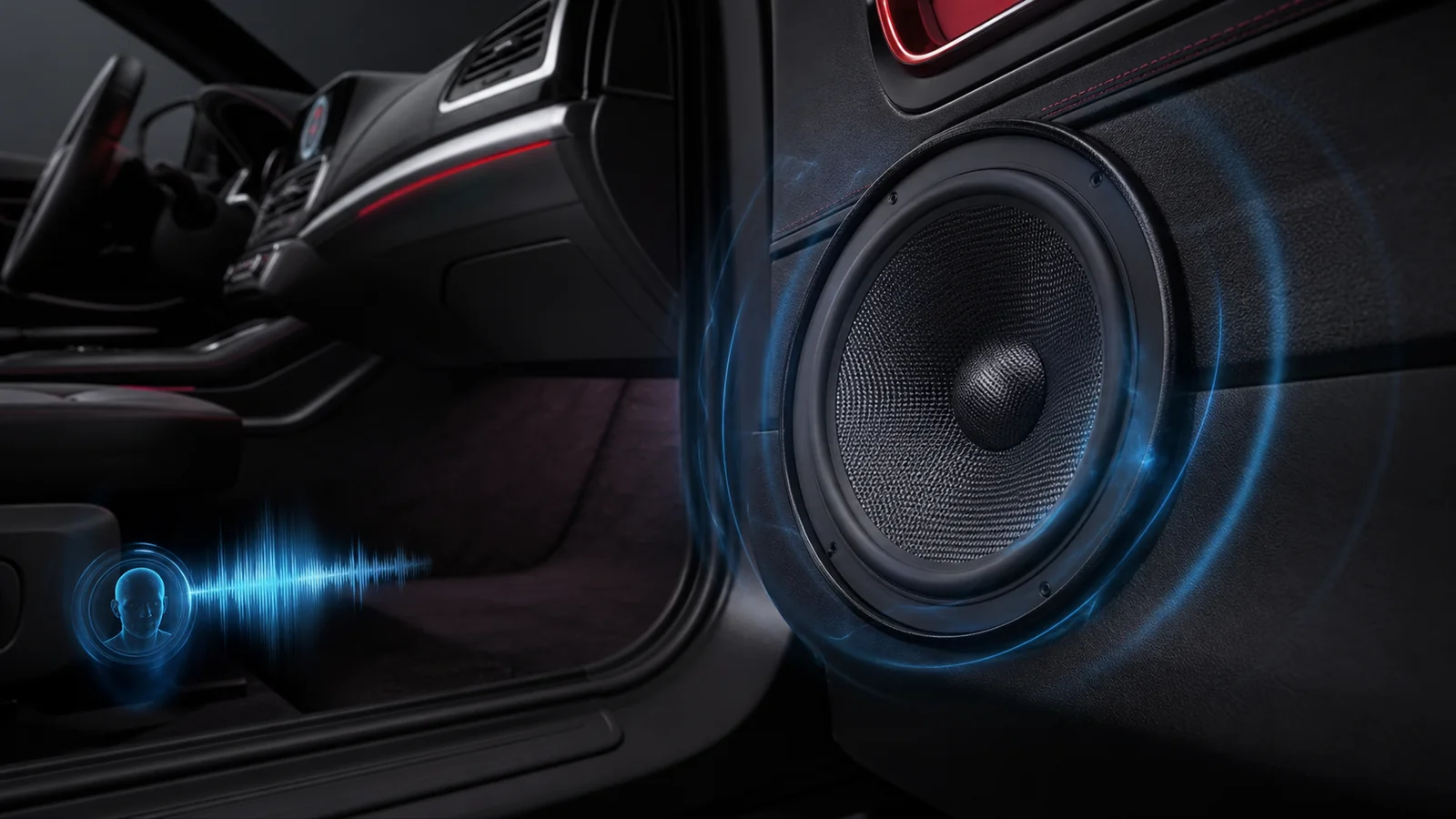
Low-mounted woofers pull the apparent source downward
In most cars, midbass speakers sit low in the doors. They reproduce bass and a large portion of the midrange carrying vocals, guitars and piano. If a woofer plays too high, its physical location becomes obvious. The music stays near the driver’s leg rather than rising above the dashboard.
The woofer, midrange and tweeter must blend correctly. Crossover points should reflect mounting locations, driver capability, directivity and distortion—not a generic preset.
The nearest speaker arrives earlier and sounds louder
The driver does not sit in the centre of the cabin. The left speaker is much closer than the right, so its signal arrives earlier and at a higher level. The brain localises sound toward the first and stronger impulse, pulling the image into the driver’s door.
Balance can reduce the level difference but cannot equalise arrival time. Time alignment delays the nearer channels so important parts of the signal meet at the listening position. A DSP provides separate delay control for every speaker.
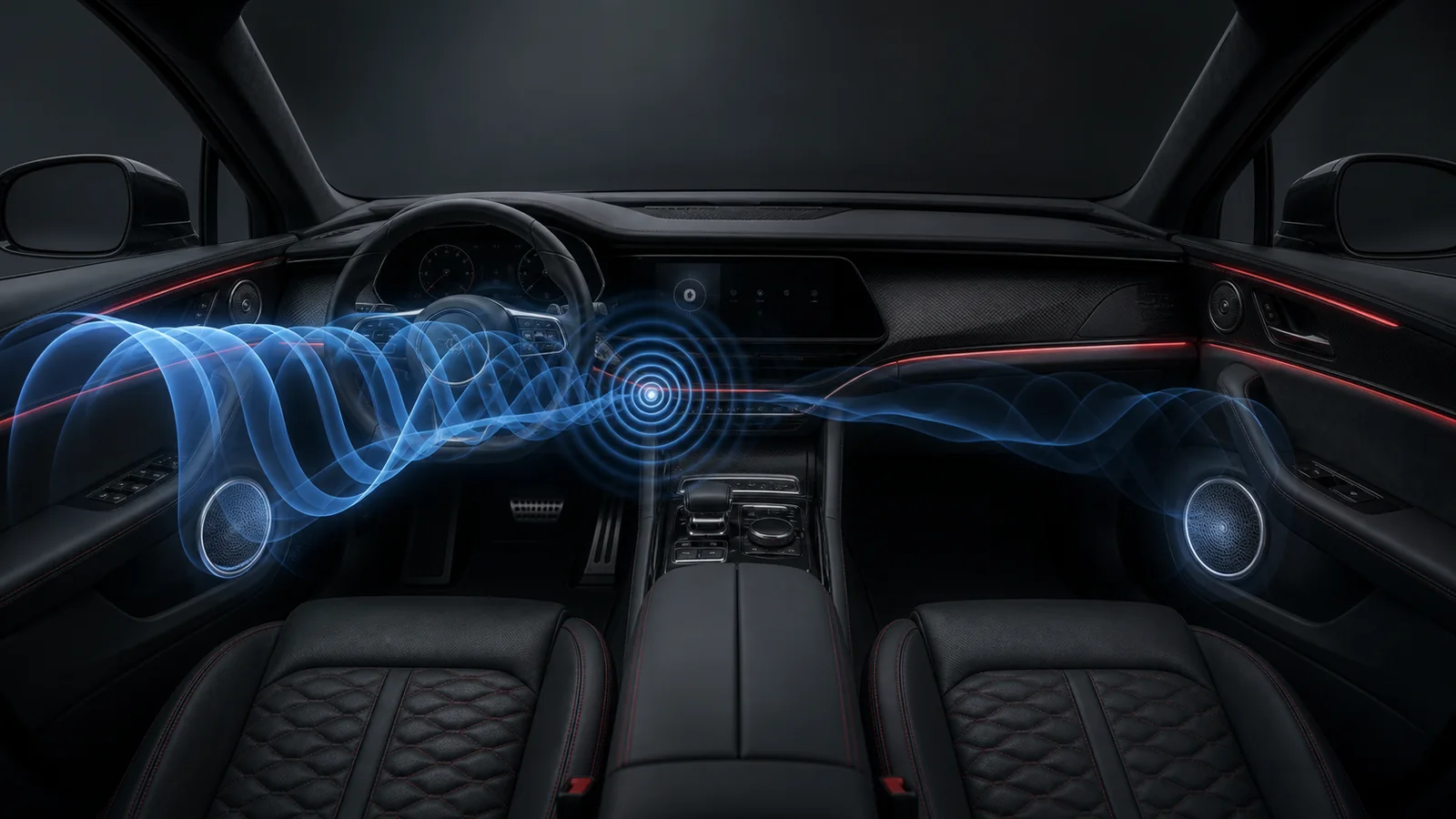
Incorrect polarity and phase break the centre image
If one speaker is wired in reverse or the drivers do not combine in phase around the crossover, part of the signal cancels at the driver’s seat. The vocal loses its stable centre, moves with frequency or splits into separate sources. Sometimes the centre appears only at one exact head position.
Checking the wiring is only the beginning. Even with matching electrical polarity, path lengths, filters and mounting locations create phase shifts. Proper tuning compares polarity options and measures how adjacent drivers combine through the crossover region.
A tweeter cannot raise the stage if it does not blend with the midrange
Tweeters in the A-pillars or mirror triangles help create soundstage height and width. Adding them alone will not move the entire image forward. If a tweeter is too loud, bright details appear high while the vocal remains in the door. An unsuitable crossover can create a gap or a peak between the tweeter and woofer.
Aiming also matters. A tweeter directed straight at one ear may dominate from that side, while excessive off-axis placement can remove needed energy. Its angle must be assessed together with level, delay and filtering.
Rear speakers can pull the soundstage behind the driver
Rear channels are often too loud in factory systems. They create an enveloping effect but weaken the precise front image. If vocals or snare drums appear beside or behind your head, reduce the rear level and check whether the stage becomes stable.
For driver-focused listening, the rear usually provides subtle ambience and should not compete with the front system. Passengers may need a different setup, which is why a good processor can store multiple listening presets.
Door installation and cabin acoustics affect localisation
A loose spacer, a leak around the speaker basket or a resonating door card smears transients and makes instruments harder to locate. Some energy escapes behind the trim rather than entering the cabin. Reflections from the console, glass and seats change each channel further.
The soundstage is therefore not created by processor settings alone. Every driver needs a rigid mount, a sealed connection to the panel and a controlled acoustic environment. DSP cannot repair a mechanically vibrating trim panel or a poorly fitted spacer.
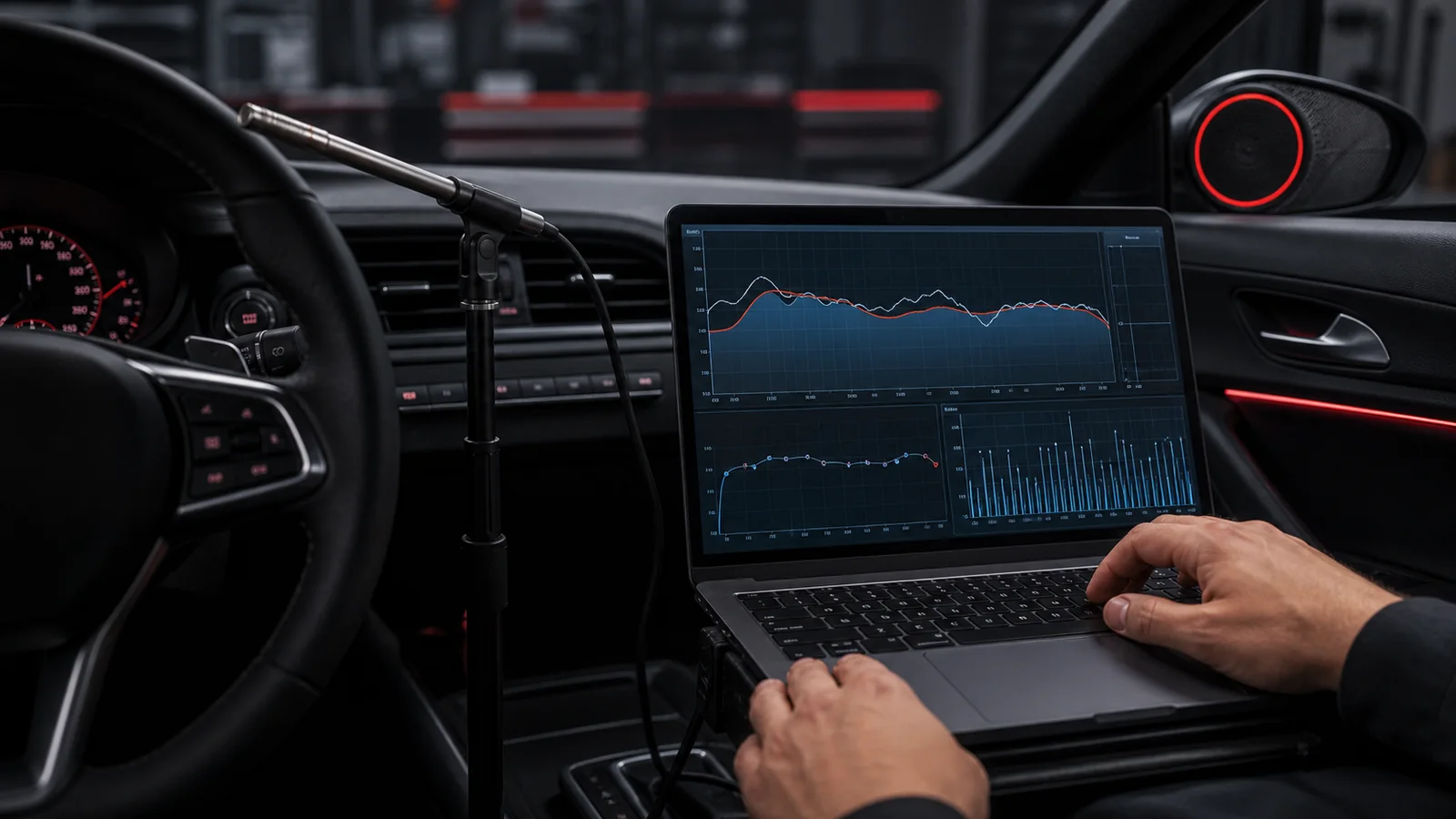
How does DSP place the stage in front of the driver?
Tuning begins by checking the input signal, installation and polarity. The working range of every speaker is then established before levels and arrival times are aligned. Frequency equalisation comes last, not first.
Measurements should cover several points around the driver’s head because a single position may overreact to a local reflection. Listening tests with well-recorded vocals and clearly placed instruments complete the process. Professional installation and tuning of an in-car sound system combines door acoustics, appropriate components and DSP settings into one coherent result.
Diagnostic order
- Disable surround modes, stage enhancement and source equalisation.
- Centre balance and fader, then listen to each channel separately.
- Verify polarity and the mechanical mounting of every speaker.
- Check the rear-channel level and mute the rear speakers temporarily.
- Review crossover points and how much midrange the door woofers reproduce.
- Set levels and time alignment for the driver’s position.
- Apply EQ last and compare several different recordings.
If localisation changes mainly at higher volume, also check why one car speaker is quieter than the other. If the image falls apart primarily on the road, see why car audio sounds worse while driving.
Summary
Music seems to come from the doors when the physical speaker positions dominate the apparent stage. Common causes include door woofers playing too high, unequal arrival times and levels, phase errors, excessive rear fill and installation problems. A properly designed and tuned system detaches the sound from the drivers: the vocal appears in front, instruments occupy stable positions and the doors stop being audible sources of the music.